By Rev. Peter Johnson

I have spent much of my life in churches, meeting rooms and on street corners, talking with people about the kind of country we want to leave our children. Sometimes those conversations were about voting. Sometimes they were about justice. But underneath them was a question: What are we willing to stand for when standing costs us something?
That question came back to me when I read about state Sen. Angela Paxton’s speech to a gathering of Texas Republican women.
“It’s not the people — it’s the seat,” she told them.
She explained that Republicans would have more control over the future if the seat stayed with their party, even when they were angry with the person seeking it. She never mentioned her estranged husband, Attorney General Ken Paxton, the Republican nominee for the U.S. Senate. But given their public circumstances, those words carried weight.
I do not pretend to know what is in Angela Paxton’s heart. I will not turn her marriage into somebody else’s entertainment. She filed for divorce alleging adultery. Ken Paxton has denied those allegations. He was also acquitted in his impeachment trial. Fairness requires saying that.
But her argument deserves examination. When does keeping a seat become more important than the standards we say we believe in?
I understand political loyalty. I understand that elections have consequences. A senator votes on laws, judges, and public spending. People can have serious reasons for supporting a candidate whose conduct troubles them.
Still, somewhere along the way, we have to ask what our principles are worth.
If character matters only when the other party’s candidate is in trouble, we have made character another campaign tool. If accountability disappears whenever our own side might lose, then winning has become our highest value.
That ought to trouble people of faith. I have preached forgiveness for decades. I believe people can change. I believe grace reaches all of us. But forgiveness does not mean we stop asking questions. It does not mean that every person we forgive is entitled to hold public office. Grace and responsibility belong together.
What troubles me especially is how women get pulled into these arguments. We hear that women must vote to protect their families. We hear that women must save the country from the other side. We hear politicians promise to defend women while expecting women to carry the burden of defending the party.
Where, in all that talk, do women themselves get heard?
A mother trying to pay for childcare needs more than a warning about the opposing party. A woman caring for an aging parent needs more than a campaign slogan. A grandmother stretching her check needs answers about groceries, medicine, and housing.
Women disagree about abortion, faith and public policy. They have every right to those disagreements. But every woman deserves an honest explanation of what a candidate intends to do and how those decisions will affect her life.
Her concerns should not be brushed aside because somebody needs another vote.
During the civil rights movement, we challenged a country that spoke beautifully about freedom while denying it to millions of its own citizens. We learned to measure promises against conduct. The words mattered. What happened after the speeches mattered more.
That lesson still belongs in our politics.
Republicans should answer for the distance between their values and their behavior. Democrats should answer for theirs. No party deserves a pass because its leaders know which Scriptures to quote or which fears will bring people to the polls.
Here in Dallas, we know that trust is built through what people do. The same should be true of those asking to govern us.
I want our children to see adults who can admit when their own side falls short. I want them to understand that conscience is something we carry into the voting booth, even when the choice is difficult.
A party can recover from losing an election. Recovering the trust lost when it abandons its principles may take much longer. Some things are worth more than a seat. Our word ought to be one of them. So should the dignity of women. So should the moral example we leave our children.
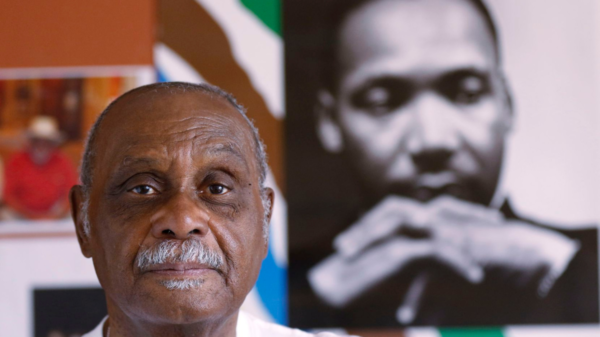
Rev. Peter Jerome Johnson, was the youngest staff member of the Southern Christian Leadership Conference under Dr. Martin Luther King, Jr. An alum of Southern University, he founded the Peter Johnson Institute on Nonviolence