By Jeremy Allen
Michigan Chronicle
https://michiganchronicle.com/
I have spent much of my life believing in a fairly simple version of the American promise. My parents taught me to get an education, work hard, be a good person, take care of my family and contribute something meaningful to society, and if I did those things, America would provide an opportunity to succeed. I believed them. More than that, I still believe them.
America has been good to me. I have been blessed to build businesses, raise a family, experience success and spend much of my professional life helping other people pursue their own piece of the American Dream through property ownership. I love this country, and I have no interest in joining the voices that seem determined to convince us that America is either irredeemably broken or that Americans of different races are destined to view one another as enemies.
But loving a country does not require us to close our eyes.
As I look at America today, I find myself thinking more deeply about race, economic independence and what it means for Black people to build a future that is not entirely dependent upon the political, corporate or social climate of the moment. I have watched the national conversation around race change. Policies and institutions created to address historical disparities are being reconsidered, challenged or eliminated. Americans can reasonably disagree about those policies, and they should. My concern is larger than any particular program or political administration. It is about what Black America should learn from this moment.
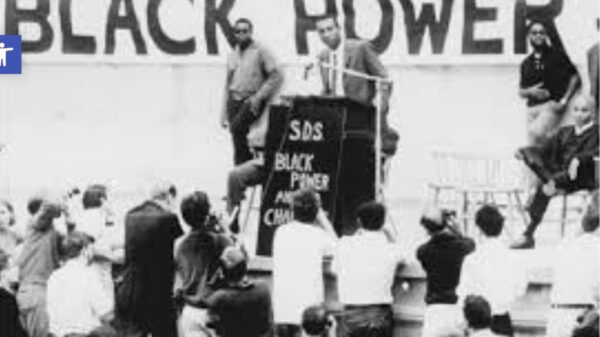
Perhaps it is time to revisit an expression that has made many Americans uncomfortable for more than half a century: Black Power.
The words immediately bring to mind the 1960s and 1970s, raised fists, protests and a period of enormous racial tension. For some, the phrase suggests militancy or separation. But underneath the imagery was another idea that deserves serious consideration today: the belief that Black Americans needed not only legal equality and access to existing institutions, but also greater economic independence, community strength and the ability to exercise meaningful control over their own futures.
That interpretation of Black Power speaks to me increasingly as I grow older. I am not interested in Black power over White people, or over anyone else. I am interested in Black people possessing enough economic power that changes in politics, corporate priorities or public sentiment do not leave an entire community wondering what will happen to us next.
For me, a modern Black Power movement would not begin with a protest sign. It would begin with a deed.
There is a reason I have spent years saying that property is power. A house is more than shelter, and a deed is more than a piece of paper. Property can change the economic trajectory of a family. A monthly mortgage payment can gradually become equity. Equity can help finance another property, provide capital for a business, help educate a child, cushion a family during difficult times or eventually become an inheritance. A rental property can produce income long after the original purchase. Commercial property can house a business while creating another appreciating asset. Land can remain in a family for generations.
That is power, not because it gives us authority over somebody else, but because it gives us greater authority over our own lives.
The racial homeownership gap makes this conversation especially important. Black homeownership continues to trail White homeownership significantly, and that disparity matters far beyond housing. Homeownership has historically been one of the primary ways American families have accumulated wealth and transferred it from one generation to another. When one group has participated in that process at substantially lower rates for generations, the consequences compound. One generation has less equity to help the next generation with a down payment, less property to inherit and fewer assets available to finance education, entrepreneurship or investment.
We know enough history to understand that this disparity did not simply appear. Black Americans lived through periods when discriminatory housing and lending practices restricted access to mortgages and neighborhoods. Those facts should be taught and remembered, not because history gives us permission to remain permanently angry, but because understanding how wealth was accumulated or prevented from accumulating helps us understand the economic landscape we inherited.
Yet history cannot become our permanent strategy.
There comes a point when the question must move from what happened to us to what we are going to build from here. That may be the most important question facing Black America today.
If our parents and grandparents own homes, are we discussing how those properties will transfer to the next generation? Are wills and estate plans in place? Are we teaching our children what equity means before they inherit it? If we have strong incomes, are we converting some portion of those incomes into assets? If we build successful businesses, are we also considering who owns the building where the business operates? When a family member becomes successful, are we thinking only about that individual’s success, or about how knowledge, capital and opportunity can be transferred throughout the family?
These questions require something more difficult than outrage. They require discipline.
It is easy to identify what government should do, what corporations should do, what banks should do and what America should do. Those are legitimate conversations. Fair lending matters. Equal employment opportunity matters. Civil-rights protections matter. Equal treatment under the law is not a favor bestowed upon Black Americans; it is part of the promise of American citizenship.
But there is another conversation that belongs entirely to us: What are we going to do?
That question becomes increasingly important in an era when government policies can change with an election, corporate priorities can change with a new chief executive and programs that exist today may not exist tomorrow. A family cannot control all of those forces. What it can control, at least to some degree, is whether it saves, whether it invests, whether it owns, whether it plans and whether one generation prepares the next.
This is where I believe the old language of Black Power can be given a new purpose.
Economic self-determination does not mean rejecting America. It does not mean refusing assistance, opposing government programs or withdrawing from relationships with people of other races. None of us succeeds alone. Businesses need customers. Investors need markets. Communities need infrastructure. America functions because people with different backgrounds and beliefs participate in the same economic system.
But there is an important difference between interdependence and dependence.
I want Black America to be deeply integrated into the economic life of this country while also possessing enough assets, businesses, property, knowledge and institutional strength to withstand changing political winds. I want us to participate in America from a position of greater economic security.
That requires us to rethink how we define success.
For much of my younger life, success meant achievement: earning an education, developing a career, increasing income, receiving recognition and providing a good life for your family. I still value all of those things. But as I have gotten older, I have become more interested in permanence.
What survives us?
A salary ends. A title eventually belongs to somebody else. A career ends. Even a successful business can disappear if the next generation is not prepared to operate it. But properly managed assets can continue producing opportunity long after the person who acquired them is gone.
One successful person is an accomplishment. A family capable of reproducing success across several generations is something more. It begins to resemble an institution.
That is why I believe we must teach our children the difference between looking wealthy and owning wealth. Consumption can provide comfort and enjoyment, and there is nothing wrong with enjoying the fruits of one’s labor. But a luxury automobile depreciates. A designer label does not produce cash flow. The appearance of prosperity and the ownership of productive assets are not the same thing.
Imagine instead a generation of young Black Americans who understand credit before they need to borrow, who understand mortgages before they purchase their first homes, who know what equity means, who understand the fundamentals of investing, who recognize the value of entrepreneurship and who grow up discussing wills, trusts, insurance, real estate and generational wealth as naturally as previous generations discussed finding a good job.
That kind of consciousness would be powerful.
And it would not require us to hate anyone.
I want Black children growing up believing they belong everywhere in America. I want them becoming electricians and engineers, physicians and developers, teachers and entrepreneurs, mortgage professionals and technology founders. I want them working with White Americans, Latino Americans, Asian Americans and every other community represented in this extraordinary country. I want us building businesses together, investing together, living beside one another, disagreeing with one another and ultimately succeeding together.
But cooperation does not require economic vulnerability.
There is nothing anti-American about a community wanting to own homes, build businesses, educate its children, preserve its assets and create something for future generations. In fact, those ideas sit very close to the heart of the traditional American Dream.
Perhaps, then, the modern meaning of Black Power should be less about power over others and more about capacity within ourselves: the capacity to build, own, invest, educate, preserve and transfer.
I cannot predict where America’s current debates about race will ultimately lead, and I do not believe fear should become our organizing principle. Fear rarely builds anything worth inheriting. But awareness can become strategy.
We can understand our history without becoming prisoners of it. We can acknowledge discrimination without allowing discrimination to define our expectations for ourselves. We can insist upon fairness from America while demanding responsibility from ourselves. We can love this country while recognizing its imperfections. And we can walk hand in hand with people of every race while remaining unapologetically serious about strengthening Black families and building Black wealth.
That does not sound militant to me. It sounds mature.
My parents’ generation told us to get an education, work hard, find a good career and become successful. They were right. Those values helped produce generations of Black professionals, entrepreneurs and leaders who might once have been denied those opportunities altogether.
Our responsibility now may be to add another chapter to their instructions.
Get educated. Work hard. Be a good person. Build a career. Treat people with dignity. Love America. Participate fully in its institutions and insist upon your rightful place within them.
But also own something.
Then teach your children how to keep it, grow it and pass it forward.
That may be one of the most constructive meanings of Black Power for our time. Not anger. Not separation. Not superiority. Ownership, self-determination and legacy.
Because equality is about having the opportunity to walk through the door. Economic power is about what we are able to build once we get inside. And that is why I will continue to say it: Property is Power!
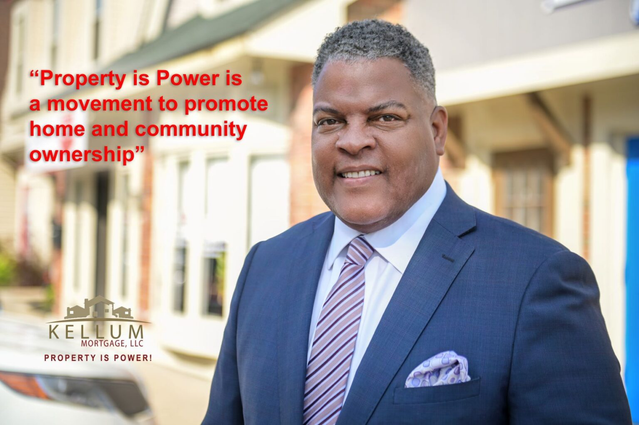
Property is Power! is a movement to promote home and community ownership. Studies indicate homeownership leads to higher graduation rates, family wealth, and community involvement.