Ahead of the midterm elections, The Highland Project’s sixth annual national poll of 700 Black women voters found that 92 percent of respondents are dissatisfied with the direction of the country.
By Janeé Bolden
Essence
https://www.essence.com/
For six years, Gabrielle Wyatt has been asking Black women to imagine the lives they want for themselves.
What they’re looking for isn’t complicated. Black women want time to care for their mental health. They want enough money to feel financially secure, loving relationships, meaningful work, healthy food, close friendships, hobbies, travel and homes of their own. In other words, they want the freedom and resources to build lives filled with joy.
Wyatt, founder and CEO of The Highland Project, calls Black women “futurists” and “seers.”
“I’ve seen it consistently in the data,” Wyatt tells ESSENCE. “We’ve consistently shared what a future for all could look like.”
What troubles her is that during election cycles, Black women are too often discussed in terms of utility as voters rather than as people who have consistently articulated a vision for how they and their communities can thrive. “We have been incredibly consistent visionaries as Black women,” Wyatt says, “and the Highland dataset proves that out.”
Since 2020, The Highland Project has worked to build a multigenerational vision of wealth and opportunity for Black women that goes beyond income or traditional measures of economic success. Through its research, the organization has also amassed a growing body of intelligence about Black women’s views on wealth, the economy and democracy.
Its latest findings, released on Tuesday, September 29, raise a more troubling question: What happens when Black women can clearly imagine the lives they want, but increasingly believe the country around them is moving further away from making those lives possible?
The Highland Project’s sixth annual national poll of 700 Black women voters, conducted in partnership with brilliant corners Research & Strategies, found that 92 percent of respondents are dissatisfied with the direction of the country. That figure has risen dramatically from 53 percent in August 2024. Fifty-one percent are pessimistic about the country’s future.
And yet Black women have not checked out.
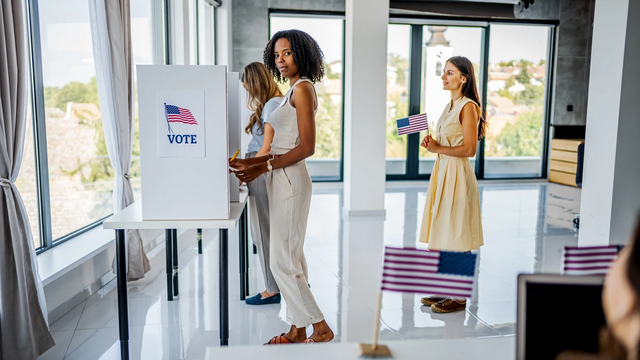
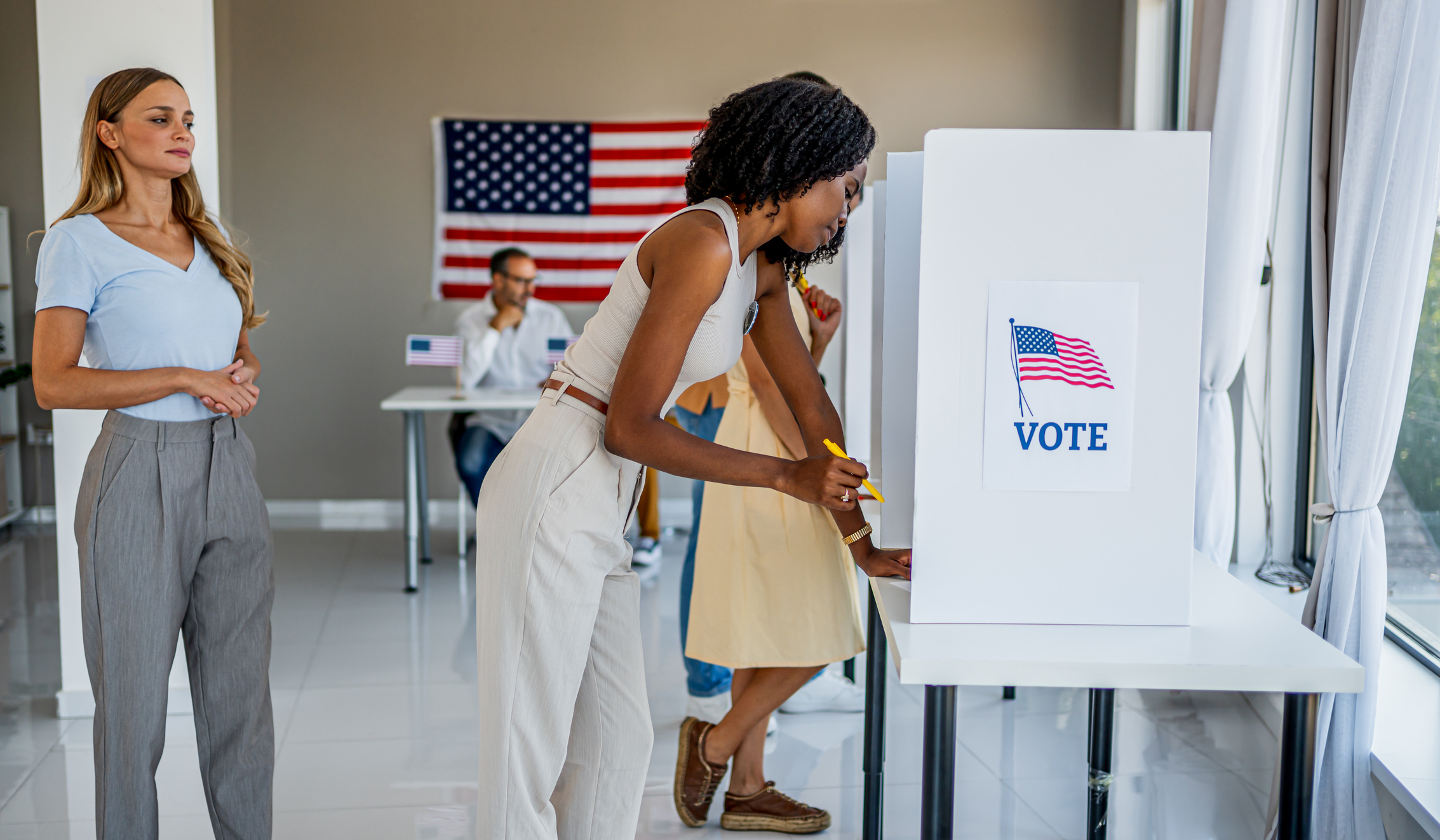
Seventy-seven percent of those surveyed said they are very motivated to vote in the 2026 midterms, while 61 percent believe this year’s midterms are more important than previous elections.
For Wyatt, that tension is important because it challenges the way Black women are often discussed during election cycles, when their value can become narrowly focused on whether they will turn out to vote rather than what they expect from the systems they help sustain.
“I think what gets missing when we hear Black women voters is, it sounds a bit like utility, and descriptive representation, and what I wish people intuitively responded with was, ‘Oh, that’s the futurist,’ right? Like, those are folks who actually know an answer of a thriving life for every person. I wish that folks, when they heard that, instead of thinking about utility, saw and heard the real investment that Black women have made into this democracy.”
“Our humanity is what’s on the line to protect,” Wyatt adds. “That should not be confused with preference for a candidate or an administration. This is really about the issues.”
The 2026 survey included what The Highland Project calls a Joy Index, asking Black women to rate the people, conditions and experiences that are important to their definition of a joyful life.
Time to focus on mental health was rated highly important by 94 percent of respondents, while 92 percent said the same about having enough money and 91 percent about loving relationships. Healthy eating, rewarding work, close friendships, hobbies, homeownership, travel, exercise, faith and other measures of well-being also ranked highly.
Taken together, the findings show how interconnected Black women’s visions of well-being are. The bigger question is how closely Black women’s lived reality matches the life they’ve described. This year, Highland sought to measure the distance between the two through what it calls the “fulfillment gap.”
Respondents rated the importance of a series of needs to themselves and their communities, then rated how well they believe leaders and institutions are delivering on those same needs. The distance between the two is the fulfillment gap. Highland stresses that the measure isn’t an assessment of a particular party. It measures respondents’ perceptions of how well the broader system is meeting the priorities that matter to them.
And that gap is substantial.
On average, respondents rated their needs 5.7 points higher than perceived delivery. Highland calculated an overall fulfillment ratio of just 38 percent, with some of Black women’s highest priorities showing among the greatest disparities between need and delivery.
“You have African American women making huge investments…and not seeing a very high return on their investments,” Cornell Belcher, president of brilliant corners Research & Strategies tells ESSENCE.
Black women invest in their families and communities. They invest their labor in workplaces and institutions. And election after election, their political participation is scrutinized as an indicator of what may happen at the ballot box.
Wyatt argues that Black women have already “literally laid out the roadmap” for what they need in return, and economic security plays an undeniable role.
Eighty-eight percent of Black women surveyed said they believe economic conditions are getting worse. Fifty-eight percent said their wages and salaries are falling behind the cost of living, while 21 percent reported being affected by federal layoffs.
But Wyatt says viewing Black women’s concerns solely through their pocketbooks misses an essential part of what they are telling researchers.
“We’re holding both things, both the pocketbook and protection,” she says.
Belcher puts it even more simply: “It’s not just economy, it’s dignity.”
Those concerns about protection appear throughout the research.
Ninety-five percent of respondents said they are concerned that the weakening of voting-rights protections will negatively affect Black communities. At the same time, 87 percent said changes to voting-rights protections make them more motivated to vote.
That helps explain why dissatisfaction and political motivation can exist simultaneously.
Belcher contrasted the current political moment with the energy he observed during the Obama era, when hope, joy and opportunity helped propel Black political participation. Today, he sees motivation driven in part by a desire to protect communities and hard-won rights and freedoms.
High motivation, in other words, shouldn’t automatically be read as high enthusiasm for the status quo.
The disconnect Highland identified isn’t limited to government policy or economic statistics. Black women also described pressures that follow them into workplaces and everyday life.
Forty-two percent said they often or very often feel they have to tone themselves down for other people’s comfort, including code-switching. Thirty-six percent said they often experience racism and discrimination, while 29 percent reported often experiencing sexism.
For the first time, Highland analyzed women who reported frequently experiencing racism, sexism or pressure to tone themselves down as a separate “burdened subgroup.” The analysis was designed to examine how those additional pressures affect women’s experiences, priorities and outlook.
Belcher says women carrying more of those burdens also exhibited an even greater fulfillment gap.
The numbers quantify something many Black women may recognize without needing a poll to name it: the additional labor of navigating spaces while determining how much of themselves those environments will comfortably accept.
And those experiences matter to how women define the future they want.
Perhaps one of the most sobering findings in the survey is that 47 percent of respondents believe the country will be a worse place for Black women 10 years from now.
Wyatt adds an important qualifier.
“We see regression if things stay the way they are,” she says, specifically pointing to a lack of structural change.
“Absent those spaces of respite, of play, of love, it is really hard… to see something different.”
When respondents were asked in their own words what real progress for Black women would look like, the most common category of responses centered on equal rights, equality, and ending racism and discrimination. Others pointed to better political outcomes and leadership, greater representation in positions of power, better jobs and career opportunities, and greater workplace equality.
The report ultimately describes a good life as personal while describing the changes Black women say are necessary to achieve it as structural. Enough money matters, but so does health, family, safety and belonging. Rights and power can determine whether any of those things are within reach.
The Highland Project’s findings can’t answer what those institutions will ultimately do. They do make clear, though: Black women have articulated what they want. Security and dignity. Meaningful work and enough money. Relationships, community, health and the freedom to be fully themselves. Joy.
Even as nearly half of the women surveyed fear the country may be worse for Black women a decade from now, Wyatt sees them carrying what she describes as a “generational charge” to keep imagining, and building, something better.
“How do we continue to keep the future going?” Wyatt asks. “And how do we create that future to be even more vibrant, and for us, even more joyful?”
To view the full poll, “The Fulfillment Gap,” visit The Highland Project website.