The founder of the Celebrating Life Foundation turned breast-cancer awareness into a year-round mission of free screenings, survivor assistance and community support.
By Stephanie Ward, Texas Metro News
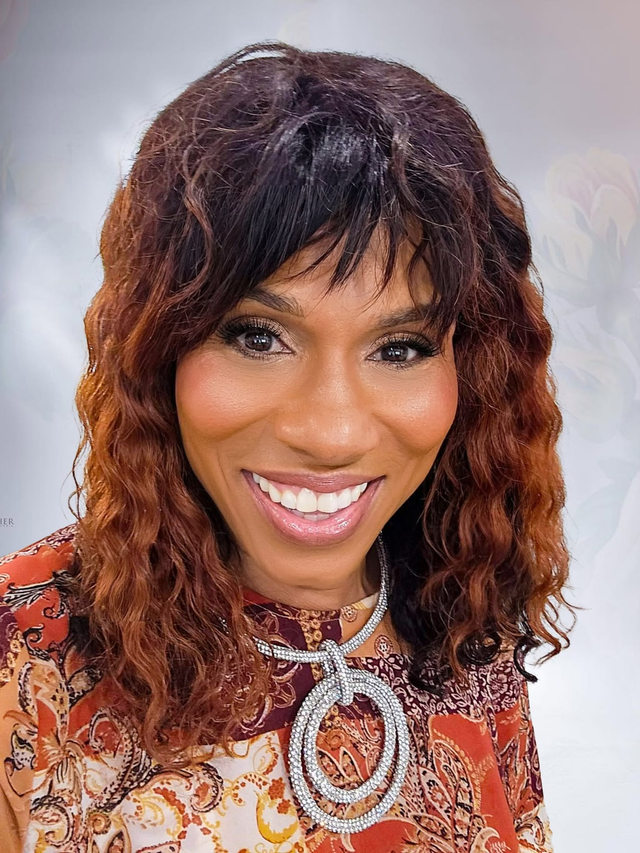
For Sylvia Powers, the work began with a question she could not ignore: Why were so many Black women being diagnosed with breast cancer and why were so many dying at a higher rate than other races.
Twenty-five years later, that question has become a life’s work. Through the Celebrating Life Foundation, Powers has helped connect women with free mammograms, health information, treatment resources and emergency assistance. The organization’s annual Sister to Sister Fitness Festival has grown into a celebration of breast-cancer awareness, survivor hood and community.
The 25th Sister to Sister Fitness Festival will be held Oct. 3 at the Alan E. Sims Cedar Hill Recreation Center. The event will feature a 5K walk and run, fitness activities, vendors, survivor recognition, health resources and fellowship.
Actress, author and sportscaster Jayne Kennedy will appear at the festival for a speaking engagement and book signing of her new memoir, Plain Jayne: A Memoir, which chronicles her life, Hollywood career, work in sports broadcasting and personal experiences.
But the anniversary belongs first to Powers—and to the vision she began building long before the foundation had a name.
‘I didn’t see Black women talking about it’
Powers’ interest in breast cancer began while she was studying communications with an emphasis in journalism at the University of Wisconsin-Madison. She was also working with a public-service radio station when singer Minnie Riperton publicly discussed her breast cancer diagnosis.
The moment stayed with Powers.“I didn’t see Black women talking about it,” she recalled. Then Powers’ aunt was diagnosed.
At the time, Powers said, Riperton and her aunt were the only two Black women she knew who had breast cancer. But once she began asking questions, she discovered that the disease was far more present in the Black community than people were saying aloud. Women began telling her: “My aunt had breast cancer.” “My grandmother had breast cancer.” “My mom had breast cancer.” The responses that surprised Powers most came from women she personally knew. “I had breast cancer,” they told her.
She realized Black women were experiencing the disease, but many were facing it quietly.
She began interviewing Black women about their experiences. In all, she spoke with 62 women in 16 states, ranging in age from 25 to 89. Their survival experiences ranged from several months to 45 years. Some had been told they were too young to have breast cancer. Others had been told their disease had progressed too far. As Powers organized their stories, she began searching for what the women had in common. Her answer was not their age, diagnosis or length of survival. They were celebrating life.
That became the title of her book, Celebrating Life: African American Women Speak Out About Breast Cancer. It also became the foundation for the organization that followed. “If you’re not a part of the solution, you’re part of the problem,” Powers said.
A mission built on access
In its early years, of the Sister to Sister festival concentrated heavily on education, health fairs and encouraging women to get screened. Over time, the organization’s work expanded to include direct support for breast cancer survivors.
That support can include free screenings, financial assistance, utility payments, transportation to treatment, rental assistance, grocery cards and referrals to other organizations.
Free mammograms have remained a central part of the mission. Many women have learned they had breast cancer after receiving screenings through the organization or attending one of its events.
Powers described one longtime supporter of the festival who retired and lost access to insurance. Through Celebrating Life, the woman received a free mammogram and was diagnosed with breast cancer.
Because she was uninsured, the foundation connected her with a breast center. She was able to receive surgery and treatment. She survived, later joined the Celebrating Life board and helped develop the Survivor Room for breast cancer survivors.
Powers also knows of women who attended the festival and were later diagnosed with breast cancer. The event no longer has a mammography truck onsite, she said, but representatives attend who can help women arrange mammograms and connect with breast-health services. For Powers, screening is not simply a recommendation. It can be the moment a woman finally gains access to care—or the moment a potentially deadly disease is discovered.
The numbers behind the mission
The health disparities that first concerned Powers remain significant. Cancer is the second-leading cause of death among Black women in the United States, after heart disease. Breast cancer accounts for about 34% of new cancer diagnoses among Black women. Although Black women are slightly less likely to be diagnosed with breast cancer than White women, they are significantly more likely to die from it. The reasons are complex, including later-stage diagnoses, aggressive forms of breast cancer, delays in follow-up care and unequal access to high-quality treatment. For Powers, those statistics have never been abstract. They represent women she has met, listened to and helped.
‘We would put the flyers on cars’
Powers’ work has been supported by people who believed in the mission from the beginning. Hyacinth Skeete, a longtime friend and early supporter, remembers the days when the festival was still being built one conversation and one flyer at a time. “I remember the early days of Sister to Sister when we would go put the flyers on cars at the different supermarkets,” Skeete said. Skeete said Powers’ commitment has always come from a genuine concern for others. “Sylvia, you really care deeply about others and you do what you do from your heart,” she said. “I look forward to this event every year. To see the growth, the love, care and the hope you give to the community.”Skeete has watched the original vision grow into something larger than an annual walk.“I am so glad to see your dream blossom into such an awesome reality and success,” she said. “Thank you, Sylvia, for allowing God’s love to shine through you.”
Skeete’s memories also show how much the event has changed. What once required volunteers to distribute flyers in supermarket parking lots now draws participants, vendors, survivors and families from across North Texas.
‘She felt like a person again’
The foundation’s support often extends beyond screening.
Powers recalled a woman with Stage 4 breast cancer who was approaching her 44th birthday. The woman had two daughters, approximately 18 and 19.
Celebrating Life helped her celebrate.
Her daughters did her makeup. There was a photo shoot. For a few hours, the woman was not defined by her diagnosis.
After being diagnosed, she had felt like a patient, Powers said.
At the birthday celebration, she felt like a person again.
That distinction captures much of Powers’ work. She understands the urgency of treatment, but she also understands that women living with cancer still need joy, dignity, family time and reminders of who they are beyond their medical records.
Another time, a partner contacted Celebrating Life about a woman undergoing chemotherapy whose electricity had been disconnected. It took about $100 to restore the service. The foundation paid it, and the electricity came back on within approximately two hours.
Powers later learned that the woman’s mother, who was staying with her, was also dealing with breast cancer.
In another case, Powers called a woman to tell her the foundation could provide a $50 gift card. The woman began crying.
According to Powers, the woman said no other organization was willing to help.
For another woman undergoing chemotherapy, Celebrating Life provided $1,000 toward her rent. Powers said the woman had been looking out a window, crying and asking God for help when the call came.
More than a run
The Sister to Sister Fitness Festival grew out of the community health fairs Powers and her team attended over the years. They heard repeated messages about nutrition, exercise, healthy living and diseases that disproportionately affect Black communities.
Powers wanted breast cancer to be part of a broader conversation about health.
She envisioned an event that would focus on breast cancer, include the entire family, encourage exercise and healthier lifestyles, and raise money to support the foundation’s work.
The festival began as a small community walk. It eventually grew into the Sister to Sister Fitness Festival.
Today, the event includes fitness activities, a 5K, health and breast-cancer organizations, clothing and jewelry vendors, candles, art activities, face painting and family programming. Participants receive a T-shirt and swag bag. Powers said the organization expects to distribute more than $100,000 worth of donated products to the community this year.
The festival is high-energy from the moment people arrive. Music fills the space. Participants take part in a group warmup, listen to pep talks and hear testimonials from breast cancer survivors.
For Tamakia Taylor, who attended the walk several years ago, the event was different from what she expected.
“It was so much more than I expected,” Taylor said. “It’s more than a run—it’s an experience.”
Taylor said the festival left her feeling energized and encouraged.
“When I leave there, I am hyped and inspired,” she said. “The survivor stories are amazing.”
That reaction reflects what Powers has tried to create: a gathering that acknowledges the seriousness of breast cancer without allowing the disease to define the entire day.
The festival feels more like a celebration than a traditional charity walk.
That is intentional.
Powers wanted women to receive important health information in an environment that also made room for music, movement, laughter and connection.
Twenty-five years and still moving
Over the years, Powers has seen the festival become more diverse, with more men participating, a wider range of ages and families from different racial and ethnic backgrounds attending together.
She originally thought of it primarily as a Cedar Hill event, but the foundation’s data showed that participants were coming from Dallas and surrounding communities.
Powers also walks in 5K events hosted by other organizations. Last year, she completed 16, exceeding her goal of walking 12 in one year. She uses those events to observe what other groups do well and bring new ideas back to Sister to Sister.
There is a practical quality to her leadership. She sees a need, studies the problem and looks for a way to respond.
The number of women seeking assistance has grown sharply.
Powers said the foundation received approximately 150 applications for help last year. At the time of the interview, the organization was tracking approximately 437 people seeking assistance this year.
The increase has forced the foundation to establish limits. Someone who has received assistance may ask for help again with groceries or another need, while another survivor may not have received any help at all.
Powers said the challenge is making the available resources reach as many people as possible.
The foundation receives support through grants, individual donors and corporate sponsorships.
The emotional weight of the work is real. Powers acknowledged that she sometimes cries with women, but she does not describe herself as tired of the mission. Her frustration comes from wanting more resources to meet the growing demand.
She sees the work as a calling.
When asked whether the mission was from God, Powers answered:
“Without a doubt. Without a doubt.”
She has lived in Dallas since 1983 and remains active in the community as a photographer, advocate and organizer. She rarely makes conversations about her own accomplishments. Instead, she redirects attention to the women the organization has helped.
When asked what she wants people to remember about her contribution, she answered with one word:
“Compassion.”
That compassion is visible in the free mammogram that led to a diagnosis, the utility payment that restored a woman’s electricity, the grocery card that helped a family get through treatment and the birthday celebration that allowed a Stage 4 survivor to feel like herself again.
It is also visible in the memories of friends such as Skeete, who remembers the early days of placing flyers on cars, and in the words of participants such as Taylor, who discovered that the event was more than a race.
Twenty-five years ago, Sylvia Powers began by listening to women whose stories had too often gone unheard. She responded by building something that has lasted: a foundation, a festival and a network of care that helps Black women face breast cancer with more information, more support and more hope.