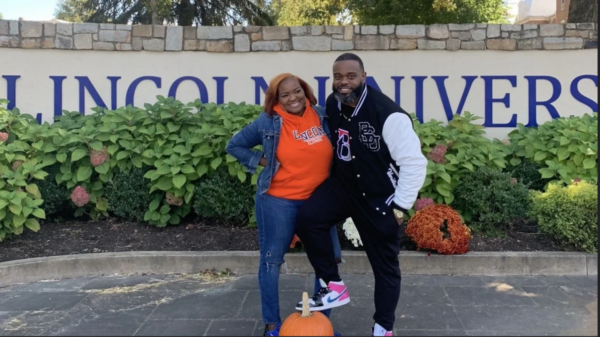
Business executive Sophie Gibson is leading a fierce battle against financial ruin and accreditation loss in a mission to save one of North Carolina’s oldest institutions and an important part of Black history.
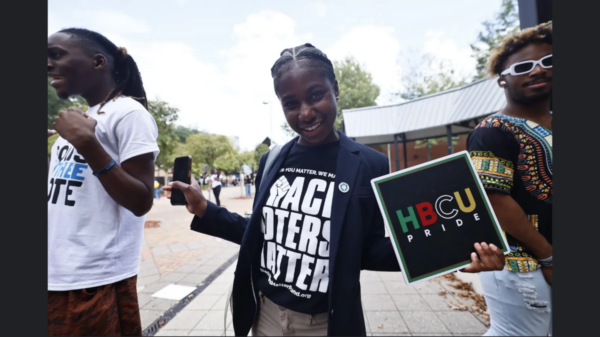
The spirit of HBCU Homecoming Season is in full swing!
Unfortunately that is not the case this year for Saint Augustine’s University. The Raleigh, North Carolina HBCU is experiencing a myriad of challenges. Founded in 1867, Saint Augustine’s is one of the nation’s oldest HBCUs. Notable alumni include accomplished author and scholar who was born enslaved yet became the 4th Black woman to earn a PhD, Dr. Anna Julia Cooper, groundbreaking chemist and scientist, Lloyd Quarterman and comedic actress and media personality (who has hosted mainstage events at the ESSENCE Festival of Culture), Pretty Vee.
However, in April of this year, the historic institution filed for Chapter 11 bankruptcy. According to WRAL News, court documents reveal the university owed between 50 and 100 million dollars as of April 2026. The IRS is the biggest creditor with Saint Augustine’s owing $14.4 million to them, according to the bankruptcy filing. The North Carolina Department of Revenue is owed $1.6 million, with $7 million owed to other federal agencies including the Department of Education. The university also lists $3.3 million owed to the American Trust Company, which is associated with employee retirement accounts.
There have also been growing concerns surrounding a high turnover within the school’s leadership. Former President Dr. Marcus H. Burgess resigned for personal reasons in July 2025. Then, Dr. Verjanis A. Peoples stepped in as Interim Provost & Vice President of Academic Affairs. Next, Dr. Jennie Ward-Robinson was appointed as Interim President of the university in December 2025. But that appointment was short-lived as she stepped down on April 28, 2026. And now, Dr. Peoples has returned as the current Interim President and Interim Provost & Executive Vice President of Academic Affairs of Saint Augustine’s University (SAU).

Dr. Peoples is herself an HBCU-educated leader who has also held senior leadership roles at HBCUs before landing at SAU. When asked about her vision for the university, Peoples offered this: “My vision is grounded in one fundamental belief: SAU must not simply survive its current challenges but create opportunities to thrive by honoring Saint Augustine’s historic legacy while designing an institution that anticipates where higher education, technology, the workforce, and our constituents are going, not where they have been. I envision SAU as a transformed, nontraditional institution that honors its historic mission while redefining how higher education is delivered.”
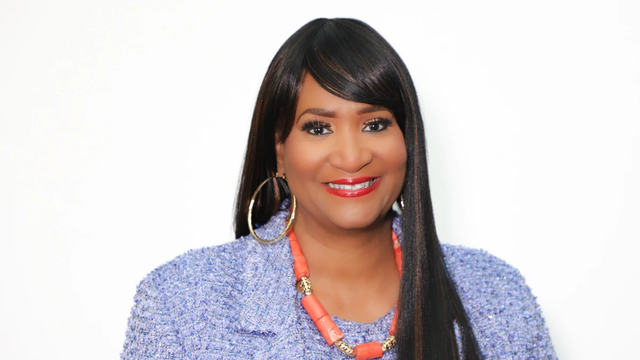
We reached out to Saint Augustine’s University officials to seek further clarity about the future of one of our beloved HBCUs. We spoke candidly with Sophie Gibson, a Jamaica native and marketing pro who is the first woman to Chair the Board of Trustees at the institution. This bold changemaker is part of the small but determined women-led team overseeing the daunting mission to turn Saint Augustine’s current situation around. Here’s what she had to say about the school’s debt crisis, accreditation ordeal and more burning concerns surrounding the historical university.
ESSENCE: Is Saint Augustine’s University permanently closing?
SOPHIE GIBSON:Saint Augustine’s University (SAU) is not permanently closing. We are in a restructuring process, and as Chair, my focus—and the Board’s focus—is on doing everything we responsibly can to preserve this historic institution and give it a sustainable future.
ESSENCE: Accreditation: Does SAU have it or not?
GIBSON: SAU’s accreditation with Southern Association of Colleges and Schools Commission on Colleges (SACSCOC) ended effective May 15, 2026. Degrees earned while the university was accredited remain accredited degrees, and arrangements have been made to help affected students continue their education through teach-out and transfer opportunities.
The permanent closure of the university and the end of accreditation are two different things.

ESSENCE: Will SAU have any traditional degree programs in the future?
GIBSON: I would not say that SAU has made a permanent decision to move away from traditional degree programs. Right now, we must be open to different ways of serving students and generating sustainable opportunities for the university. That may include certificates, workforce development, apprenticeships and other non-degree programs while we work through the restructuring.
But we have certainly not given up on the possibility of traditional degree programs or future accreditation.
ESSENCE: How does the school’s bankruptcy impact all of this?
GIBSON: We didn’t get here overnight. I cannot say how many decades it took, but it did take decades to get here. I do not think anyone [in past leadership] did anything malicious. I do believe there was some borrowing from Peter to pay Paul, as they say. This is not unique to a liberal arts university or an HBCU.
Chapter 11 gives us an opportunity to restructure the university’s obligations and work through some financial issues under the supervision of the court. There are still matters being considered by the court and the Board, so I don’t want to speculate about outcomes that have not been decided.
What I can share is that I did not take on this role to close Saint Augustine’s University. This position is purely voluntary. I took it on because I believe this institution, with its 159-year history, is worth fighting for.

ESSENCE: What lies ahead for SAU?
GIBSON: We have difficult decisions ahead of us, and I don’t want to minimize that. But I remain hopeful about what is possible for SAU, and the Board is working very hard to give the university the best opportunity for a sustainable future.
ESSENCE: Many people in our audience want to support SAU. How can they do so?
GIBSON: 1867 FORWARD is Saint Augustine’s University’s call to alumni, corporations, foundations, faith communities, HBCU supporters and friends around the world to stand with SAU at this defining moment. The campaign is focused on preserving the university’s legacy and assets, stabilizing its financial and operational foundation, and reimagining a sustainable future for SAU. Readers can learn more, support the campaign and give here.