By Karsten Winegeart/Unsplash
Afro
https://www.afro.com/
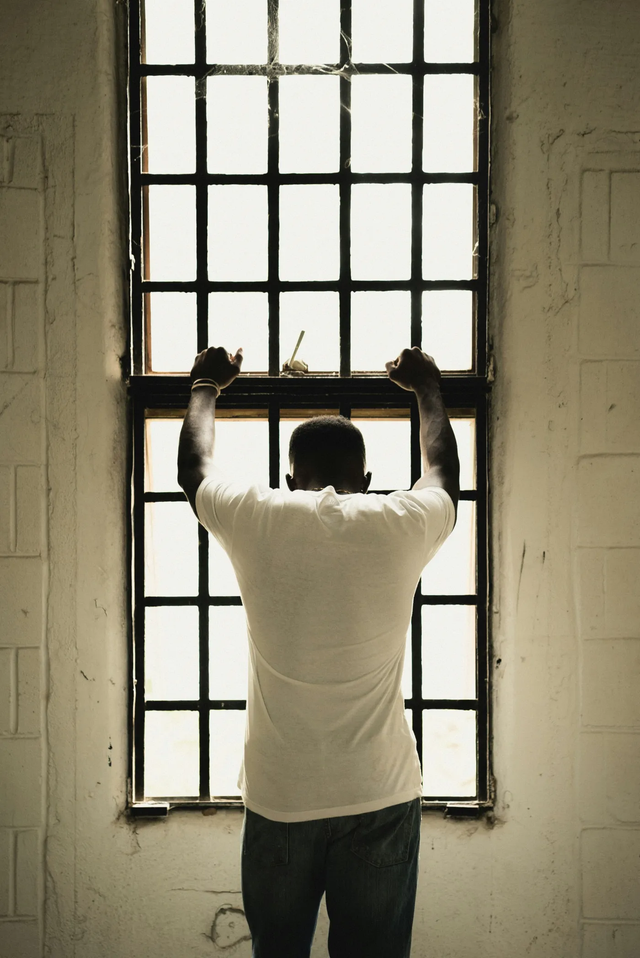
Mass incarceration is not an abstract policy problem, and having experienced incarceration myself, I know it demands our immediate attention. Nearly 2 million people, many of whom are Black or Latino, wake up in jails and prisons across the U.S. This is a 900 percent increase since 1925. Black Americans comprise 33 percent of the prison population despite being only about 13 percent of the U.S. population.
This is not coincidental; it is the direct result of policies designed to replace slavery and Jim Crow with a new system of racialized control.
As part of “The Black Papers,” a policy agenda for Black liberation, we outline a framework rooted not only in research, but in lived experience: prevention, diversion, decarceration, restoration and abolition.
Prevention means investing in the root causes of harm: lack of housing, inequitable education and the absence of healing-centered, youth-driven programs. Safety is not created by surveillance or punishment; it is cultivated through opportunity, stability and care.

“Safety is not created by surveillance or punishment; it is cultivated through opportunity, stability and care.”
Accordingly, school-based policing and surveillance that disproportionately target Black and Brown youth must be eliminated, with funding redirected toward Black-led violence interruption initiatives and restorative justice programs that provide support proactively.
Community-based diversion models should be expanded, especially those implemented before charges are filed or court processes begin.
Diversion looks like decriminalizing poverty, substance use and acts of survival—behaviors frequently penalized rather than addressed through supportive care. Rather than involving police in mental health crises, youth conflicts or homelessness, we must fund and deploy trained crisis responders who center on de-escalation and trauma-informed care.
Decarceration can mean repealing mandatory minimums, eliminating cash bail and closing detention centers. For my own family, this is not theoretical. My brother-in-law remains incarcerated in Indiana under a decades-long sentence while family members advocate for his release amid serious health concerns. Families like ours experience incarceration alongside the person serving the sentence. But the human cost of incarceration is only part of the equation. Decarceration is not only a moral imperative; it also makes economic sense. The economic multiplier effect of community investment far exceeds the costs of incarceration.
The U.S. spends approximately $80 billion annually on incarceration—more than the federal education budget. This means we spend $35,000 for every incarcerated person annually. In contrast, effective community-based programs cost $3,000–$15,000 per person annually and achieve recidivism rates below 30 percent.
Restoration requires centering directly impacted leadership in reentry and policy design. Mass incarceration has perpetuated a narrative that people who are incarcerated are beyond redemption, but we reject that narrative. We can replace the current system with one rooted in healing, accountability and meaningful reintegration.
Abolition is both a long-term goal and a strategic framework. At its core, abolition means addressing the real causes of harm—poverty, trauma, and lack of resources—rather than punishing people for the symptoms of those problems. It also recognizes that the current system cannot simply be reformed because it is working as it was designed: to control and harm Black communities.
Abolition does not mean immediately closing all prisons or abandoning accountability. It is not unrealistic or disconnected from other struggles. It poses a simple, yet powerful question: What must be built to render prisons obsolete? The answer is clear—communities where everyone has housing, healthcare, education, meaningful work and belonging, and where harm is addressed through healing and transformation rather than punishment.
But this means nothing without action. Anyone who believes in justice, dignity and liberation must act without delay. If you believe in restoration and rehabilitation over punishment and destruction, your life’s advocacy should reflect this belief.
To see meaningful change, individuals must observe how the system functions, support imprisoned and formerly incarcerated people and vote for leaders committed to decarceration. Organizations can hire formerly incarcerated people and divest from companies profiting from mass incarceration. Communities can start a participatory defense hub, launch a community bail fund and support families navigating the carceral system. Policymakers can work to eliminate money bail, end contracts with private prison companies, restore voting rights to all people with convictions, redirect funding to community programs and so much more.
To understand mass incarceration through a racial justice lens, we must radically reimagine our societal values. Our communities have always turned pain into power, resistance into resilience and survival into vision. We are brilliant, resilient, and deserve liberation. Those of us who have survived these systems are more than evidence of their failures; we carry knowledge about what must replace them. It is time for our policies to reflect that truth, and for our society to see that potential in us.
The opinions expressed in this commentary are those of the writer and not necessarily those of the AFRO.