By Rita Cook
Texas Metro News
https://texasmetronews.com
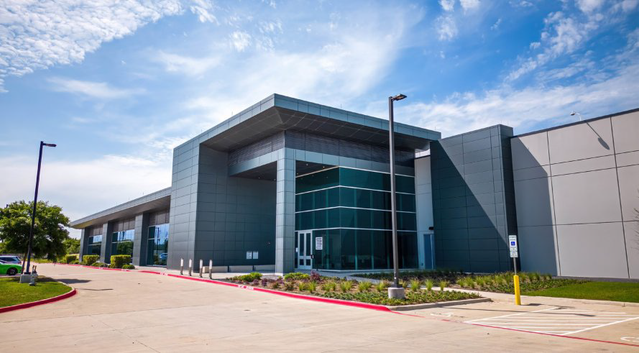
GARLAND – If you have been following the growing debate over data centers in North Texas, you could be forgiven for thinking these massive facilities are a brand-new phenomenon.
But Garland has been home to major data-center operations for years, and that was one of the things that stood out to me when I recently toured Stream Data Centers in the city.
Whatever you might think about data centers, and I know there are many different opinions, there is something valuable about seeing one from the inside.
First, not all data centers are alike.
As for Stream’s Garland facility, it is part of a data-center industry that has been quietly building itself in this community for years.
Stream isn’t a newcomer that just discovered Garland. It opened in 2020, bringing a major hyperscale operation to an already established commercial and industrial area.
And Stream isn’t alone.
NTT Global Data Centers has a significant presence in Garland with a facility on Lookout Drive. NTT has been operating in Garland since 2017.
Digital Realty is another major player. The Garland operation has grown into a substantial campus, with additional facilities planned or under development elsewhere too.
And Prime Data Centers is now adding another chapter to Garland’s data-center story with a major new development that is expected to include three buildings and represent a substantial private investment in the community.
Garland isn’t standing at the starting line of the data-center race.
As has been the talk about data centers, it is said they require enormous amounts of electricity. Depending on the design, they can also require significant water resources. They bring backup generators, cooling systems, miles of electrical infrastructure and buildings that can cover hundreds of thousands of square feet.
And while those are legitimate community issues there is another side to the conversation that sometimes gets lost.
These facilities represent billions of dollars in private investment across the region and they require construction workers, and other personnel during the early stages.
They also contribute to the commercial tax base and require substantial infrastructure to support their operations.
During my tour of Stream, what struck me was how little of what happens inside a modern data center is actually visible from the street.
There aren’t hundreds of employees arriving for a shift. There isn’t a manufacturing line producing something you can see. Instead, there are rows of equipment, sophisticated cooling systems, layers of security and redundant electrical systems designed to keep the digital world running.
And that is really what these facilities are: the infrastructure behind the infrastructure.
Our banking, shopping, communications, entertainment, businesses and increasingly artificial intelligence depend on the servers housed inside facilities like these.
That doesn’t mean data-center companies should get a free pass.
If anything, their growing presence means communities should continue to ask for transparency about electricity, water, taxes, infrastructure, jobs and community investment.
But Garland has an advantage in this conversation that some communities don’t and that is experience.
Residents have had time to understand how data centers operate and what they bring to the community.
So, while other areas are up in arms, the better question for Garland isn’t should they come, they already have.
Instead, question is “Are data centers good neighbors” and how can residents and data centers work together for a positive outcome.
After touring Stream, I think that’s a conversation Garland is uniquely positioned to have.
Currently Texas has one of the largest concentrations of data centers in the United States. The exact number depends on how they’re counted, but a 2026 analysis cited by Pew Research Center reported there are 296 currently operating data centers in Texas and 170 planned projects.
At this point, the only way the data-center naysayers are going to stop the growth of this industry is to convince all of us to put down our phones, turn off our computers, stop streaming, stop shopping online and somehow stop creating data. Good luck with that.
Data centers are here, and Texas is becoming one of the biggest hubs in the country. The question now isn’t whether we can wish them away. It is whether communities and the companies building these facilities can figure out how to live and work together.
Garland has a head start.
Stream Data Centers, NTT Global Data Centers, Digital Realty and Prime Data Centers are already part of Garland’s story. Now comes the more important part of that story — making sure the community has a seat at the table.
Because perhaps the real question isn’t whether data centers belong in Garland.
It’s whether they can be good neighbors. And after seeing one from the inside, I think that’s a conversation worth having.
Rita Cook is a world traveler and writer/editor who specializes in writing on travel, auto, crime and politics. A correspondent for Texas Metro News, she has published 11 books and has also produced low-budget films.