By Cary Clack San Antonio
Express News
https://www.expressnews.com/
In the late summer of 1996, my shrinking afro, a hairstyle I’d worn since I was 12, ended abruptly when my barber accidentally cut off more than I wanted. When I walked outside, I felt something I couldn’t remember experiencing before: the wind against my scalp.
It felt good.
It also felt good, in days to come, not having to do anything with what was left of my hair.
I loved my Afro and would grow another one had not my hair follicles accepted early retirement a while ago. But Afros require a great deal of attention and care. They’re like democracies. If you’re not vigilant about their maintenance, they can get out away from you.
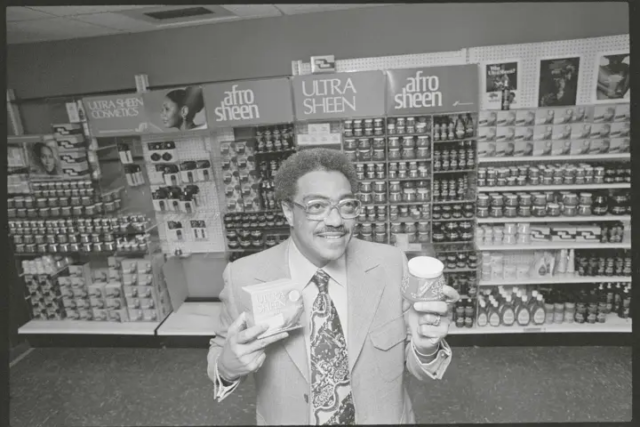
My Afro and I had a difficult, tangled and painful relationship. So I must pay my props to the man who eased the pain, untangled some of the knots and allowed our relationship to grow: George Johnson, the Black hair care entrepreneur and founder of Johnson Products Co. who died July 6 at the age of 99.
A few years ago, I suggested that the 16th-century Italian St. Benedict of Moor could be the patron saint of Afros because he appeared to be listed as the patron saint of anything Black, including African Americans, Black people and African missions.
In retrospect, a better choice would be another Black saint, the 16th- and 17th-century Peruvian St. Martin de Porres. Besides also being a patron saint of Black people — because, Lord knows, you can’t have too many saints advocating for you — he is also the patron saint of barbers and hairdressers.
But I decided that if there were a patron saint of the Afro, it should be Willie Lee Morrow. Until his death in 2023, I’d never heard of the Alabama native who moved to San Diego, where he opened a barber shop and created a multimillion-dollar Black hair care empire, including inventing the Afro pick.
Inventing the Afro pick was enough to earn my vote for his canonization.
Afro picks were essential for teasing out hair by digging down to the scalp to stretch it from the roots so an Afro could be shaped. Sporting an Afro wasn’t simply about letting your hair grow out. It had to be cared for, nourished with the right products, trimmed and sculpted by good barbers.
This is where Johnson comes in. He created the products I used, making him known to me before I was a teenager.
Johnson played a significant role in African American culture and, thus, American culture. Beginning with a hair relaxer for men — think of the hair styles of entertainers like Nat King Cole, Little Richard and James Brown — called Ultra Wave and one for women called Ultra Sheen.
He and his wife, Joan, created a multimillion-dollar empire in Chicago that dominated the Black hair care market during the 1960s and in 1971 became the first Black-owned company listed on the American Stock Exchange.
We can also thank Johnson for the hippest trip in America because, also in 1971, Johnson and Don Cornelius created the R&B music television show “Soul Train.” Its theme song — “T.S.O.P. (The Sound of Philadelphia)” — was the first television theme song to reach No. 1 on the Billboard Hot 100.
The Black people in the commercials for Johnson Products weren’t stereotypes but dignified Black professionals. When Martin Luther King Jr. visited the manufacturing facility in 1966, he told Johnson, “Now, this is Black power.”
In embracing Black power, Black pride and the mantra of Black is beautiful, Black people also embraced natural hairstyles, including the Afro, which was nourished by Johnson’s Afro Sheen products.
I’ve never exaggerated in saying that my Afro was so thick that I could put pencils, pens, coins and folded dollar bills in it and forget about them until the next morning.
If you had thick hair like mine, before you could use Morrow’s Afro pick, the steel rakes called “cake cutters,” you first had to use Afro Sheen Comb Easy or the Afro Sheen Blowout Kit to soften and untangle it.
After you picked, combed and shaped your ’fro, making sure there were no divots, you applied some Afro Sheen Hair Spray. I was always partial to the coconut scented but also liked the strawberry.
All these products could be bought in an Afro shop in Alamo Plaza across from the Alamo.
Johnson shaped many of our lives, and Afros spared us a lot of pain. So I place him alongside Morrow as the patron saint of Afros.
I will buy a bottle of Afro Sheen and pour out a tribute to these great men.
cary.clack@express-news.net
Editorial Writer & Columnist
Cary Clack, an Alamo City native, is a San Antonio Express-News columnist and Editorial Board member. He first joined the paper in 1995 as a reporter and columnist. He left the Express-News in 2011 to join Joaquin Castro’s first congressional campaign, later serving as Rep. Castro’s district director. He rejoined the Express-News as a member of the Editorial Board in 2019.
Clack has been recognized for his writing and was inducted into the Texas Institute of Letters in 2017; he won the 2021 Texas Associated Press Managing Editors Star Opinion Writer of the Year; in 2022, he won the Texas Associated Press Managing Editors Award for Editorial Writing; and he won the Texas Associated Managing Editors Awards for Editorial Writing and General Column Writing in 2023.
Trinity University Press has published two collections of Clack’s columns, “Clowns and Rats Scare Me” (2009) and “More Finish Lines to Cross: Notes on Race, Redemption and Hope” (2024).