Difficult choices avoided today will just come back to haunt the city later.
From The DMN Editorial Board
Dallas Morning News
https://www.dallasnews.com/
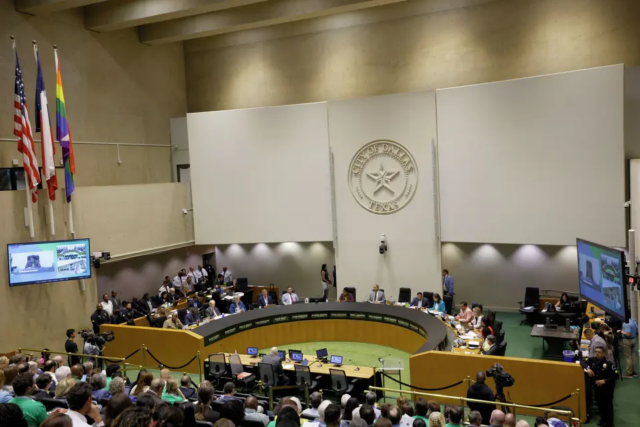
As Dallas moves deeper into budget season, pressure will grow on City Council members to relent on cuts proposed by City Manager Kimberly Bizor Tolbert. We urge them to remain committed to reducing the cost of government.
This early in the process, many council members are still guarded about whether they’ll support the city manager’s budget. But public meetings last week provided a glimpse of what’s coming: Some residents will oppose cuts in the particular areas they value.
Council members have to listen closely to resident feedback, but they also have to think about the city as a whole. The city manager’s recommended budget moves Dallas in the right direction. It recognizes Dallas’ new financial reality by eliminating positions and trimming back some programs.
However, council member Paul Ridley was right to point out that, while Dallas closed its budget gap without major service cuts in the coming fiscal year, it could face another budget crunch in the next as rising costs outpace revenue.
Now is the time to look for cuts, incremental and structural. Kicking the can down the road any further is sure to make things even harder in future budget years. For evidence, look at City Hall itself.
For decades, Dallas failed to invest in the building. Now taxpayers are facing unmanageable costs that will have to share space with every other resident priority in an overcrowded budget.
With the building’s problems out in the open, it would be hard to do nothing. Stay or leave, it’ll cost a lot. Hundreds of millions of dollars. Maybe more.
The City Hall question is one of many competing priorities that will make budgeting harder and harder every year: soaring pension obligations, a voter-approved police spending mandate and state restrictions on municipal taxation.
The best solution is to find as many opportunities as possible to eliminate non-core functions that are outside the city’s scope.
Here’s what shouldn’t be the default solution: raising the tax rate.
Voters already approved a record-breaking $6.2 billion bond this year for Dallas ISD that’s expected to add a little bit to residents’ tax bills. Dallas County commissioners voted 3-2 this month to raise the county rate by about a cent, our newsroom reported. That rate could grow by another 2.4 cents after the November election, when voters will decide whether to tax themselves even more to pay for homelessness services.
In 2024, Dallas voters gave the city permission to borrow $1.25 billion. Now, the city is asking voters for permission to borrow even more in a $443 million bond election in November. That includes money for a new police academy voters already supported in the last bond, but the $50 million they approved wasn’t enough.
At a budget briefing, council member Adam Bazaldua pointed to the fact that the city of Dallas only makes up about a third of residents’ tax bills. The rest is split between the county, school district, college and hospital.
As frustration mounts over the city’s compounding money problems, the council shouldn’t give in to the argument that small cuts to the budget aren’t worth it because they won’t make much difference. That attitude is like ignoring small leaks because the boat isn’t sinking yet. In fact, the council should be looking more deeply for programs and functions that the city has absorbed over years of mission creep.
The city has enacted tax rate reductions annually for about a decade — most of them small. Even if that doesn’t lower residents’ actual bill year over year, it eases pressure over time. Since the 2016 fiscal year, the city has lowered the tax rate by almost 10 cents, equal to about $220 million in revenue based on the current property tax base, according to city documents.
Dallas is facing a mountain of budgetary challenges, some of which it cannot control. But many of its problems are self-inflicted. The best answer is to lower costs, not to ask taxpayers for more.
Have thoughts about this? Send a letter to the editor using our letters form or email letters@dallasnews.com. Letters should be no more than 200 words and include the first and last name of the writer and city of residence.
The Dallas Morning News Editorial Board
Opinion Staff
Dallas Morning News editorials are written by the paper’s Editorial Board and serve as the voice and view of the paper. The board considers a broad range of topics and is overseen by the Editorial Page Editor.
This story, originally published in The Dallas Morning News, is reprinted as part of a collaborative partnership between The Dallas Morning News and Texas Metro News. The partnership seeks to boost coverage of Dallas’ communities of color, particularly in southern Dallas.