You are a sign of the times. Be aware. Be valued. Be steadfast.
By: Norma Adams-Wade
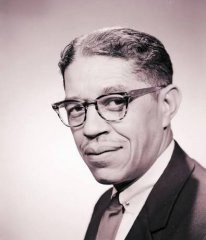
TV. First Black news correspondent
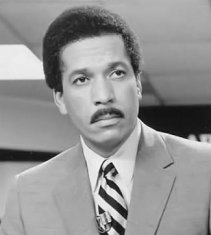
TV. First Black television
news anchor
Memories
Light the corners of my mind
Misty, water-colored memories
Of the way we were
Song: “The Way We Were”
Sung by: Barbra Streisand
Writers: Alan Bergman, Marilyn Bergman, Marvin Hamlisch
Greetings,
Faces on the morning and evening newscasts bring a flood of memories to my mind these days. I’m writing to tell you how those memories make me think of you young Black (I prefer Black over African American) male and female journalists.
Your faces grab my sight and prick my heart. You stand or sit so confidently in front of the cameras, telling us viewers what’s going on in the world. Even amid today’s chaotic political scenes, you young ones shine and speak boldly.
I personally remember when it was not this way at all — when there were no people of color, or women, in front of the cameras — only White males. Trailblazers of color on TV included singer Nat King Cole with his breakthrough variety show in 1956.
In media, Mal Goode broke through at ABC-TV in 1962 as the first Black TV news correspondent and Max Robinson at the same TV station in 1978 as the first Black news anchor. An interesting footnote is that as a novice TV reporter in 1959 in Portsmouth, Virginia, and under that station’s policy, Robinson had to read the news from behind a station logo screen to prevent viewers from seeing that he was Black.
Yes. I’ve been on the planet long enough to remember those times. That’s why some younger cohorts call me “Mama J” for Mama Journalism. But I digress.
These memories seem closely associated with current deplorable trends of erasing Black history and culture from institutions and eliminating Diversity Equity and Inclusion (DEI) programs. The trend also manifests visibly through dwindling numbers of journalists of color across media outlets. This dwindling number largely results from race-related and political issues; i.e., the exits of Joy Reid, MSNOW; Don Lemon, CNN; and Karen Attiah; The Washington Post.
My message to you: Wear your war clothes and maintain an exit strategy that should lead you to higher heights or equal status. Remember an old saying, “You were looking for a job when you found this one.”
I remind you, as a descendant of Motherland Africa, when you chose this field, you adopted the history of griots – storytellers and keeper of our people’s history. Yes. Your assignments may put you in different news categories; i.e., science, politics, law, or community. But inside your gut, I believe your instincts should connect with the souls of the people anywhere you cover, respecting their various cultures and expecting that they respect yours.
As one of the 44 founders of the National Association of Black Journalists in 1975, my instincts then were tuned to presenting the African American perspective. During those initial years, that perspective largely had been ignored. Now, over a half-century of existence, NABJ membership has grown from the 44 founders to more than 4,000 griots who help tell news of Black America and all cultures.
I remember the 1967 Kerner Commission report that explored wide-spread national racial unrest. After six months, the investigation ended with this much-quoted conclusion that: “Our nation is moving toward two societies, one black, one white – separate and unequal.”
The report suggested this remedy: “Expand coverage of the Negro community and of race problems through permanent assignment of reporters familiar with urban and racial affairs, and through establishment of more and better links with the Negro community.”
Here in Dallas, I was around when major media pursued my mentor, Julia Scott Reed, to become the first Black reporter at The Dallas Morning News in 1967. She exclusively covered the Black community through her regular column “The Open Line.”
She had been highly revered at the Black press and struggled with deciding to leave. She finally accepted the new job as a sacrifice of progress for our people. Her files are preserved at DeGolyer Library at Southern Methodist University in Dallas.
I followed her seven years later in 1974 as the first Black person in Dallas’ major media to cover news of all races citywide.
I mentioned your young Black faces that continuously catch my eye these days. At the same time, I’m recalling the very few trailblazing Black faces that kept me informed decades ago.
Also, the power of the pen and voice in print and radio media and the Black-owned press is a whole other story to appreciate, if we had the time and space.
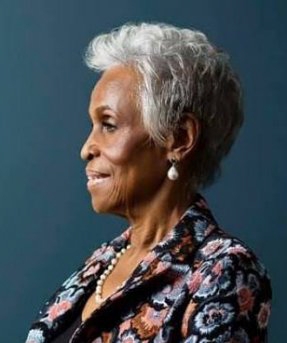
Washington Post. First Black female
reporter
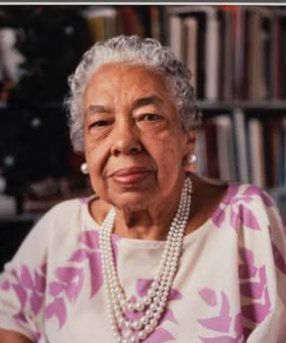
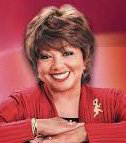
TV. First Black female to anchor
major network newscast.
We talked about Goode and Robinson, and I will not attempt to call various other rolls. But I will mention these few other trailblazer examples. You should look up their achievements: Carole Simpson, 1982 ABC News; Dorothy Butler Gilliam, 1961 The Washington Post; Alice Dunnigan, 1946 Chicago Defender representing Black-owned media in the White House press corps.
So, as I always do, I thank you, this younger generation; examples include Audie Cornish, CNN; Charles Divins, Spectrum News 1Texas; Dia Wall, WFAA-TV(Ch 8); Steven Dial, KDFW-TV/FOX 4 Dallas. Had you new generation journalists not picked up the torch that we founders lit a half-century ago, we would have been the tree falling in the forest that nobody heard the sound of.
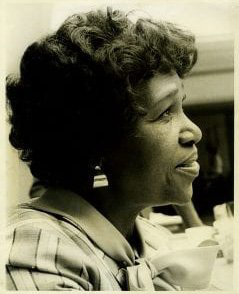
Dallas native Julia Scott Reed was born July 17, 1917, daughter of Johnnie and Nina McGee. She graduated from Booker T. Washington High School in Dallas, Texas, attended Wiley College, and graduated from Phillip’s Business School.
Early in her career Ms. Reed worked for the African-American newspaper The Dallas Express, where she often took her own photographs to accompany her articles. She eventually served as the paper’s city editor. For eight years she reported “News and Views” as a radio personality on Dallas radio station KNOK. In 1967, Ms. Reed became the first African-American writer to join the Dallas Morning News staff, and she also became the first African American woman to join the Dallas Press Club and Dallas Altrusa Club. Her column “The Open Line” featured articles on community issues, politics, religion, race relations, and other current events.
Ms. Reed received numerous accolades and awards such as the Dallas Business and Professional Women’s Club’s Extra Mile Award, the Maura Award, and Woman of the Year Award from both the Florence B. Brooks Club and the Zeta Phi Beta Sorority.
Dallasite Norma Adams-Wade is a Texas Metro News senior correspondent, The Dallas Morning News retired writer, and a National Association of Black Journalists founder.