Ford, current CEO of the Jacksonville Transportation Authority, has also led transit agencies in Atlanta and San Francisco. The choice divided DART’s board of directors.
BY: Lilly Kersh
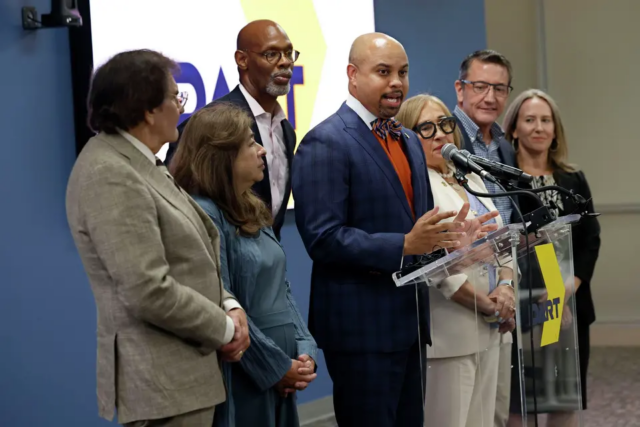
Dallas Area Rapid Transit’s board of directors announced Tuesday that Florida transportation leader Nathaniel Ford Sr. will serve as the agency’s next CEO, a hire that divided board members at a time when many are calling for unity.
The board voted 9-4 to approve Ford’s employment agreement after three hours of discussion, much of it behind closed doors. The board chose the current Jacksonville Transportation Authority CEO as the top pick from among three candidates last week but did not publicly name him until Tuesday’s meeting.
DART Board Chair Randall Bryant lauded Ford’s decades of experience leading transportation agencies in Florida, Atlanta and San Francisco and said Ford had a strong vision for DART.
“Now it’s time for us all to move forward together, not as 12 separate cities, not as some board members here and others there, not as Dallas versus suburbs or vice versa, but as one regional transit system serving one of the one of the fastest growing metropolitan areas in this country,” Bryant said in a press conference following the vote to approve Ford’s contract.
While Bryant was surrounded by several board members who voted in Ford’s favor while addressing reporters, some board members were missing — directors representing Plano, Irving, Carrollton and Garland were not present at the briefing and had voted against Ford’s contract.
Director Doug Hrbacek, who represents Irving and Carrollton, said more “red flags” had been uncovered about Ford and sought to postpone the vote.
Ford’s extensive past experience — nearly four decades at public transportation agencies across the country — has come under scrutiny for reports ranging from personal spending on agency credit cards in Atlanta to frequent domestic and international travel in Florida. In Jacksonville and San Francisco, he’s been one of the highest-paid city employees, according to local outlets.
“The evidence from Jacksonville raises serious questions about financial stewardship, and DART’s riders deserve a leader whose record is beyond reproach,” said paratransit advocate Madison McNair in a statement to the board. “Other finalists had strong records free of controversy… I’m not saying Mr. Ford is incapable. I’m saying the risk is too high.”
Other board members said they did not view questions around personal spending and travel in Ford’s past as barriers to his hiring.
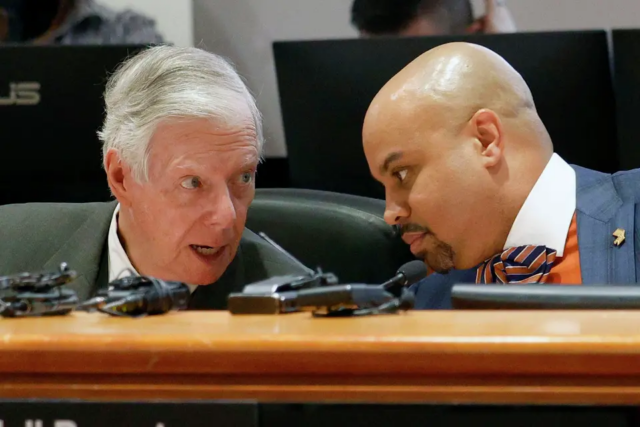
“These so-called red flags are not red flags. We’ve had a chance to go through every single one of them,” said Enrique MacGregor, who represents Cockrell Hill and Dallas on the DART board. “There’s a rational explanation for each of them, and none of them deserve to be called red flags.”
Bryant said travel at Ford’s past agency had been approved and his expenses were audited.
Ford plans to start at DART on Oct. 26 and his employment agreement is for three years, Bryant said. Ford was at DART headquarters Tuesday night but would not speak with reporters, officials said.
Bryant said the executive will take a pay cut to come to the agency, but would not release the amount of his base pay. He said it is similar to DART’s CEO’s past pay. Former CEO Nadine Lee, who stepped down in March, earned more than $400,000 annually in base pay. Jacksonville station WJAX-TV reported in 2023 Ford made at least $458,000 a year.
“Because this contract will pay DART’s CEO higher than the highest-paid executive at any of the 12 member cities,” said Plano DART board representative Anthony Ricciardelli, “I cannot support this contract, irrespective of the candidate.”
Director Michele Wong Krause said Ford has experience working “in a very conservative environment” and can understand the politics around transportation in Texas. He will bring innovation, she said.
“We need a different way of moving forward in a collaborative nature,” Wong Krause said. “We have got to heal the relationship that has been fractured over several years and pull together in one direction.”
Some of DART’s board members took issue with how Ford came under consideration.
Director M. Nathan Barbera, who represents Plano and Farmers Branch, said last week the board had been told Ford removed himself from consideration earlier in the search process. But at the will of a handful of board members leading up to the final interviews, Ford returned for consideration, he said. Barbera was not present at Tuesday’s board meeting.
Past DART board chair Gary Slagel said he and other past chairs requested Ford reenter the candidate pool when they heard Ford had resigned from the JTA in early July.
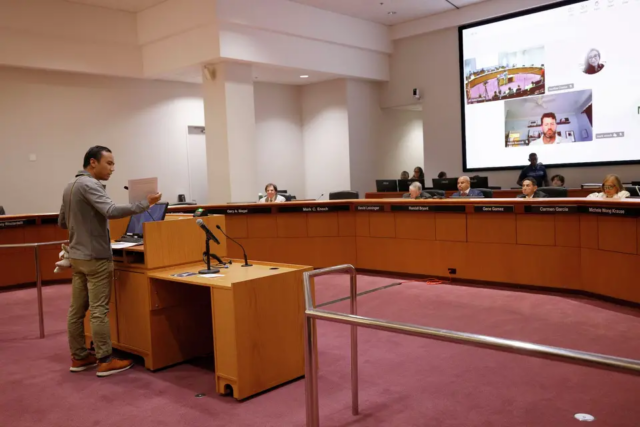
“Because Mr. Ford was a top candidate at the very beginning, we were disappointed when he withdrew,” Slagel said. “We felt it would be important to DART and to the region that since he resigned his position in Jacksonville, we at least asked him if he would be interested in visiting with us again.”
The tenured transit leader will inherit an agency rebuilding itself after nearly half of DART’s cities called elections to leave the agency earlier this year. Only the town of Highland Park followed through, leaving the network with one less member and a slate of proposed compromises to change its service, governance and funding.
Board members said building cohesion and trust will be paramount for DART’s next leader, who will be tasked with satisfying member cities with different priorities and unifying around desired reforms, including in the state Legislature.
While several of DART’s board members voted against Ford, citing his past tenures and a hiring process that felt rushed, a Jacksonville leader believes Dallas is scoring a great leader.
Jacksonville Mayor Donna Deegan called Ford “a visionary” and said she was disappointed he is leaving Florida but not surprised DART hired him.
“He is constantly trying to look to the next innovation and what can make us a leader,” she told The Dallas Morning News. “Many of the projects we’ve been able to fund here have been because of the relationships he’s established and the vision that he’s had.”
One of Ford’s “crowning achievements” in Jacksonville, according to his bio, is the city’s autonomous vehicle program. Some city leaders have questioned the success and future of the program, but Deegan said the JTA is looking at the future, not for immediate results — “people are very slow to adapt to new things,” she said.
Transit advocate Hexel Colorado raised concerns over JTA’s budget to the DART board and questioned the autonomous vehicle program. The Jacksonville Daily Record reported in May the JTA faces a projected $17.5 million budget deficit and is set to cut routes and raise fares.
“All of this money that he is known for raising, where does it go?” Colorado asked. “If he’s so skilled at raising money, how come he cannot prevent a deficit … I can’t imagine what kind of contract you can come up with that will prevent this.”
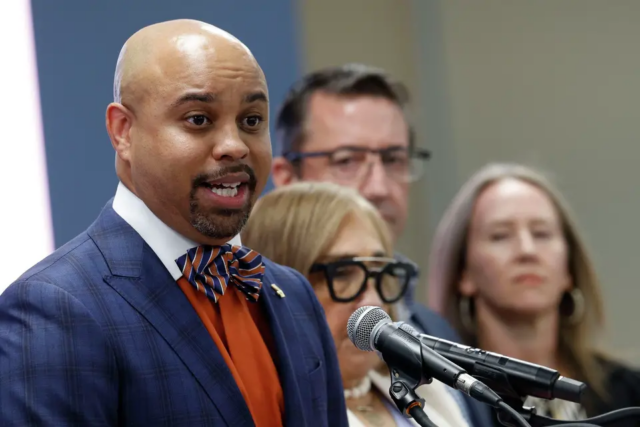
Bryant said Ford is well equipped to lead DART through its efforts to secure funding and reforms in the state Legislature. Ford worked “from the ground up,” Bryant said, starting as a train conductor in New York and going on to serve as CEO of several agencies, including the San Francisco Municipal Transportation Agency and the Metropolitan Atlanta Rapid Transit Authority.
While the hiring process revealed disagreements about DART’s future, Bryant said it’s nothing new for the agency.
“We have not had unity for quite some time,” Bryant said. “It’s up to [Ford] to ensure that his working relationship is strong. But the board has to work on greater links of trust and unity that go outside of Mr. Ford.”
David Leininger is serving as the agency’s interim CEO. Ford plans to join the agency this fall.
Lilly Kersh is a local government accountability reporter at The Dallas Morning News covering Collin County with a focus on McKinney and Plano. She graduated in 2024 from the University of Georgia with a degree in journalism and was born and raised in Atlanta, Georgia.
This story, originally published in The Dallas Morning News, is reprinted as part of a collaborative partnership between The Dallas Morning News and Texas Metro News. The partnership seeks to boost coverage of Dallas’ communities of color, particularly in southern Dallas.