Metrocare is in financial crisis with a $28.5M operating loss as of 2025, threatening services it provides to 50,000 youth and adults in Dallas County.
By Tracey McManus
Dallas Morning News
https://www.dallasnews.com/
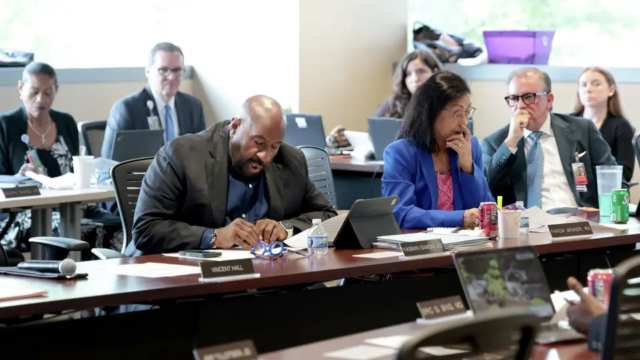
In an extraordinary attempt to save Dallas County’s largest public mental health provider from financial collapse, Parkland Health is planning to loan Metrocare up to $18 million so the nonprofit can continue providing services to 50,000 youth and adults each year.
Parkland’s Board of Managers voted unanimously Monday to begin negotiating an agreement with Metrocare to give emergency assistance with terms for strict oversight and transparency of its books.
Metrocare’s financial state has devolved to near insolvency this year as its costs and debt increased, a position worsened by inaccurate projections of cash coming in. It had a $28.5 million operating loss in 2025, three times larger than the year before, according to an audit report.
Dallas County Auditor Tim Hicks told county officials last month he believed Metrocare needed $10 million to $15 million immediately to survive. Parkland, the county’s public hospital system, would be providing the assistance to the nonprofit that has 1,200 employees and a $168 million budget.
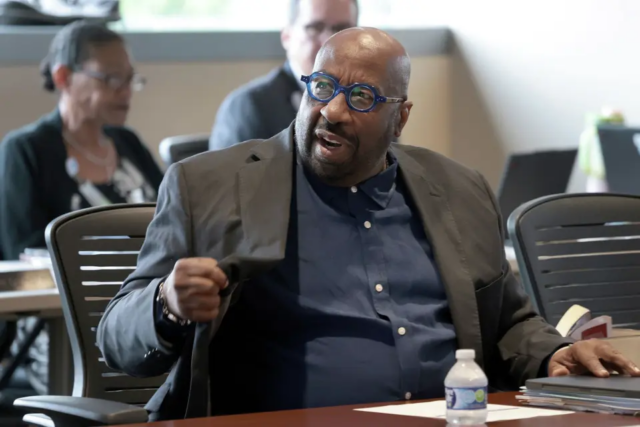
Vincent Hall, Parkland’s board chair, told The Dallas Morning News the proposed assistance doesn’t signal a merger of the two organizations but is meant to help Metrocare “turn it around themselves.” He said the emergency intervention is to prevent disaster from hitting community members and incarcerated people in the Dallas County jail who depend on Metrocare’s mental health services.
“Our real concern is that we don’t want to take a chance that so many of the people that Metrocare does serve will go without any services they really need,” Hall said. “If Metrocare was to fail, it would have a profound negative effect on not only Dallas County and Parkland but even on the jail.”
Continuing services
Metrocare’s Board of Trustees will meet Wednesday to discuss the proposed bailout. Spokesperson Kennedy Newbanks declined to comment on the arrangement while discussions are underway.
In a statement to The News, Newbanks attributed Metrocare’s financial decline to multiple factors that accumulated over time. Although the organization had consistent revenues for the past four years, auditors found its net position — the difference between its assets and liabilities — decreased in 2025 by $25 million after slightly increasing in 2024.
Newbanks said this immediate crisis emerged after revenue fell short of what the nonprofit had projected to receive in prior and current-year budgets. At the same time, salaries and employee benefits went up, according to the audit.
Newbanks said that gap “reduced visibility into our true financial position … and delayed corrective action.”
As the organization identified its financial challenges, Newbanks said leadership added financial controls while continuing to serve tens of thousands in the community.
“We are the safety net for our most vulnerable neighbors,” Newbanks said. “Our focus is on ensuring continuity of care and maintaining services for those who depend on us.”

Its liabilities ballooned with the September grand opening of the $92 million Mental Health & Disability Innovation Center, known as the Hillside Campus in southern Dallas. Metrocare borrowed about $50 million from Parkland to help fund the project, which has been paid back, according to the audit.
The crisis also comes amid turnover of Metrocare’s leadership. Metrocare’s former CEO of 13 years, John Burruss, retired in April, and Chief Strategy Officer Tate Ringer has since served as interim CEO.
Former CFO Lucas Wilson left the nonprofit in May. Newbanks declined to comment on personnel issues.
Financial plan
Hall said he had been looped into conversations about assisting Metrocare approximately five weeks ago when “somebody sounded the alarm” and leadership began working on a plan.
On June 23, the Dallas County Commissioners Court voted 4-1 to spend $600,000 to hire the Nashville-based restructuring firm Gibbons Advisors to provide interim financial leadership and financial services.
Newbanks said the firm will help strengthen cash-flow management, improve financial reporting and forecasting, assess internal processes, and help the board develop a long-term recovery plan.
County Judge Clay Lewis Jenkins described the firm’s hiring as a way to help prevent residents from losing crucial services they depend on: “A lot of those people are on a razor’s edge of dangerous decompensation. People with a history of suicide attempts, adults that are severely developmentally disabled that would lose services that are a lifeline to them.”
Commissioner John Wiley Price cast the lone no vote, saying the injection of $600,000 for an interim financial firm was “a waste of taxpayer’s money” and that this crisis should not have been a surprise to Metrocare.
Price said financial trouble was spelled out in the last three or four audits before becoming an emergency last year, and the organization has long overstated its financial position and needs a complete overhaul.
“Unless there is a reorganization and a parceling of services from Metrocare, all we’re doing is punting so that somebody else can pick up the tab,” Price said.
The resolution Parkland approved Monday states the $18 million loan will be spent on payroll, benefits, vendor payments and costs to implement a financial and operational turnaround plan.
It requires Metrocare to provide Parkland with access to all operational and financial records to conduct a comprehensive evaluation of the organization. Parkland is requiring Metrocare to continue providing services to Dallas County residents and outlines terms for the nonprofit to reimburse Parkland in the event of credit default.
The board on Monday did not vote on an interest rate or payback period for the loan, but the resolution requires Metrocare to repay Parkland any emergency assistance “on terms that will afford Metrocare the opportunity to achieve financial and operational stability.”
The resolution calls for Parkland to assume long-term oversight without taking full control, Hall said. That arrangement may include Parkland’s right to control major financial decisions.
Tracey McManus joined The Dallas Morning News in October 2024 and covers Dallas County government. She previously spent nine years as a reporter for the Tampa Bay Times in Florida and five years as a reporter for The Augusta Chronicle in Georgia. Tracey is a graduate of the University of Florida with degrees in journalism and Spanish.
This story, originally published in The Dallas Morning News, is reprinted as part of a collaborative partnership between The Dallas Morning News and Texas Metro News. The partnership seeks to boost coverage of Dallas’ communities of color, particularly in southern Dallas.