The historian who built the Smithsonian’s National Museum of African American History now faces perhaps the greatest challenge of his career: protecting the independence of America’s largest museum system.
By Bonita
The Voice
https://www.communityvoiceks.com/
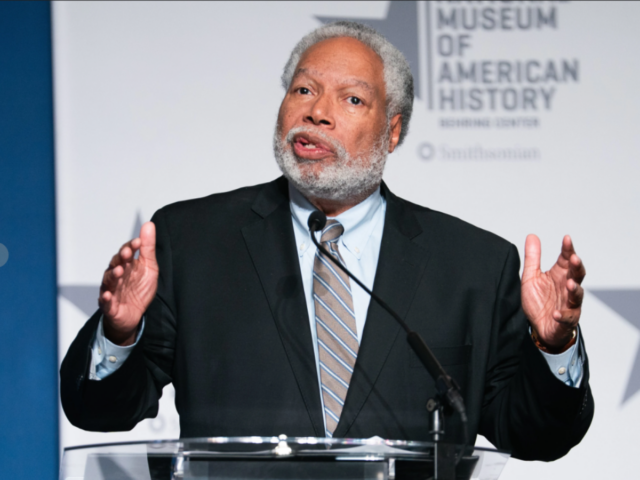
Lonnie G. Bunch III, Secretary of the Smithsonian Institution, oversees the nation’s 21 Smithsonian museums, the National Zoo and one of the world’s largest collections of historical and scientific artifacts. Bunch, the founding director of the National Museum of African American History and Culture, is now at the center of a growing debate over how American history should be presented.
Most Americans know the Smithsonian through its famous museums. Few realize they are all led by Lonnie G. Bunch III, one of the nation’s most respected museum leaders, who now finds himself fighting to preserve the independence of the world’s largest museum system as it faces mounting pressure from the Trump administration.
As Smithsonian secretary, Bunch oversees the institution’s 21 museums, the National Zoo, 14 education and research centers, and more than 150 million artifacts, works of art and scientific specimens, making it the world’s largest museum, education and research system.
✦ If you like this story, please consider donating to support The Voice ✦
Since returning to office, President Donald Trump has targeted the Smithsonian as part of his campaign against what he calls “woke” interpretations of American history. Through executive orders, exhibit reviews and public criticism, his administration has argued the museums spend too much time highlighting slavery, racism and other painful chapters of the nation’s past while giving too little attention to America’s achievements.
For months, Bunch largely avoided a public fight, insisting only that the Smithsonian’s work be guided by scholarship rather than politics.
That changed after the administration released a 162-page report on July 4 accusing the Smithsonian—particularly the National Museum of American History—of promoting political activism instead of patriotism.
Within days, Bunch fired back in a memo to Smithsonian employees, calling the report “not a fair characterization” of the museum’s work and reaffirming the institution’s commitment to “scholarship, nonpartisanship, independence, accuracy and integrity.”
As the administration’s campaign against the Smithsonian intensifies, a larger question hangs over one of America’s most respected museum leaders: How much longer can Lonnie Bunch protect the Smithsonian’s independence—and hold on to the job he has spent a lifetime preparing for?
A Lifetime Preparing for This Moment
Bunch’s résumé explains why he was chosen to lead the Smithsonian at one of the most consequential moments in its history.
After earning degrees in American history, the Newark, New Jersey, native built a career spanning nearly five decades. He held leadership positions at the Smithsonian, helped establish the California African American Museum and transformed Chicago’s historical society into today’s Chicago History Museum, earning a reputation as one of the nation’s premier museum leaders. He also helped preserve landmark Civil Rights artifacts, including the Greensboro Woolworth lunch counter where the 1960 sit-in movement began.
By the time Congress created the National Museum of African American History and Culture in 2005, Bunch had already established himself as one of America’s leading museum administrators.
Building a National Treasure
When Bunch accepted the assignment, the museum existed largely on paper. Over the next decade, he raised hundreds of millions of dollars, assembled thousands of artifacts and built what became one of the Smithsonian’s most visited museums. Opening on the National Mall in 2016, it earned international acclaim for presenting African American history as an essential part of the American story.

Three years later, Bunch became the first African American to serve as Secretary of the Smithsonian Institution, placing him in charge of the entire Smithsonian system.
Why the Smithsonian Is Different
The Smithsonian has largely avoided the sweeping exhibit changes seen elsewhere in the federal museum system.
Under President Trump’s executive orders, the National Park Service has revised or removed material at more than 50 exhibits across 37 historic sites, prompting lawsuits from historians and preservation groups who argue the administration is rewriting history. While a federal judge initially ordered some exhibits restored, an appeals court has allowed the changes to remain in place while the case proceeds.
The Smithsonian has taken a different path. Although a handful of exhibit labels have been revised and some displays reviewed, its museums remain largely intact.
Unlike the National Park Service, the Smithsonian is not a traditional executive branch agency. While roughly two-thirds of its funding comes from Congress, it is governed by an independent Board of Regents that includes the Vice President, the Chief Justice of the United States, members of Congress and citizen regents. That governance structure gives the institution greater independence from direct presidential control than most federal agencies.
That protection, however, is not absolute. The administration’s July 4 report urged Congress and Smithsonian leadership to make significant changes to how American history is presented, raising new questions about how long the institution can continue resisting political pressure.
How Much Longer Can Lonnie Bunch Hold on?
No one can answer that.
But after spending a lifetime building museums, preserving history and giving voice to people too often left out of America’s story, Bunch now faces perhaps the greatest challenge of his career—not creating a great institution, but protecting one.

Topeka Native Led Museum Into Political Storm
The Smithsonian’s National Museum of African American History and Culture became one of the earliest targets of President Donald Trump’s campaign to reshape how American history is presented.
The museum was led by Topeka native Kevin Young, who succeeded founding director Lonnie Bunch in 2021. In March 2025, just two weeks before Trump issued his executive order targeting what he called “divisive” historical narratives at the Smithsonian, Young was placed on indefinite leave and later stepped down. The Smithsonian has never publicly explained his departure, citing personnel matters.
The administration specifically criticized the museum’s former “Talking About Race” online educational resource, even though the material at the center of the controversy had already been revised years earlier.
Despite repeated criticism from the White House, the museum’s permanent exhibits have remained largely unchanged. Instead, the administration’s focus has shifted to Smithsonian Secretary Lonnie Bunch and the broader direction of the entire Smithsonian system, where the larger battle over how America’s history should be told continues.
Bonita, Editor-in-ChiefEditor-In-Chief
Since 1996, Bonita has served as as Editor-in-Chief of The Community Voice newspaper. As the owner, she has guided the Wichita-based publication’s growth in reach across the state of Kansas and into… More by Bonita, Editor-in-Chief