By Chelsea Lenora Small
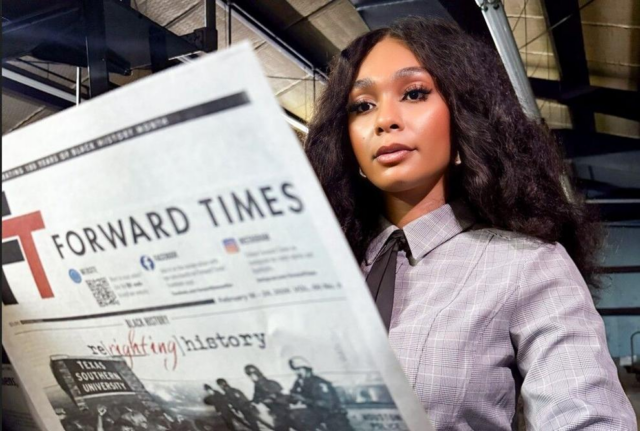
Forward Times
https://forwardtimes.com/
On a random Friday afternoon at the end of March, Meta gave me 30 days to say goodbye to more than a decade of my life.
I was standing in my kitchen switching between my personal and business Instagram accounts, something I had done countless times before, when a message appeared on my screen informing me that my account had been disabled for fraud and scheduled for permanent deletion.
There was just one problem.
I hadn’t done anything wrong.
The notice was clear: my account would be permanently deleted in 30 days. There was no meaningful explanation, no appeal process, and no way to speak to a human being.
My first thought was that it had to be some sort of mistake affecting Instagram.
Then I logged into Facebook.
Gone.
That’s when I realized this wasn’t an Instagram problem. It was a Meta problem.
Because Facebook, Instagram, and Threads are interconnected, whatever had happened to one account had spread across all of them. Within minutes, nearly two decades of photos, memories, conversations, connections, and content seemed to have vanished into the digital ether.
I immediately went into problem-solving mode.
I logged in from different devices. Different browsers. Different networks. I opened private browsing windows. I even tried using other devices on entirely different IP addresses. Every workaround I found online led me to believe there had to be a way to challenge the decision.
There wasn’t.
No matter what I tried, I kept running into the same roadblock.
As the reality of the situation settled in, I realized I wasn’t simply losing access to a social media account.
I was potentially losing years of my life.
My Facebook account wasn’t just a profile. It was high school. College. Family milestones. Photos of loved ones. Posts that captured moments I had long forgotten until Facebook’s memory feature resurfaced them years later.
My Instagram account held evidence of nearly every version of myself I’ve been over the last decade. Nearly 60,000 followers had joined me through different chapters of life. Some followed me when my life revolved around studio sessions, wardrobe racks, production shoots, and the constant anticipation of the next musical release. Others arrived when I met my husband and occasionally shared pieces of our love story. Some arrived for the endless stream of photos and videos of Zeus, our furry child, whose quality of life currently exceeds that of many working adults. Others followed as I stepped into leadership at Forward Times and shared the responsibility, privilege, and occasional chaos that comes with helping steward a third-generation media company.
Then there was Threads, which had quietly become my digital journal. A place for observations, random thoughts, and admittedly a few intrusive thoughts that probably didn’t need to be shared with the internet.
Suddenly, all of it disappeared.
I would love to tell you that I handled the situation with grace and perspective.
Sometimes I did.
At various points, I convinced myself this was all part of a larger plan. Maybe I needed to quiet the noise. Maybe I had become too dependent on social media. Maybe this was the universe forcing me to focus on the things that actually mattered.
Other times, I was fully spiraling.
For two days, I barely ate. Every time I thought about a decade’s worth of photos, videos, conversations, and memories disappearing, my stomach dropped. Some moments felt oddly peaceful. Other moments had me convinced that my commitment to truth-telling had finally made me the target of an elaborate conspiracy that existed entirely in my own imagination.
What made it worse was realizing how much of my life existed on platforms I do not own.
I wasn’t panicking because I couldn’t post. I was panicking because I suddenly realized how much of my life was being stored in a place I didn’t control.
The feeling was difficult to explain. The closest comparison I can offer is losing your wallet. Not because of the wallet itself, but because of everything tied to it: your identification, your access, proof of who you are.
Social media has quietly become much the same. In today’s world, it’s often a business card, résumé, portfolio, networking tool, and public identity rolled into one.
One of the first questions people ask when they meet you today is, “What’s your Instagram?” They’re not simply asking for a social media handle. They’re asking who you are, what you do, and how you move through the world.
Without access to those platforms, I felt disconnected in ways I hadn’t anticipated. I wasn’t interested in creating new accounts. I didn’t have the energy to start over. All I could think about was the possibility that people I had connected with throughout various seasons of my life might simply disappear.
And perhaps that’s not surprising.
For years, many of us have been living increasingly digital lives. The pandemic accelerated a trend that was already underway. We learned how to work remotely, celebrate birthdays through screens, attend meetings virtually, and maintain relationships through apps and notifications. Social distancing was necessary, but I sometimes wonder whether we ever fully returned from it.
Today, many of us know what our friends posted before we know how they’re actually doing.
We follow one another closely while simultaneously feeling more disconnected than ever.
Somewhere along the way, our phones became both a bridge and a barrier.
Thankfully, a Meta executive stepped in on my behalf. She didn’t know me personally. We were connected only through a friend of a friend of my husband’s. Yet for more than three weeks, she followed up on my case, checked statuses, and advocated internally when every other avenue seemed to lead nowhere.
What stayed with me wasn’t just that she helped. It was that she had no obligation to. In the middle of a demanding career and a life of her own, she chose to spend time helping someone she barely knew.
Then, on day 29 of a 30-day countdown to permanent deletion, everything came back.
There was no notification, no explanation, and no apology. I happened to be checking something on the Forward Times Instagram page when I noticed my profile photo appear in the list of followers. For a second, I thought I was imagining it.
I wasn’t.
I nearly dropped my phone.
I was relieved, grateful, and excited. But after the initial excitement faded, something unexpected happened: having access again felt strangely foreign.
By that point, I had spent weeks living without those platforms. Instead of scrolling, I found myself doing something I hadn’t done in years. I started looking for memories elsewhere.
I developed rolls of film that had been sitting untouched in drawers. I dug through old photographs and uncovered moments I didn’t even remember capturing. Some made me laugh. Some made me emotional. Some reminded me of people and experiences I hadn’t thought about in years.
And somewhere during that process, I realized something that has stayed with me ever since: we have confused documenting our lives with preserving them.
The two are not the same.
Posting a photo is not the same as preserving it. Uploading a video is not the same as protecting it. Building a following is not the same as owning your community.
At any moment, a technical error, policy change, hacked account, or algorithmic mistake can place years of memories beyond your reach.
That realization sent me searching through another archive: Forward Times.
For 66 years, this newspaper has documented the lives of Black Houstonians. Not just the major headlines, but the moments that make up a life. Baby showers. Baptisms. School graduations. Church anniversaries. Family reunions. Community celebrations. Small business openings. Garage sales. The moments that some people might dismiss as ordinary but that mean everything to the people who lived them.
Today, the Forward Times archives are preserved at the African American Library at the Gregory School. Every time someone calls looking for a photograph of a parent, an article featuring a relative, or proof that a particular moment happened decades ago, I’m reminded of how important that work is.
Those memories survived because someone believed they were worth preserving.
Long before cloud storage, social media platforms, and digital archives, many of our families were preserving history in the pages of family Bibles. Births, marriages, deaths, family trees, and milestones were carefully recorded by hand and passed from one generation to the next. Our ancestors understood that memories needed a home, and they didn’t leave that responsibility to chance.
In many ways, Black media has always been about more than news. It has been about memory, documenting lives that others ignored, and ensuring future generations know we were here, what we built, what we celebrated, and who we loved.
This is not an argument against social media. I use it. I enjoy it. By the time you read this, I’ll probably have posted or reposted something online. But I am asking all of us to think differently about preservation.
Print the photos. Back up the videos. Save the documents. Record the stories. Attend the reunion. Show up at the community event. Support the institutions preserving our history.
Because somewhere between losing my accounts and getting them back, I learned a lesson I wasn’t expecting: social media may help us document our lives, but it was never designed to preserve them.
And if the algorithm decides you’re gone tomorrow, your memories shouldn’t disappear with it.