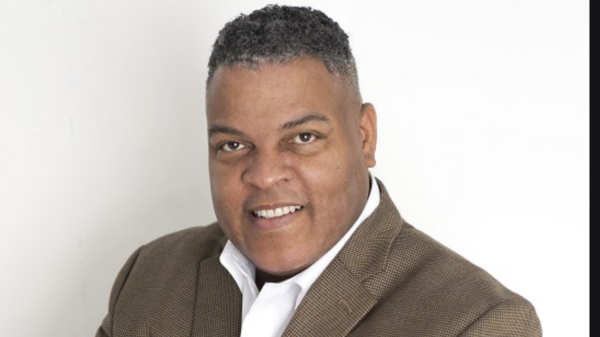
By Dr. Anthony O. Kellum
Pittsburgh Courier
https://newpittsburghcourier.com/
For generations, Black Americans have understood something fundamental about land that the broader culture often chooses to forget—property is not merely shelter. Property is leverage. Property is permanence. Property is political power with a deed attached to it. And yet, despite that truth being embedded deeply in the history of Black America, from the farmers who fought to keep their acreage after Reconstruction to the middle-class families who migrated north and bought brick homes in Detroit, Chicago, Baltimore, and Atlanta, there remains a troubling disconnect between how many Black Americans discuss wealth and how wealth is actually built in America. Too often, we approach income as success and overlook ownership as strategy.
A six-figure salary may create comfort, but property creates staying power. A prestigious title may signal achievement, but real estate creates transferable wealth. And in America, transferable wealth, not income, is what shapes family trajectories, educational opportunity, political influence, and intergenerational stability. This is not ideology, it is structure.
The uncomfortable truth is that many Black professionals have mastered the language of professional advancement while remaining underexposed to the mechanics of capital formation. We know how to earn. We have become exceptional at navigating corporate America, academia, medicine, law, government, athletics, entertainment, and entrepreneurship. But earning alone, even at high levels, rarely closes the racial wealth gap because income is transactional while ownership compounds. That distinction matters more than ever.

The wealthiest communities in America are not wealthy because they simply make more money. They are wealthy because they own appreciating assets. They own land in strategic corridors. They own rental property. They own commercial buildings. They own apartment complexes. They own industrial parks. They own shares in companies. They understand depreciation schedules, leverage, tax advantages, refinancing, and equity extraction. Their money works while they sleep because ownership is structured to produce cash flow and appreciation simultaneously. Black America must increasingly think this way—not emotionally, but strategically.
Homeownership is often dismissed today as an outdated aspiration, especially among younger professionals who view mobility and flexibility as modern virtues. But this framing misunderstands what a home actually represents in the American economic system. A home is not simply a place to live. It is often the first balance sheet a family ever owns. It is forced savings. It is leverage against inflation. It is a hedge against rising rents. It is collateral for future investment. It is frequently the single largest appreciating asset a middle-class family will ever possess, and importantly ownership changes psychology.
Renters think month to month because renting is transactional. Owners think decade to decade because ownership forces long-term thinking. Communities stabilize when people own. Schools improve when people own. Crime often declines when people own. Political engagement rises when people own because ownership creates attachment and accountability. Property turns residents into stakeholders.
This is why the conversation around Black homeownership cannot merely be framed as symbolic progress. It must be framed as economic infrastructure. For decades, many Black neighborhoods suffered from deliberate disinvestment, predatory lending, redlining, undervaluation, highway placement, and appraisal disparities that stripped billions of dollars in potential equity from Black families. These realities are well documented and still reverberate today. But acknowledging systemic barriers and developing a sophisticated ownership mindset are not mutually exclusive; in fact, they must co-exist. A wealth mindset understands systems without becoming psychologically imprisoned by them.
There is a profound difference between recognizing structural inequities and internalizing powerlessness. One produces strategy, the other produces stagnation. What Black America now requires is not simply more consumers with higher incomes, but more owners with long-term vision.
We need more Black families purchasing duplexes instead of only luxury vehicles. More professionals acquiring mixed-use commercial buildings before chasing image-driven consumption. More parents teaching children about equity before teaching them about status. More conversations at dinner tables about debt-to-income ratios, tax assessments, zoning, interest rates, cash flow, estate planning, and land acquisition. Because while culture often celebrates visible wealth, actual wealth is frequently quiet.
The investor who owns 12 rental units may not look richer than the executive driving a leased “sedan,” but over 20 years, one is accumulating appreciating assets while the other is often accumulating depreciating liabilities. One is building equity; the other is maintaining appearance.
This distinction is especially critical within the Black community, where social pressure to display success can become economically corrosive. In many affluent Black circles, visible achievement is rewarded culturally faster than invisible ownership. Yet historically, every enduring ethnic and economic community in America, from immigrant merchant families to old-money suburbs, understood that ownership must come before optics—land first, lifestyle second, and there is another dimension often overlooked—community control.
When Black people do not own property in their own communities, we lose more than wealth. We lose influence over development, business ecosystems, school boundaries, political priorities, and neighborhood identity. Gentrification is not merely about demographics; it is about ownership transfer. The communities that determine the future of a neighborhood are usually the communities that own the underlying assets. Ownership determines who benefits from appreciation. That is why buying property should not be viewed solely through an individual lens; it is also civic participation; it is community preservation; it is economic voting power.
The challenge ahead is cultural as much as financial. We must elevate the language of ownership inside Black spaces with the same seriousness that we elevate conversations around education, representation, and professional advancement. Degrees matter. Representation matters. Corporate success matters. But ownership translates achievement into permanence, and permanence matters because history has shown how quickly progress can evaporate when it is not anchored to assets. The future Black wealth gap will not primarily be determined by who earns the highest salaries. It will be determined by who acquires appreciating assets in strategic markets, who passes those assets down effectively, and who understands that real estate is not merely about houses, it is about control, leverage, inheritance, and choices.
This is not about romanticizing property ownership or pretending every real estate decision is wise. Markets fluctuate, bad investments exist, predatory actors remain real. But despite every market cycle, one principle has remained remarkably consistent throughout American history—ownership changes outcomes.
The Black families who will shape the next generation economically will likely not be those who merely participated in the economy as consumers. They will be those who positioned themselves as owners within it. Because ultimately, property is not just power in the financial sense. It is power in the civic sense, the psychological sense, and the generational sense, and perhaps that is the deeper lesson Black America must fully reclaim. Ownership is not simply about acquiring wealth, it is about securing agency.
(Dr. Anthony O. Kellum—CEO of Kellum Mortgage, LLC
Homeownership Advocate, Speaker, Author
NMLS # 1267030 NMLS #1567030
O: 313-263-6388 W: www.KelluMortgage.com.)
Property is Power! is a movement to promote home and community ownership. Studies indicate homeownership leads to higher graduation rates, family wealth, and community involvement.