PRAIRIE VIEW, Texas – This wasn’t a story we set out to tell.
It started with a typical visit to the Prairie View A&M University Meat Science Center for Innovation; the kind of stop you make once a week on Fridays, between 1 p.m. and 5 p.m., to pick up the best cuts of steak, fresh jerky, pork chops, and so much more – a grill master’s heaven. We pick up what we need and keep it moving.
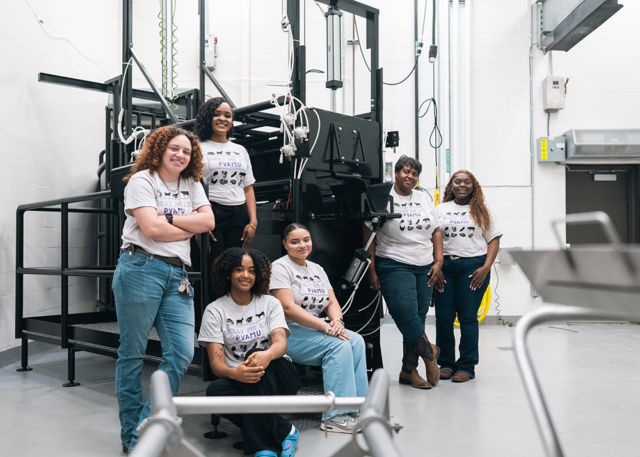
Photo Credits: Nicholas Hunt, Prairie View A&M University
But something made us pause. Behind the counter was an all-female team working with a level of focus and confidence that immediately stood out. It was unexpected, and it stayed with us.
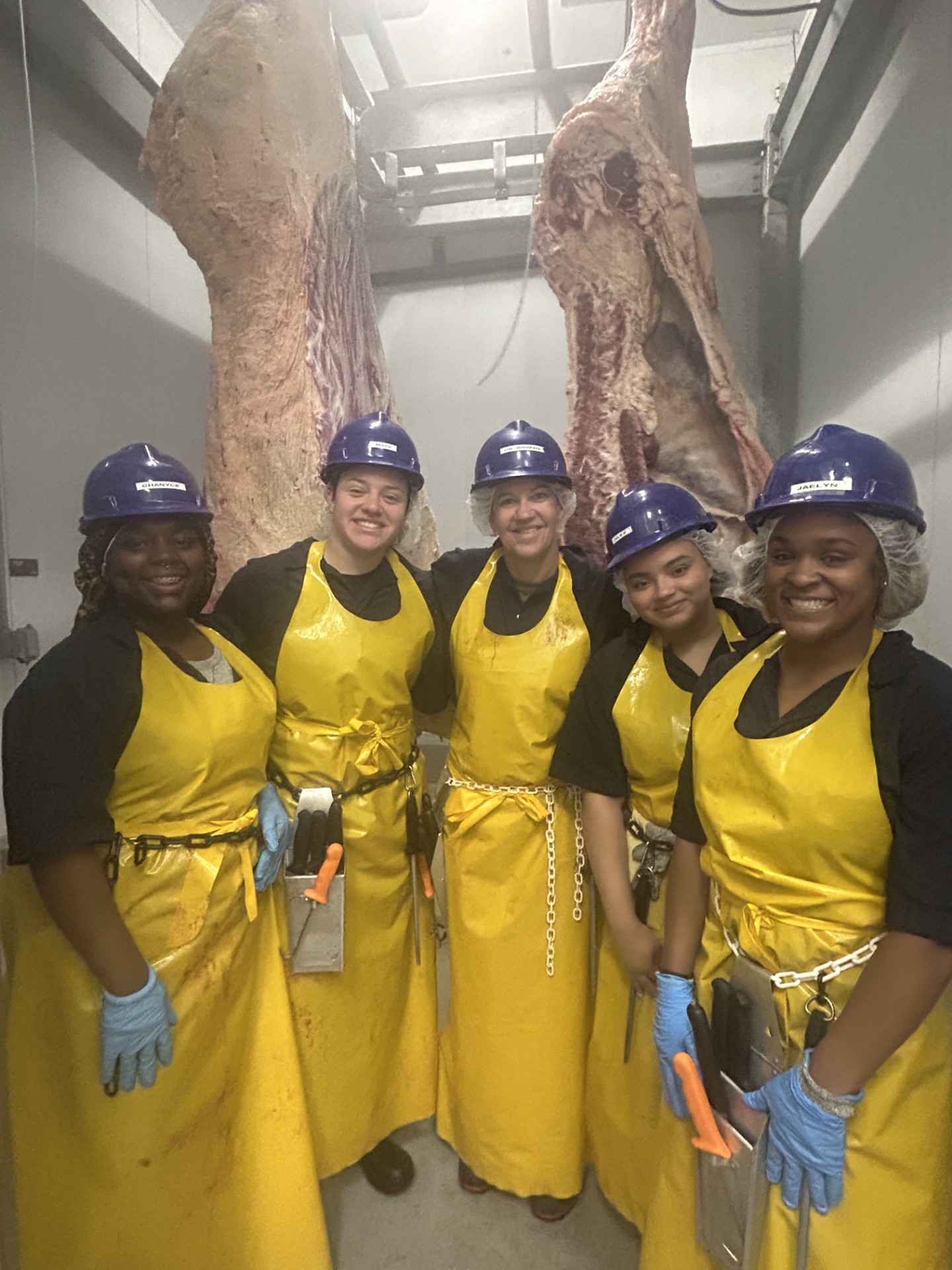
So, we made plans to return, this time with additional members of our team, to take a closer look. Spending time inside the facility made one thing clear. This was its own unique culture and energy, nestled in the middle of the University’s over 770-acre farm. A group of young women who had found their place in a space that demands both discipline and skill.
They call themselves the Cleaver Divas. As soon as I heard the nickname, I knew that had to be the title of this story. The designation encompasses what each of these young women brings to the narrative.
Senior Jaelyn Neal describes it as something bigger than simply showing up.
“It’s very empowering to come to work every day and see other women who are looking to get the same degree as I am,” she said. “We’re all chasing our own individual dreams, but still doing it collectively under one umbrella.”
“I love it,” Senior Dejanae Wiliams said. “It shows that women, no matter who we are, can do anything. We’re all different. Tall, short, different personalities, different backgrounds, but we come together and make it work. We have fun, we support each other, and it’s empowering. It’s shown me just how strong I am as a Black woman and as a woman in general.”
Junior Chanyce Johnson speaks candidly about what this experience means to her. “Honestly, working here has been a highlight of my whole entire college,” she said. “I’m smiling. I’m wanting to come to work. I’m rushing from class just to get here.”
Imagine that? Rushing to get to work? That mood speaks volumes.
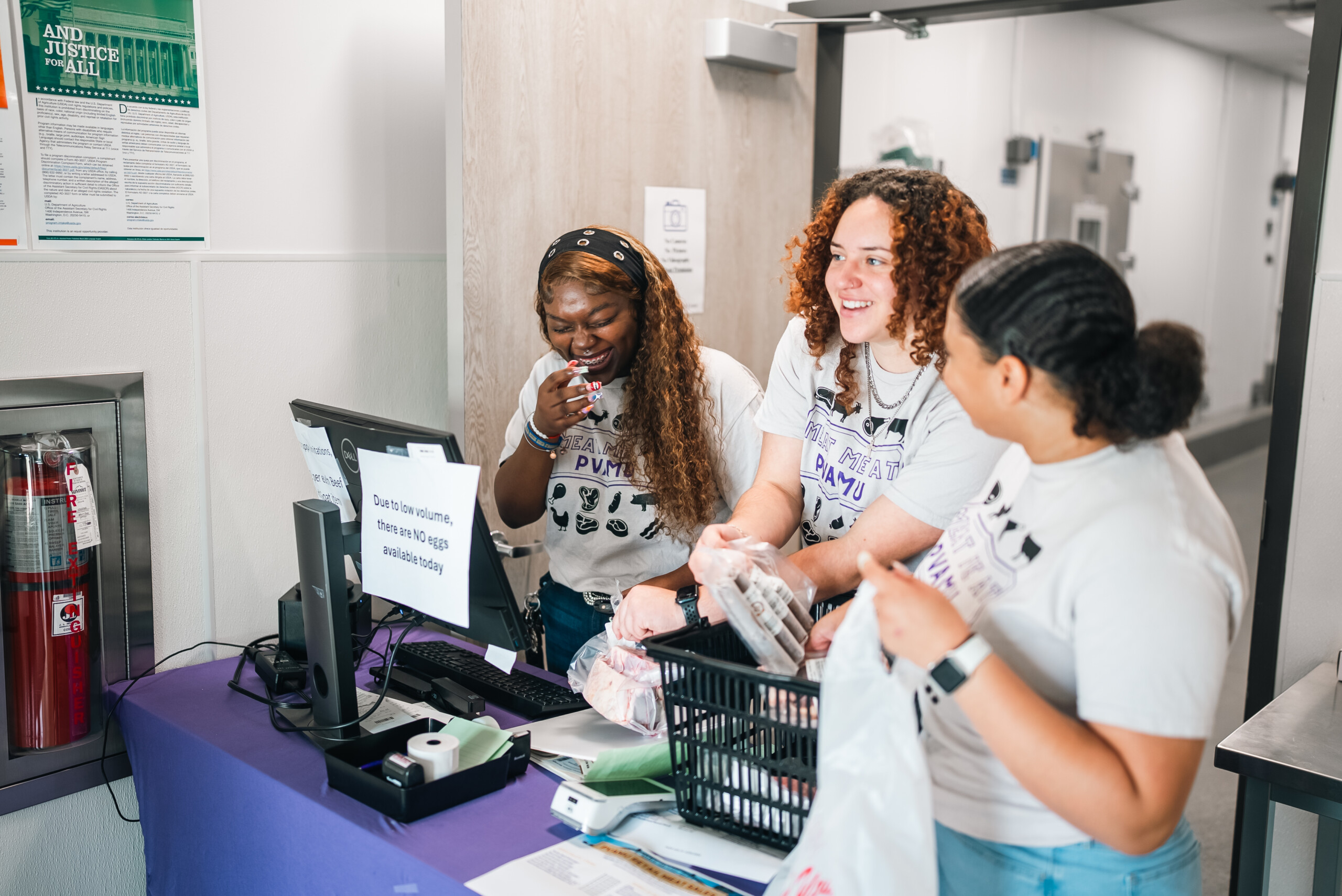
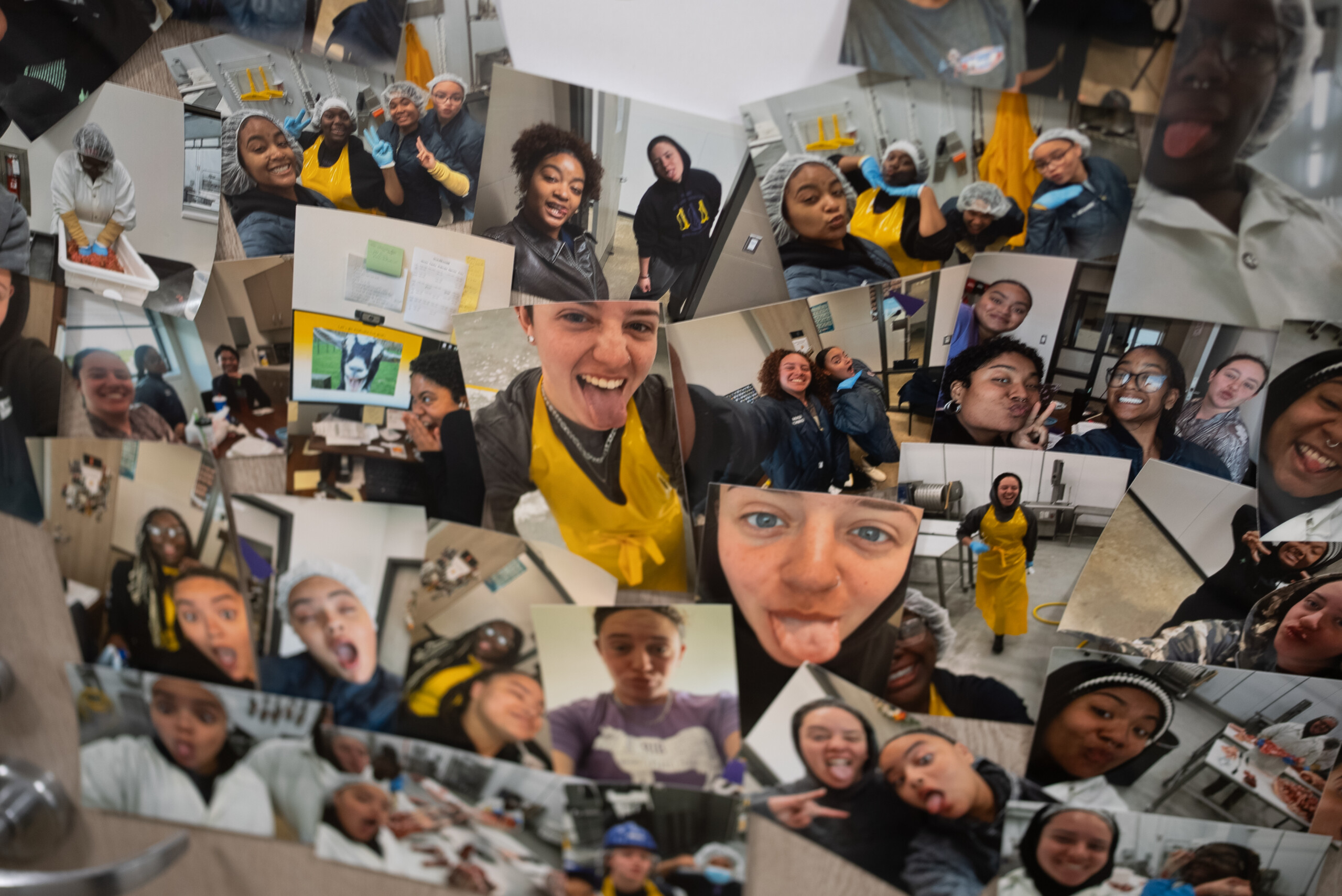
Chanyce also knows the assumptions and dismisses them just as quickly. “People think it’s going to be drama, but it’s not. We’re really close. If it wasn’t for this job, we probably would have never met each other. But we connected, and we bonded just doing our work.”
Senior Alexandria McQueen offers a more reflective view.
“We’re co-workers, but we’re also best friends,” she said. “We support each other, and we call Dr. Kinman our work mom because we know we can go to her about anything.”
More on Dr. Kinman in a bit….
That sense of trust Alexandria referenced shows up in the way they move through the work together, especially when the work itself becomes demanding. What becomes clear with time inside the Meat Science Center is that it is not simply a classroom. It is a working environment designed to mirror the expectations of the industry.
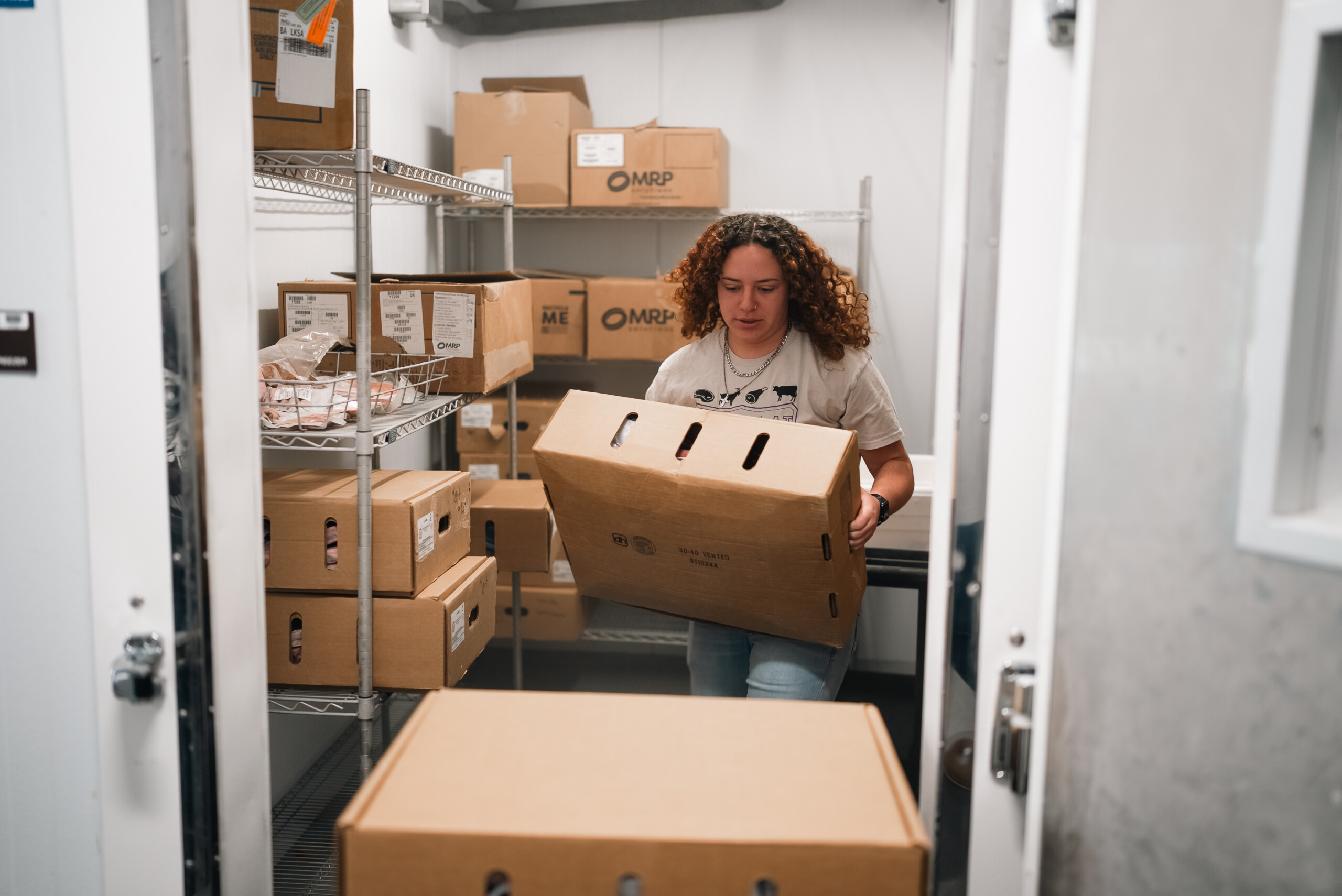
The Meat Science Center for Innovation serves as the primary venue for instruction, extension workshops, and research experiences. Students gain hands-on exposure to quality assurance and food safety, carcass harvesting and fabrication, and the development of processed meat products such as sausage, bratwurst, and jerky. In-class demonstrations introduce grading techniques and quality assessment, giving students a clear understanding of how decisions made during processing affect product quality and market value.
This is where the program separates itself.
Students are not simply learning about the industry. They are being prepared to enter it. The experience is so profound that Sophomore Madi Monroy is baffled by the fact that some students, even those in the agriculture programs, are unaware that the meat science center and the farm even exist! “This should be your home,” she exclaims, wide-eyed, her excitement palpable.
Assistant Professor Tamra Tolen, a strong protective presence throughout our interview, watched proudly as the students described a typical day at the MSCI. When we asked about the process of preparing the meat, she responded with authority, so we did not lose sight of the importance of that mission.
Respect comes first. Students are trained in humane handling practices ahead of slaughter and are expected to adhere to strict state laws and guidelines set by the United States Department of Agriculture. Sanitation, inspection readiness, and controlled access are all part of maintaining a safe and compliant environment.
“We take good care of the animals,” she said. “That is a standard we do not compromise.”
The work demands attention to detail at every level. Students are responsible for maintaining equipment, including breaking down machinery such as grinders down to the screws and reassembling them correctly. It is intricate work that requires patience and discipline, and it is the kind of experience that follows them long after they leave.
“If you don’t like cleaning, you’re in the wrong profession,” Tolen said.
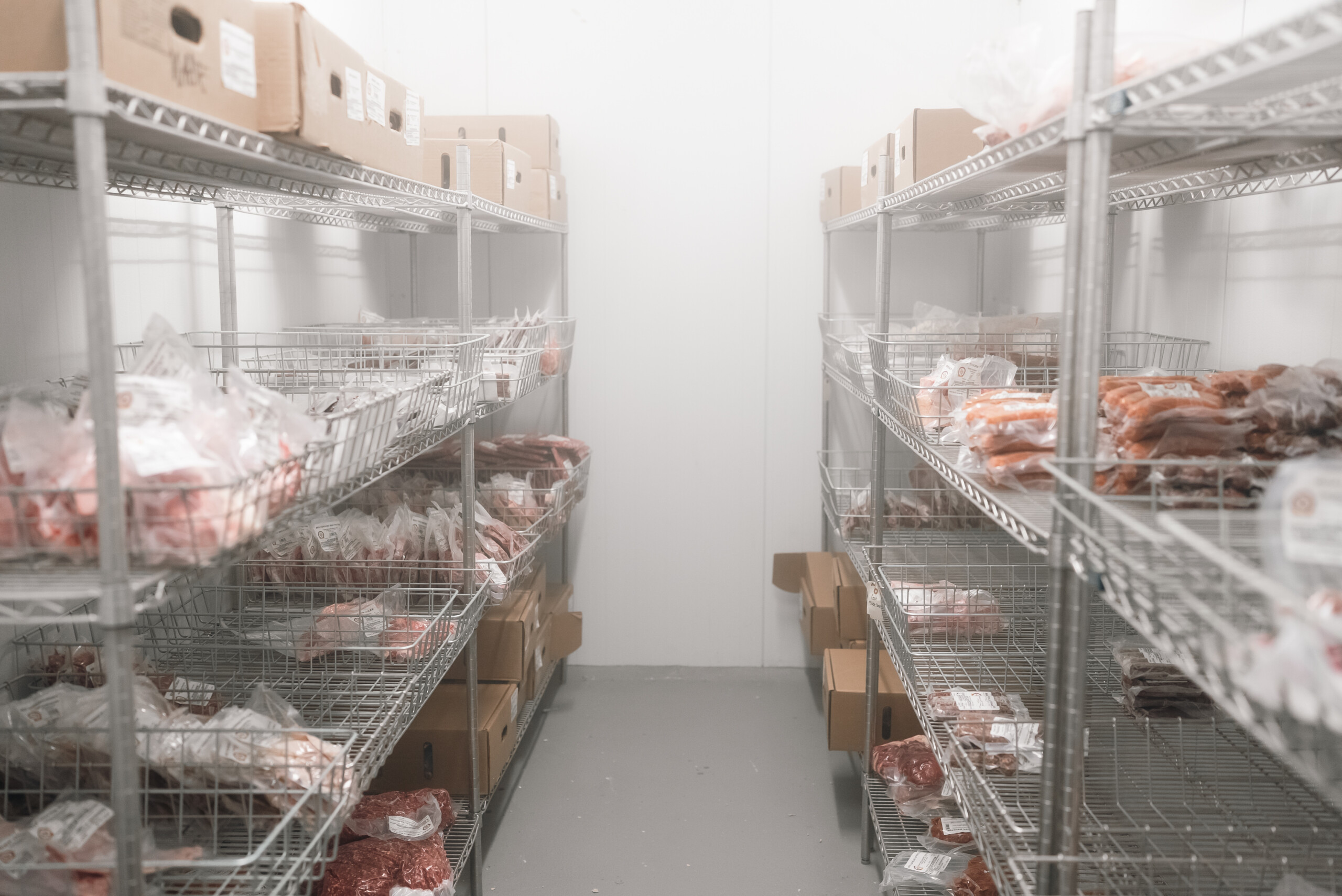
Timing matters just as much as technique. Once processing begins, heat must be drawn out quickly to prevent spoilage. Every step is deliberate.
It’s a process that takes getting used to. Chanyce admits, these fabrication days (the days they break down a carcass and create those tasty cuts of steak) are the hardest, especially having to skin the animals. But they do it. “We start from when we first walk in, all the way to when it’s time to put their carcass in the freezer.”
Chanyce credits her skills to the lessons she’s learned from Dr. Tolen and Dr. Kinman. She says both “saw something in her.” She shows her appreciation by paying all she’s learned forward, educating friends, family, and the community about meat science.
And then there is the physical labor. Several of the students shared that customers occasionally walk into the retail space, look around, and ask a familiar question: Where are the men?
The assumption is clear. So is their response. Jaelyn has heard it more than once. “It’s definitely different when people come in and ask that,” she said. “And it’s just us getting the work done.”
Dejanae sees it as a reflection of perception, not reality. “You can say this is a man’s field,” she said, “but we’re right here doing it.”
Introducing “work mom,” Dr. Lea Ann Kinman, Research Associate Professor, who beams when she talks about her elite girl squad. She places the work they contribute to within a much larger context.
She says the Meat Science Center is not only a training ground. It is part of a research ecosystem that connects directly to industry needs, workforce development, and community impact. Dr. Kinman adds that the meat and poultry industry continues to face a shortage of skilled labor, and programs like this are designed to address that gap by introducing students to hands-on, experiential learning early in their academic careers.
She also notes that research within the program is applied and intentional. Students engage in work tied to product development, ingredient functionality, and value-added processing that enhances the marketability of livestock.
We learned that Prairie View’s International Goat Research Center continues its longstanding work in advancing the field through research in reproduction, feed efficiency, milk and meat production, and the development of innovative products.
Kinman sees these advancements as central to the University’s future. Progression toward becoming a research-intensive institution, expanding research capacity, while maintaining its land-grant mission remains critical.
Dejanae, who brought steady confidence to the group, is still working through what the experience means to her. “I’m a city girl,” she said. “Agriculture is so new to me.” She added, “This course taught me anatomy, where everything is located, how it looks, and how everything works. It got me acclimated to the crazy smells.”
Photo credit: Dr. Lea Ann Kinman
She does not hide the emotional weight of the work. “I don’t like watching them die. It still hurts my feelings.” Still, over time, she has found a way to connect that discomfort to purpose. “This is helping feed people. We’re giving back to the community.”
Jaelyn approaches it from a place of familiarity. “We all have to eat somehow,” she said. “And somebody’s got to do it. Now, I’m that person.” The experience allowed our team to witness every aspect of the young women’s personalities and strengths. Madi, who stands just about 5’6, stepped up to a large industrial refrigerator and pulled the heavy door open with ease, as if she were simply pushing apart a set of delicate French doors. It was quick and almost effortless (probably just par for the course for her), but it said more than anything we could have written. There is a physicality to this work that cannot be overlooked. The lifting, the repetition, the precision.
More importantly, none of them shy away from it.
Madi still sounds surprised by how much she has grown. “I never thought that I would take the head of a goat off by myself…” she remarked, as if she is still stunned by her accomplishment. “I’m a hands-on learner,” she explains. “Getting to actually see it and do it makes a big difference.” She also impressed upon us the importance of things like getting to learn more about what you’re eating, what you’re putting into your body, and the process of everything.
Ariyanna Jimenez ’26 describes her journey as one of growth. She’d considered working in some facet of the industry since high school. Her first year at PV was tough.
“At first it was kind of rocky,” she said. “I didn’t know anybody.” That uncertainty gave way to clarity as she gained more exposure and found a mentor in Dr. Kinman. Her focus has expanded beyond working with animals to understanding food systems and accessibility, and how she might contribute to solving those challenges. “We have a lot of food,” she said. “We’re just not distributing it properly.”
Alexandria sees the impact in everyday life. “I’ve become a smarter consumer,” she said. “I know what to look for and how food gets from start to finish.” That knowledge shows up at home, in conversations with family, and in the choices she makes.
So, how do these young women plan to use what they have learned?
Ariyanna hopes to work in research or with the USDA, helping make food more accessible and affordable for communities in need. Alexandria plans to pursue veterinary medicine and become a veterinary technician, while recognizing that the experience has also opened doors in food inspection and agricultural science. Dejanae is on a pre-vet track. Jaelyn is focused on becoming a veterinarian, crediting Prairie View’s hands-on opportunities for helping her prepare for the next step toward veterinary school. Chanyce plans to pursue a career as a meat scientist, inspired by the confidence and expertise she developed inside the Meat Science Center.
Ultimately, what is happening here is a clear reflection of Prairie View A&M University’s Journey to Eminence in action.
Advancing teaching excellence and academic relevance is visible in every lesson learned through doing. Student success is evident in the confidence, growth, and clarity of purpose these young women carry with them. The strategic advancement of research is happening in real time, connecting discovery to industry and community impact. And social responsibility extends beyond the campus, linking Prairie View to the communities it serves, from farm to market to table.
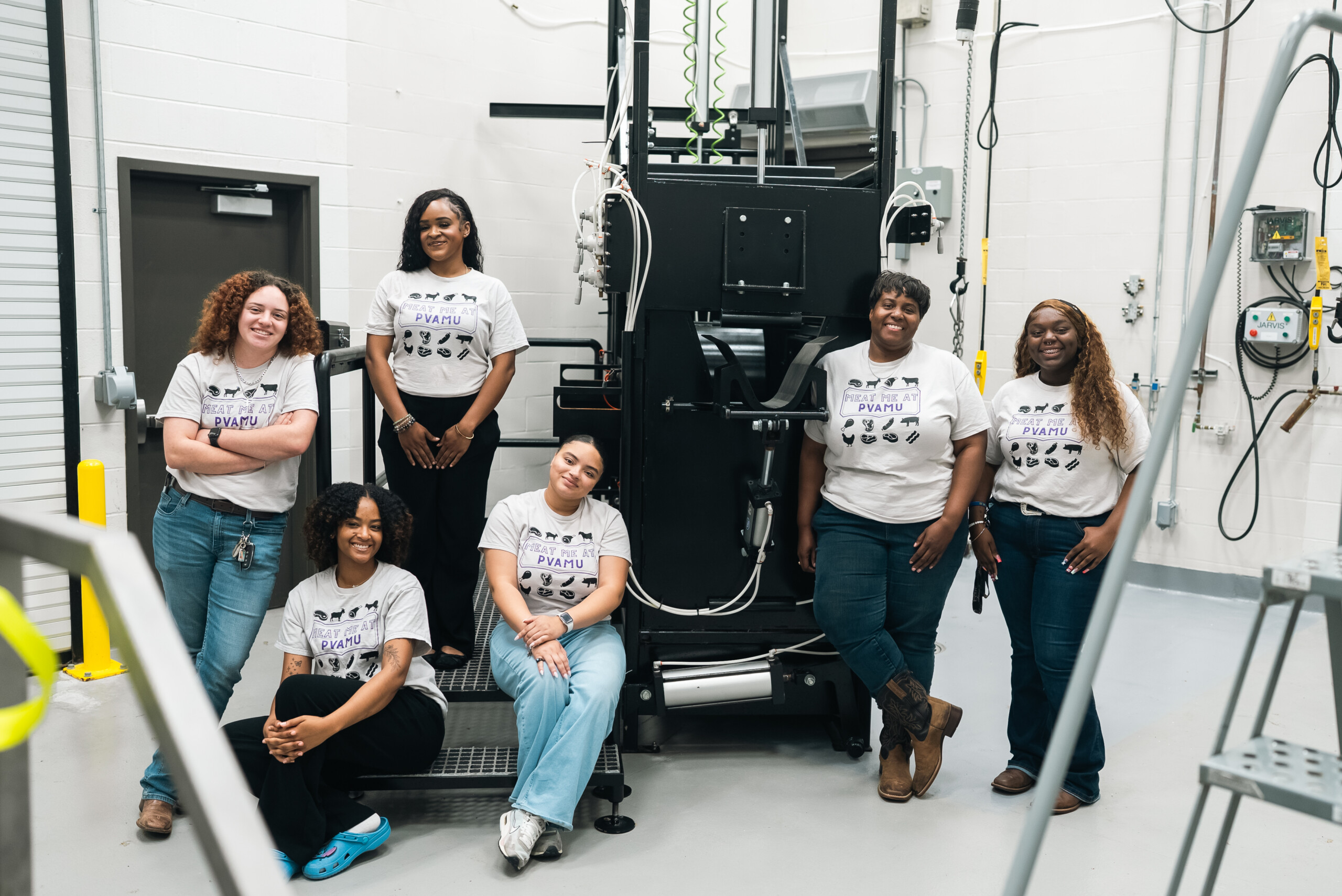
In a space where they are often not expected, these young women are not just present.
They are prepared. They are capable. And they are leading.
To learn more about Prairie View A&M University’s College of Agriculture, Food, and Natural Resources, please visit the website. The University farm is open for tours. Schedule a visit today. Meat retail sales are open to the community during scheduled times.
By Liz Faublas-Wallace