By: Chelsea Lenora Small,
New facility positions TSU students closer to careers in aerospace, engineering and commercial aviation
For generations, Houston has proudly carried the title of Space City. It is a nickname rooted in innovation, exploration and proximity to industries that have shaped the future of the nation.
But for many students across Houston’s Black and underserved communities, careers in aviation and aerospace have often felt worlds away.
Texas Southern University is working to change that.
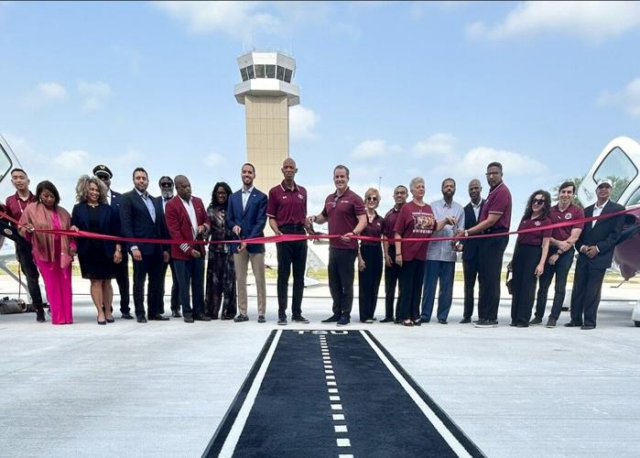
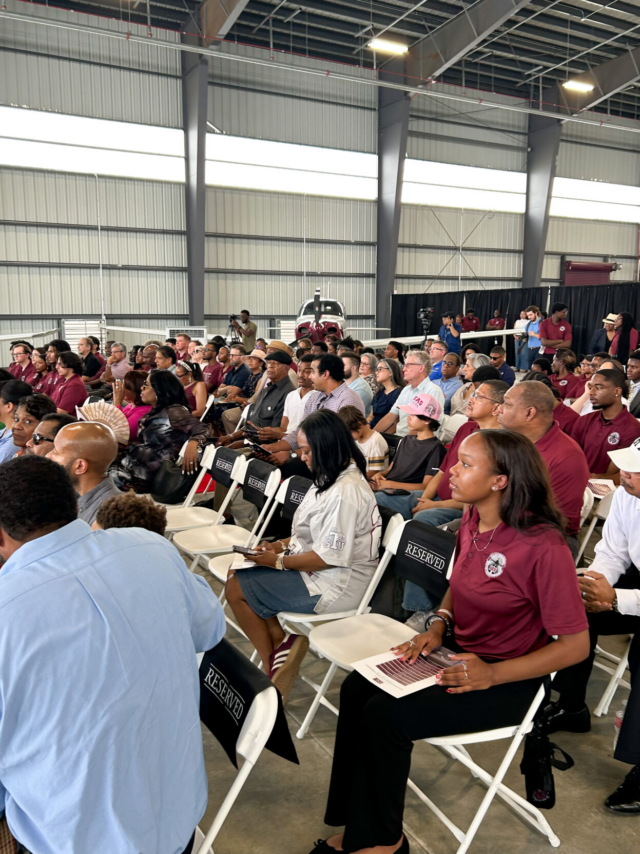
On Saturday, university officials, city leaders and aviation partners gathered at Houston Spaceport to celebrate the opening of a new aviation training facility designed to create more direct pathways for students pursuing careers as pilots, engineers and aviation professionals.
The new 20,000-square-foot hangar, located at Houston Spaceport at Ellington Airport, will serve as a satellite campus for Texas Southern University’s aviation program. The facility houses a newly acquired fleet of 12 Cirrus SR20 aircraft, along with 4,500 square feet of classroom and office space that will support expanded instruction and future aerospace engineering coursework.
“This facility represents a transformative step forward for our aviation program,” said Dr. Terence Fontaine, executive director of Texas Southern University Aviation. “By providing our students with access to modern aircraft, expanded instructional space and real-world training environments, we are positioning them to compete and excel in the rapidly evolving aviation and aerospace industries.”
The City of Houston invested $5.5 million into the facility’s construction, underscoring how seriously local leaders are taking workforce development tied to aviation and aerospace, two industries expected to continue growing in Houston.
Texas Southern’s New Houston Spaceport Hangar Expands Access To Aviation Careers
For a city with deep ties to NASA and space exploration, the investment feels aligned with Houston’s broader identity. It also raises an important question about who gets access to those opportunities.
Historically, Black professionals have remained underrepresented in aviation. That reality makes investments like this one particularly significant, especially at an HBCU that has long served as a pipeline for students seeking opportunity in industries where representation remains limited.
“The opening of Texas Southern University at Houston Spaceport underscores our commitment to innovation, workforce development and academic excellence,” said J.W. Crawford III, president of Texas Southern University. “It strengthens our role in preparing a diverse pipeline of highly skilled professionals for careers in aviation, aerospace and beyond.”
The facility also includes an 8,000-gallon fuel tank that university leaders say will create fuel independence for the program and save hundreds of thousands of dollars annually, reducing operational costs as Texas Southern continues expanding its aviation footprint. The investment reflects a long-term commitment to strengthening the university’s aviation program while creating more opportunities for students interested in careers in aviation, aerospace and engineering.
For students, that investment translates into something tangible: greater access to hands-on training, stronger industry partnerships and clearer pathways into careers that have historically lacked Black representation.
Houston City Councilwoman Carolyn Evans-Shabazz called the project a smart investment in Houston’s future workforce.
“It connects our students to high-paying, high-demand careers in aviation and aerospace,” she said. “This is how we grow a city in the right way.”
Texas Southern students are already building relationships with major airlines before graduation.
The university has maintained a longstanding partnership with United Airlines, which has provided scholarships to students since 2022. Texas Southern also participates in United’s Aviate pilot pipeline program and Southwest Airlines’s Destination 225 program. This spring, Delta Air Lines added Texas Southern to its Propel pilot career pathway initiative.
Those partnerships signal that this investment extends far beyond a ribbon-cutting ceremony.
For many students, this hangar represents access to careers they may not have previously seen as attainable. And in a city built on innovation, expanding who gets to participate in that future may be the most important investment of all.