By Robin Givhan
The Philadelphia Tribune
https://www.phillytrib.com/
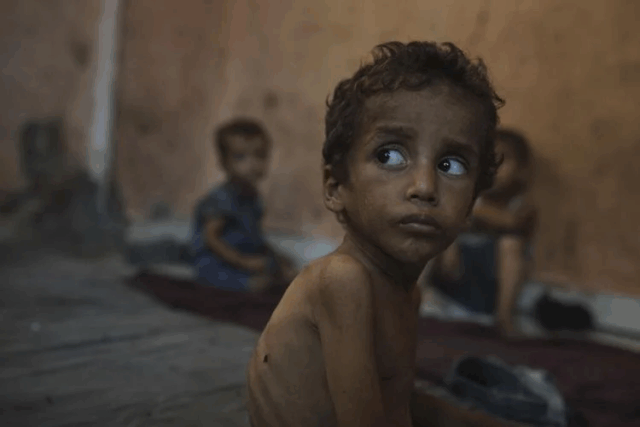
How does the world make sense of the images coming from Gaza? Where will they fit into history? The pictures didn’t sneak up on anyone. They were inevitable.
For months people have known about the increasing hunger in the region. When the war there began after Hamas attacked Israel on Oct. 7, 2023, early news photographs showed anxious Palestinians clustered together with their pots and buckets and whatever container they had handy hoping to get a share of the sustenance delivered by aid workers. Donations of food have long been part of life in Gaza. The desperation in these pictures was palpable and worrisome.
Six months later there were warnings of “catastrophic” hunger. Those who delivered aid had come under fire. Observers saw the charred aftermath of an Israeli attack on a group of civilians working for World Central Kitchen. The humanitarian organization reported the deaths of seven members of the team that had been delivering food in Gaza. The Israel Defense Forces took responsibility for the attack. Their spokesman described the WCK mission as “noble” and offered condolences. Using the euphemisms of war, he called the killings an “incident.”
In recent months, stories have documented how Palestinians have been killed as they were trying to access food through a delivery system that left them vulnerable to stampedes set off by their frantic neighbors and volleys of bullets from Israeli soldiers. These were stories of people dying of hunger. These were stories of people from hunger.
And now, this: “The worst-case scenario of famine is currently playing out in the Gaza Strip. Conflict and displacement have intensified, and access to food and other essential items and services has plummeted to unprecedented levels,” read an alert this month from the Integrated Food Security Phase Classification, which gauges food security and malnutrition around the globe.
What people can now see over their morning coffee or afternoon salad are images of emaciated children, their skin stretched taut over their ribs, their arms seemingly as breakable as twigs. These images have been shocking. A more analytical assessment would suggest that the inevitable has finally become obvious despite Israeli Prime Minister Benjamin Netanyahu’s best efforts. He has encouraged people not to believe their own eyes by insisting “there is no starvation in Gaza.” To suggest otherwise, he said, is “a bold face lie.” He uttered these words as if to suggest that the people who were hungry and desperate for food have somehow found sustenance, despite the blockades, despite the lack of medical access, despite the shootings, and have returned to vigorous health. Would he have the world believe that all the babies in Gaza are round and plump? Would he have the world believe that people are feasting amid the violence?
There are those who make those arguments and present as evidence photographs described as showing members of Hamas dining on meat, vegetables and sweets they stole from aids groups. To rebut allegations that Israel is starving children, COGAT, the branch of the Israeli military that coordinates civil affairs in Gaza, shared a photo Monday of an emaciated Palestinian boy who it said was in fact afflicted with a genetic disease, not hunger.
Even President Donald Trump, who has tied his political fortunes to his unwavering support of Israel, who has linked demands for Palestinian dignity with antisemitism, and who once mused about the prospects of transforming Gaza into “the Riviera of the Middle East,” has recognized what is happening to Gazans as starvation and as something that is deeply inhumane.
Those images now enter the culture’s visual archive of extraordinary suffering. They will be filed alongside the pictures from the Ethiopian famine in the mid-1980s, the one that sparked the global relief effort “Live Aid,” which marks its 40th anniversary this month. The world was moved to action by pictures of starving and malnourished children in Ethiopia, a country that for many people was not only distant but also unfamiliar. Many remember that crisis as one brought on by drought, a travesty that was an act of God rather than something man-made. But man had a hand in it through war and government policies. Man always seems to have a hand in the worst things.
The pictures from Gaza live alongside those from the Rwandan genocide in 1994. They reveal sweeping suffering compressed into a narrow window of time. Deaths caused by tribalism, disinformation and dehumanization. And, those images call to mind the horrors of the Holocaust.
Two Israeli rights groups have said their country is committing genocide, as uncomfortable as that might be for a nation born out of Auschwitz and Buchenwald and Dachau. Physicians for Human Rights and B’Tselem have characterized the killing in Gaza as such. They are organizations based in Israel. And while they do not speak for the Israeli population, they have spoken up. “This report documents the Israeli assault for what it is: a deliberate, cumulative, and ongoing dismantling of Gaza’s healthcare system — and of the population’s ability to survive. Its meaning: genocide,” reads a statement from Physicians for Human Rights.
This assessment follows last year’s announcement by the International Criminal Court that it was seeking arrest warrants for high-ranking members of Hamas, as well as Israeli government leaders, for war crimes and crimes against humanity.
Netanyahu has stood firm on Israel’s right to self-defense. Israelis long for the return of what the government has said are 50 remaining hostages taken by Hamas on Oct. 7. So many things can be true at once. A country may well be exercising its right to defend itself, while also allowing that defense to take on wholly unconscionable proportions.
In the midst of its war, Israel leaves behind photographic evidence of its military’s capacity to cause pain in service to patriotism. More than 60,000 people have died in Gaza, according to local health authorities. One might be tempted to call that capacity astonishing, but the historical album is filled with examples of man-made agony that seems almost beyond human understanding. One can only hope that when future generations scroll through those photos, they will take a lesson. How could this happen, yet again?