Staffing shortages mean incarcerated people are not getting vital medical care, programming and other services.
By Rebecca McCray
The Marshall Project
https://www.themarshallproject.org/
This is The Marshall Project’s Closing Argument newsletter, a weekly deep dive into a key criminal justice issue. Want this delivered to your inbox? Sign up for future newsletters.
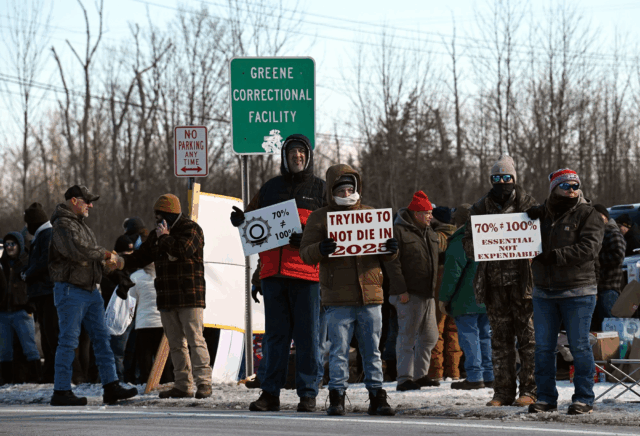
In January, James Johnson began a journalism course at Sing Sing Correctional Facility, north of New York City, offered through Columbia University. He was eager to wrap up his bachelor’s degree and enroll in a master’s program this fall. But state correctional officers began a 22-day-long wildcat strike in February, and all educational, vocational, and mental health programs in prisons ground to a halt.
Four months after the strike ended, it’s unclear when the journalism course will restart — normal operations have yet to resume in most of the state’s prisons. Johnson likened his post-strike experience to life after a natural disaster: “The media coverage is gone, and we are still waiting on FEMA, while we try to make do with whatever scraps we can salvage from the rubble that we find ourselves standing in.”
When the illegal strike ended, more than 2,000 of the 13,000-plus striking guards were fired after they refused to return to work. That compounded an ongoing staffing shortage that partially sparked the strike itself. Thirty-five of the state’s 42 prisons are operating with an average of 32% of guard posts unfilled, New York Focus reported.
As of this week, nearly 3,000 National Guard members remain stationed in at least 34 prisons, according to a spokesperson for the Department of Corrections and Community Supervision. In April, Gov. Kathy Hochul told reporters the cost of the roughly 4,400 National Guard members’ presence at the time was “well over $10 million per month.” The governor’s office and the New York State Division of Military and Naval Affairs declined requests to confirm the current price tag.
While National Guard members can support prison operations, such as head count and basic supervision, they can’t fill all the responsibilities of correctional officers, such as escorting incarcerated people and intervening in violent encounters.
For incarcerated people, the lingering dysfunctions from the strike run the gamut from frustrating to life-threatening. At Auburn Correctional Facility, west of Syracuse, Bartholomew Crawford said that only one of two prison yards has been open since the strike, and it doesn’t have any sports or weightlifting equipment — just blacktop to walk or run on.
Meanwhile, civil rights and criminal defense attorney Amy Jane Agnew, who represents people in prisons throughout the state, said she’s concerned about her elderly and ill clients. Without enough officers to drive people to and from specialized doctors’ appointments, Agnew says some of her clients are going without vital medical care.
“That right now is a huge systemic problem,” said Agnew. “I’m way more worried about a guy who’s not getting his oncology visit than not getting the same amount of rec time.”
In addition to limited recreation, understaffing has led to prisoners spending more than 17 hours a day in their cells at some facilities. “It feels like a perpetual lockdown,” said Crawford, the man incarcerated at Auburn Correctional Facility.
Seventeen hours is a legally important number. Under a 2022 state law, any confinement longer than that qualifies as “segregated confinement,” and triggers special protection and restrictions.