By Rita Cook
Correspondent
Texas Metro News
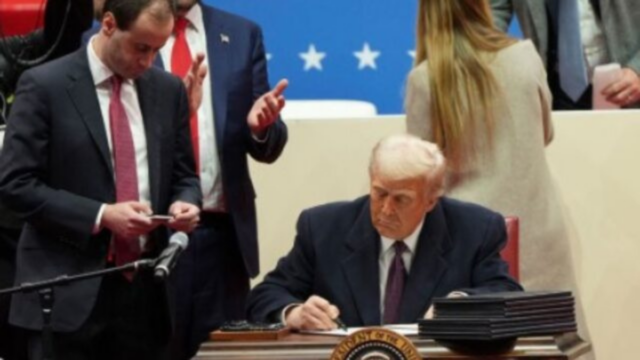
WASHINGTON D.C. – President Donald Trump signed an executive order last week that could have consequences for summer travel.
The EO is part two of a travel ban that originally began with his first group of travel ban orders issued on January 20.
This new ban, which became effective Monday of this week, restricts the entry of foreign nationals, “to protect the United States from Foreign Terrorists and Other National Security and Public Safety Threats.”
The order now bans 12 countries, and in the EO Trump v. Hawaii was cited noting the Supreme Court upheld the President’s authority to use section 212(f) of the Immigration and Nationality Act to protect the United States through entry restrictions.
The travel ban fully restricts and limits the entry of nationals from 12 countries “found to be deficient with regards to screening and vetting and determined to pose a very high risk to the United States.”
These countries include Afghanistan, Burma, Chad, Republic of the Congo, Equatorial Guinea, Eritrea, Haiti, Iran, Libya, Somalia, Sudan, and Yemen.
The Proclamation also partially restricts and limits the entry of nationals from seven countries who are said to pose a high level of risk to the United States including Burundi, Cuba, Laos, Sierra Leone, Togo, Turkmenistan, and Venezuela.
The order excludes exceptions for lawful permanent residents, existing visa holders, certain visa categories, and individuals whose entry serves U.S. national interests.
It was stated in the EO explanation that “After evaluating a report submitted by the Secretary of State, in coordination with other cabinet officials, President Trump has determined that the entry of nationals from certain countries must be restricted or limited to protect U.S. national security and public safety interests.”
Trump said this new ban was related to the recent attack in Boulder, CO. He said the firebombing attack there underscored why the ban has become necessary.
“It underscores the extreme danger to our country by the entry of foreign nationals who are not properly vetted as well as those who come here as temporary visitors and overstay their VISAs. We don’t want them. In the 21st century we have seen terror attacks carried out by foreign visa overstayers from dangerous places all over the world. And thanks to Biden’s open door policies today there are millions and millions of these illegals who should not be in our country.”
In this speech Trump reiterated the work he did on banning travel during his first term.
“My travel restrictions were one of our most successful policies and were a key part in preventing major foreign terrorist attacks on American soil,” he said. “We will not let what happened in Europe happen to America.”
President Trump is also hoping to identify the number of people from the banned countries who entered the United States during the Biden administration. He would like to look into the possibility of retroactively suspending their visas.
Biden rescinded Trump’s travel ban he had put in place during his first term in office, reversing it on the first day in office in 2021.
For more details, the EO outlines a justification for the full and partial suspension of each country listed in the June 4 travel ban executive order.
The Supreme Court also upheld the travel ban, ruling it “is squarely within the scope of Presidential authority” and noting that it is “expressly premised on legitimate purposes.”
Rita Cook is a world traveler and writer/editor who specializes in writing on travel, auto, crime and politics. A correspondent for Texas Metro News, she has published 11 books and has also produced low-budget films.