As the Congressional Black Caucus Foundation marked 50 years in Washington, D.C., lawmakers, activists and cultural leaders wrestled with what Black communities should demand from those entrusted with their votes, voices and influence.
By Shelby Stewart
Essence
https://www.essence.com/
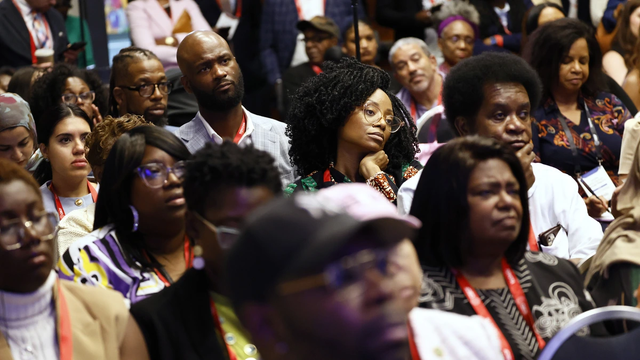
For five days, Black political power filled the halls of the Walter E. Washington Convention Center.
There were lawmakers rushing between panels, activists debating policy, receptions stretching late into the night and familiar faces exchanging hugs in hallways. Conversations moved from voting rights and the midterms to artificial intelligence, cryptocurrency, representation, culture and the future of Black political power.
And as the Congressional Black Caucus Foundation celebrated its 50th anniversary, there was plenty of history to honor.
But underneath the celebration was a more urgent question: What are we doing with the power we have?
That question surfaced again and again during the Congressional Black Caucus Foundation’s 55th Annual Legislative Conference, under the theme Rooted, Ready & Rising. Thousands of leaders, advocates, professionals, students and changemakers descended on Washington for five days of policy conversations, organizing and signature events at a gathering that has grown from the Black Caucus Weekend of the 1970s into one of the country’s most significant convenings of Black political thought.
CBCF itself opened the conference with an urgent call for leadership, civic engagement and collective action, framing this year’s milestone not simply as an opportunity to commemorate the past, but to consider what Black America does next.
This year, homecoming came with accountability.
“We Need To Elect People Who Can See Us”
In conversation with ESSENCE, Sen. Angela Alsobrooks made the case that representation alone cannot be the finish line.
“We need to elect people who can see us,” Alsobrooks said when asked what Black women should demand from Washington.
It was a deceptively simple answer to a complicated political reality.
Black representation in government matters, but Alsobrooks argued that voters should also examine whether the people seeking their support actually understand the communities they intend to represent.
“We have every right to demand that people see us,” she told ESSENCE.
Her comments captured a tension that repeatedly surfaced throughout the week. The question was no longer simply whether Black people could gain access to political institutions that historically excluded them. It was what should be expected once that representation exists.
Christian Menefee And The Weight Of What Came Before
For Rep. Christian Menefee, that question carries the weight of history.
The Houston native entered Congress representing Texas’ 18th Congressional District, a seat whose lineage includes Barbara Jordan, Mickey Leland, Sheila Jackson Lee and Sylvester Turner.
During a conversation at CBC, Menefee reflected on the legacy he inherited from those who occupied the halls of Congress before him, including Jordan, who became the first Black woman from the South elected to the House more than half a century ago.
His presence represented another recurring theme of the weekend: Black political power is not static. Each generation inherits victories made possible by the one before it, along with unfinished work.
For a new generation of Black lawmakers, the challenge is not simply occupying historic seats. It is deciding what they will do with them.
Joyce Beatty’s Message: Keep Fighting
If Menefee represented a new generation inheriting the fight, Rep. Joyce Beatty offered a reminder that some battles require staying in them.
The Ohio congresswoman and former Congressional Black Caucus chair urged Black people not to become discouraged by the political fights unfolding around them, returning to a message that has become something of a mantra for her: when we fight, we win.
Beatty had a particularly tangible example.
She has been locked in a legal battle over the future of the John F. Kennedy Center for the Performing Arts, challenging President Donald Trump and the Trump-aligned leadership of the institution over efforts to rename and reshape the congressionally established memorial.
And while Beatty was inside CBC urging people to keep fighting, the fight was unfolding outside.
During CBC weekend, protesters descended on the Kennedy Center, where demonstrators formed a human chain around the building amid growing uncertainty over its future. The demonstration came after the center’s Trump-aligned board voted to close most of the complex for what it described as major renovations, while Trump publicly raised the prospect of demolishing the existing building.
The timing was difficult to ignore.
Inside the Convention Center, Black lawmakers, advocates and cultural figures were debating what resistance, representation and political power require. Across town, people were physically linking arms around one of Washington’s most recognizable cultural institutions.
And that wasn’t the only battle over access unfolding in the nation’s capital.
On Friday, President Trump announced that CNN, MS NOW and Politico would be barred from the White House, accusing the three news organizations of reporting what he called “fake news.” By Saturday morning, as CBC weekend continued, journalists from all three outlets reported being denied entry to the White House grounds, with some saying their credentials had been disabled or confiscated.
The White House Correspondents’ Association condemned the move and called for the journalists’ access to be immediately restored, arguing that allowing the government to exclude news organizations because of their coverage threatened more than the rights of individual reporters.
“The implications extend beyond these organizations,” WHCA President Jacqui Heinrich said in a statement, warning that the same standard “could be applied to any outlet in the future.”
For a gathering so deeply concerned with political power, the developments outside CBC provided an unavoidable backdrop.
Questions being debated inside the Convention Center—Who gets access? Who gets heard? Who gets to scrutinize those in power? What happens when institutions are reshaped by the people temporarily entrusted with leading them?—were simultaneously playing out in real time across Washington.
Al Green Looked To The Future—And Insisted On Remembering The Past
For Rep. Al Green, the questions surrounding Black political power stretched from America’s earliest history to some of the newest forces attempting to shape Washington.
During The Cryptocracy: How the Administration, Its Crypto Allies, and Their Millions Are Infecting Black Politics, the longtime Texas congressman warned about the political influence of the cryptocurrency industry and the money flowing into congressional races.
Green also looked ahead, warning that both the artificial intelligence and cryptocurrency industries were positioning themselves to have significant influence over lawmakers in the next Congress.
His concern spoke to another question hanging over the conference: who gets to shape the priorities of government when emerging industries with extraordinary amounts of money can spend heavily to influence the people occupying its seats?
Green knows that power personally.
During the 2026 Democratic primary, the crypto-aligned super PAC Protect Progress spent millions in independent expenditures supporting his opponent, as cryptocurrency interests poured money into congressional contests around the country.
At CBC, Green’s warning was not simply about new technology. It was about old questions of access, money and power being repackaged for a new era.
But one of his most resonant moments of the weekend had nothing to do with the future.
It was about remembering the past.
During another session, Green led the audience through a call-and-response rooted in his longstanding effort to establish and commemorate Slavery Remembrance Day.
Green recalled well-documented aspects of the brutality endured by enslaved Africans in America: people kidnapped from their homeland, the horrors of the Middle Passage, men and women held in bondage and forced into labor, and families torn apart as parents and children were sold away from one another.
Again and again, Green offered the prompt.
“We must.”
And the room responded:
“Always remember.”
It was a ritual Green has practiced publicly for years. His push for Slavery Remembrance Day led the House in 2022 to support an annual observance recognizing August 20, tied to the arrival in 1619 of the first recorded enslaved Africans in England’s mainland North American colonies.
Inside a conference where so much conversation centered on the next election, the next Congress and technologies that could transform the future, Green’s remembrance offered a counterweight.
One moment asked Black America to pay attention to the forces accumulating power tomorrow. The other demanded that no one forget the systems of power that shaped yesterday.
For Green, both ultimately came back to the same questions: who has power, how did they acquire it and who pays the price when it goes unchecked?
Kendrick Sampson Challenged The People Holding The Microphone
Political power wasn’t the only kind under examination.
At Platforms & Purpose: A Conversation With Black Men Leveraging Their Reach, actor and activist Kendrick Sampson joined Rep. Jasmine Crockett, Jason Lee, Eric Benét and Yung Joc for a discussion about the responsibility that comes with commanding an audience.
Sampson didn’t mince words.
“We on the Hill. We at the Capitol. Just to be real, most of us are not using our platforms correctly,” he told the room. “Most of us. The overwhelming majority of us.”
And he wasn’t talking only about entertainers and influencers.
“Most politicians don’t use their platform correctly,” Sampson said. “Politicians, the main thing for the CBC right now should be how we protect each other. That’s it. How we protect each other.”
Sampson has spent years moving between those worlds himself. The Houston native has built a career as an actor through projects including Insecure, How to Get Away with Murder and Miss Juneteenth, while simultaneously developing a public record as an organizer and activist. He co-founded BLD PWR to connect artists and cultural figures with grassroots movements and has long argued that art and activism do not have to exist separately.
At CBC, his challenge extended to accountability within Black communities themselves.
“Our people, we need to call each other in instead of have to wait until we have to call them out,” he said.
That point became especially sharp when the conversation turned to Nicki Minaj, whose increasingly public engagement with conservative politics has drawn attention over the past year.
But Sampson appeared less interested in making Minaj the sole example of a celebrity misusing a platform than in questioning why communities sometimes wait until someone’s politics or actions reach a point of widespread controversy before challenging them.
“If Nicki Minaj is the standard, if we wait to criticize until you get to that, then we can’t correct,” he said. “There’s people on the panel right now that we need to correct.”
His point broadened the conversation beyond one celebrity or political affiliation. If people with influence are going to talk seriously about responsibility, Sampson argued, accountability also has to extend to those within their own circles.
It was another version of the question that had followed the conference all week: once you have access to power—political, financial or cultural—what responsibility comes with it?
Reproductive Justice Was Part Of The Conversation, Too
That question—what Black women should be able to demand from their government—extended beyond the halls of the Convention Center.
As CBC weekend came to a close Sunday, reproductive justice advocates gathered for For All Our Futures: Reproductive Justice Brunch, a celebration centered on the freedom, dignity and resources people need to make decisions about their bodies, families and futures.
Hosted during CBC Week by All* Above All, Higher Heights for America and Hip Politics, the gathering honored leaders advancing reproductive justice through its RJ Rebel Awards, including Reps. Sydney Kamlager-Dove and Lateefah Simon, Baltimore Councilmember Phylicia Porter, Philadelphia Councilmember Kendra Brooks and the Pennsylvania Black Maternal Health Caucus.
For Kamlager-Dove and Simon, that work has also reached Capitol Hill. Earlier this year, the two lawmakers joined Rep. Ayanna Pressley in introducing a resolution outlining a federal reproductive justice framework that addresses abortion access alongside maternal health, contraception, economic security and the ability to raise families in safe and sustainable communities.
The brunch added another layer to a weekend largely focused on the future of Black political power. For Black women in particular, representation in Washington is inseparable from the policies that determine what choices they are able to make in their everyday lives.
And across CBC weekend, those questions about representation repeatedly came back to the people now carrying forward some of Congress’ most historic Black political legacies.
Rooted, Ready And Rising—But Toward What?
That willingness to challenge institutions—and one another—felt emblematic of a conference taking place at an inflection point.
CBCF turned 50 this year, while its Annual Legislative Conference entered its 55th year. The milestone invited celebration, but Rooted, Ready & Rising also made looking backward impossible without asking what comes next.
And across ALC 55, there wasn’t always agreement on what that answer should be.
Alsobrooks was asking whether the people elected to Washington can truly see the communities they represent.
Menefee was reckoning with what it means to inherit a historic tradition of Black political leadership.
Beatty was urging people to keep fighting as she waged a very public battle of her own.
Green was asking Black America to remember where it came from while watching where new concentrations of money and technological power are headed.
And Sampson was challenging politicians, entertainers and creators alike to examine what they’re doing with the audiences and influence they already possess.
Outside, protesters linking hands around the Kennedy Center provided their own interpretation of what political participation could look like.
Taken together, those moments captured something larger about CBC weekend.
Black political power isn’t confined to the people who hold congressional seats. It exists in the voters who put them there, the organizers who pressure them once they arrive, the artists and creators who shape public conversations, and the communities willing to hold all of them accountable.
Fifty years after the Congressional Black Caucus Foundation was established, the question isn’t whether Black political power exists.
The more pressing question coming out of Washington was what happens next.
Who gets heard? Who gets protected? Who gets held accountable? Who gets to shape the next generation of policy? And with another election approaching, what should Black communities expect from the people asking for the power of their participation?
Al Green’s audience spent part of CBC weekend repeating three words:
“We must always remember.”
Joyce Beatty offered another three:
“We must fight.”
Together, those sentiments captured the tension at the heart of Rooted, Ready & Rising.
Being rooted requires remembering where we’ve been. Being ready means understanding the forces shaping where we are now.
And rising requires deciding what we’re willing to fight for next.