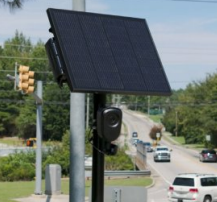
DALLAS – As one anonymous high-ranking local police official noted, “This [Flock] is an added tool for officers to solve crimes and locate missing and wanted people. Systems, like anything else, can be abused if we don’t have rules and accountability requirements.” While rules are clearly needed, questions remain over who is setting them. For now, residents in Ellis and Dallas Counties are pushing back, citing growing concerns over oversurveillance. In response, a few local police departments—including Midlothian and Waxahachie in Ellis County, alongside Dallas and Addison—have established transparency portals to allow the public to view camera usage numbers and data-sharing agreements. The debate intensified recently after Governor Greg Abbott ordered state agencies to pause all state funding for Flock Safety cameras, clarifying that state funds cannot be used to purchase or maintain them. This directive drastically alters how local cities and law enforcement finance their automated license plate reader (ALPR) programs. This freeze stems from a 2023 investigation by The Texas Tribune. The Texas Legislature had previously passed a law adding a $1 fee to vehicle insurance policies to combat catalytic converter theft. However, the Motor Vehicle Crime Prevention Authority (MVCPA) instead channeled at least $30 million generated by that fee into building up the state’s Flock camera network. The MVCPA distributed at least 95 grants to local police departments to buy roughly 2,000 cameras, while allocating another $15.9 million to the Texas Department of Public Safety (DPS) for 1,200 more.
Privacy Violations and Misconduct The freeze is also directly tied to privacy concerns involving potential Fourth Amendment violations. Misconduct has already surfaced: at least 13 specific instances of Flock tracking abuse have been cataloged across Texas, resulting in internal investigations, officer resignations, and felony indictments. Nationally, at least 50 law enforcement officers have been formally accused or criminally charged with misusing ALPR systems for unauthorized personal tracking. Under the new state mandate, cities choosing to keep their Flock systems must rely entirely on federal public safety grants or their local municipal budgets. Facing its own budget constraints, the Dallas Police Department recently shut off 321 of its 684 Flock cameras. The remaining cameras survived only because the Dallas City Council rejected a budget amendment that would have eliminated the city’s independent $1.5 million local contract. Data Sharing and “Side Door” Access Dallas has implemented tighter security protocols. The Dallas PD slashed outside system access, reducing the number of external law enforcement agencies permitted to view its Flock data from over 1,500 down to 202 Texas-based agencies, entirely eliminating federal partners. However, loopholes remain. Even when local departments restrict direct access, data can still reach federal agencies without explicit community knowledge via interconnected regional networks. Unless a city council mandates strict restrictions—as Dallas recently did—municipal and county agencies in North Texas often leave their default sharing settings open to regional or nationwide databases. Furthermore, public watchdog groups have revealed widespread “side door” access. Local police officers can manually run searches on the nationwide network on.