In North Carolina, at least five of the state’s 11 HBCUs have touted significant gains this fall. The state trails only Alabama in the number of HBCUs.
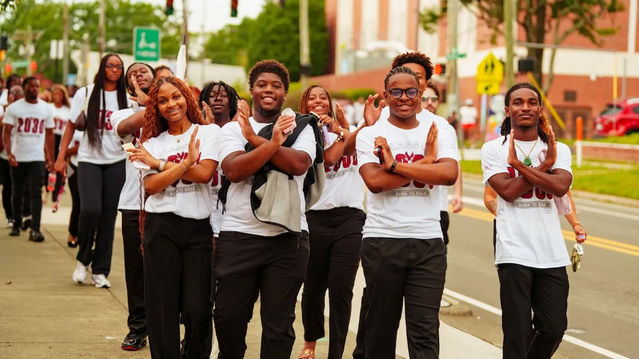
Historically Black colleges and universities (HBCUs) are seeing record enrollment growth — in North Carolina and nationwide. Experts and university leaders attribute the influx to shifting political climates and rollbacks of diversity programs at majority-white institutions.
In North Carolina, which trails Alabama in total number of HBCUs, at least five of the state’s 11 historically Black schools have touted significant gains this fall.
Marybeth Gasman, a Rutgers University professor who studies college trends, said the HBCU gains are driven in part by national politics. She noted, in particular, the Trump administration’s push to eliminate all vestiges of DEI from college campuses.
“A lot of the majority institutions that said that they cared about things like diversity and inclusion have shown that they really don’t care that much once pressured by the Trump administration,” Gasman said. “Black students have seen this.
“I’m a historian,” she added, “and I’ve never quite seen higher education be bullied like this.”
Gasman downplayed the Supreme Court’s 2023 ruling that struck down the use of race in college admissions. That ruling, she said, had little effect beyond a handful of elite universities that accept only a small fraction of applicants.
“Most students in the United States don’t go to Harvard,” she said. “It doesn’t matter what race they are. Harvard accepts very, very few students.”
At Livingstone College, a small, private school in Salisbury, enrollment has increased about 70% in the last four years. Its president, Dr. Anthony J. Davis, also noted the role of politics, including the Supreme Court ruling.
“What looked like evil was really a blessing for our institutions,” he said. “We are letting students know that they don’t have to go where they are tolerated. You can come to Livingstone College, where you’ll be celebrated.”
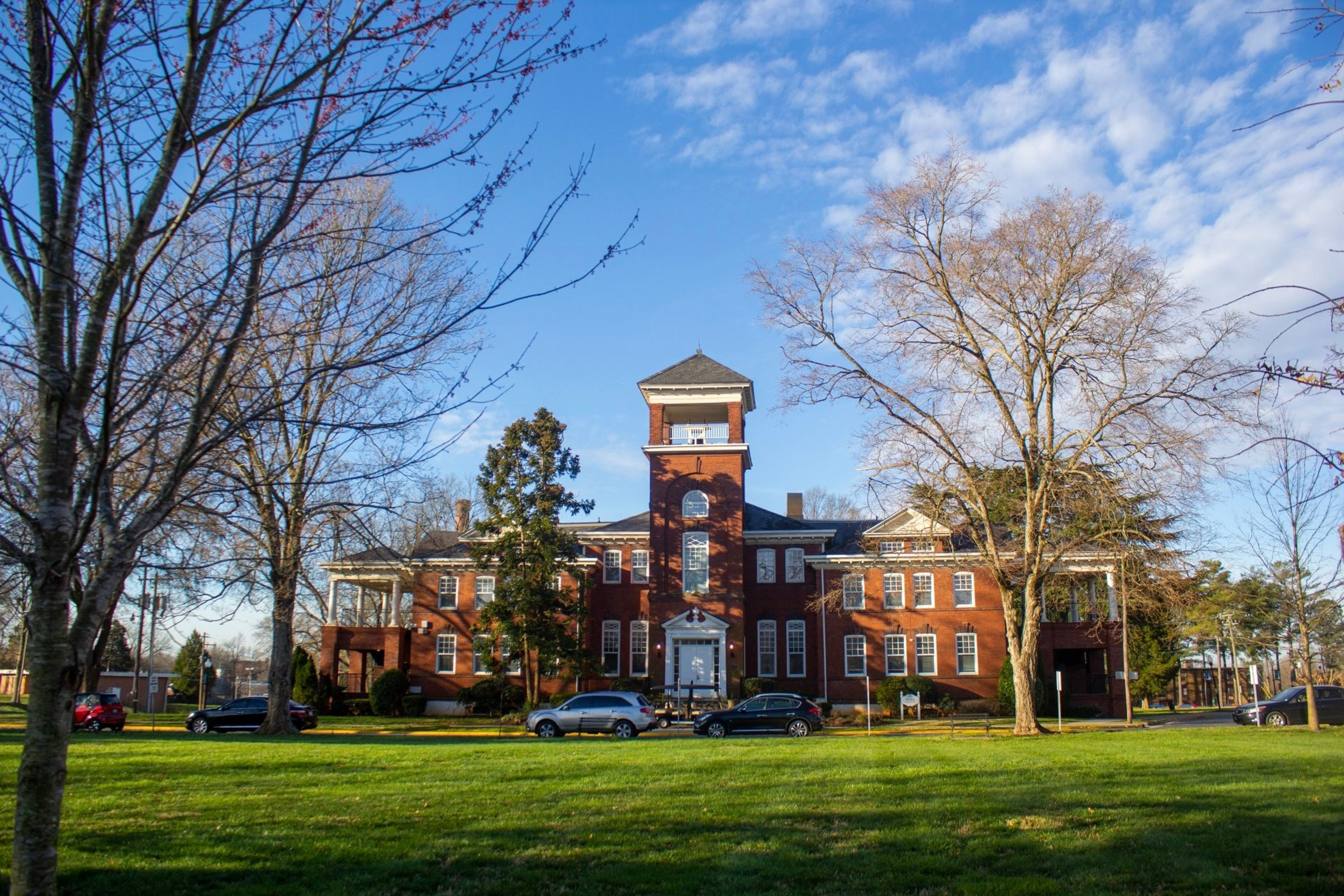
Livingstone College, located in Salisbury, North Carolina. Photo: Livingstone College
Glasman said the enrollment surge is most pronounced at the “big public powerhouse HBCUs” but also extends to private institutions with strong academic programs and name recognition. She mentioned Howard, Spelman, Morehouse and Tuskegee in particular — all private and ranked among the nation’s elite HBCUs.
“I’ve interviewed a lot of people about this,” Glasman said. “I think it’s a combination of a variety of things. But definitely [students] feeling safer, feeling like they belong, feeling like people aren’t questioning whether or not they should be there.”
Along with surging enrollments, many HBCUs have also reported that first-year students are arriving with higher grade-point averages — an indication that they could have gone elsewhere.
Selah Miller, a first-year student at North Carolina Central, said she chose the Durham HBCU over several other schools, including High Point University.
The Charlotte native said she was drawn to NCCU’s family-like environment and commitment to community service.
“Growing up, I was in a predominantly white neighborhood, and I was always one of the few black girls in my school and in the friend groups,” said Miller, who grew up in Charlotte. “So just seeing more people like me … you can fit in here,” she said of N.C. Central.
Mikayla Drake, a junior at Winston-Salem State University, expressed similar sentiments about attending an HBCU.
“Coming to an HBCU and that cultural effect, I really feel like that grew me into the African woman that I am today,” she said. “I could be more comfortable in said community. Not saying I would be uncomfortable anywhere else, but I really feel like being around what I grew up with and what I am, I could grow more and be more confident in who I am culturally.”
Drake, who grew up in Winston-Salem, said she had a choice of colleges after leaving high school.
“I chose an HBCU only because I felt like I would thrive in that kind of environment better,” she said.
Here are the enrollment gains reported this academic year by some of North Carolina’s leading HBCUs.
Fayetteville State
Enrollment at Fayetteville State topped 7,700 students this fall, the highest ever. Since 2021, FSU has added more than 1,000 students and increased student retention from approximately 63% to 80.7% in five years.
This year’s freshman class entered with an average GPA of 3.45, the highest in university history.
“As proud as I am about the overall enrollment in recent history, I am especially proud of how Fayetteville State University is remarkably raising the bar in the quality within those numbers,” Chancellor Darrell T. Allison said in a statement.
North Carolina A&T
An estimated 15,700 undergraduate and graduate students enrolled this fall, including more than 800 transfer students and a record 3,214 first-year students.
The freshman class enters A&T with an approximate 3.7 GPA, “underscoring that the university’s continued growth is occurring alongside strong academic quality,” the school said on its website.
This marked the 13th straight year that A&T, recently ranked by Forbes as the nation’s top public HBCU, has seen enrollment growth.
Livingstone College
Officials at Livingstone College reported 575 first-year students this year — a 70% increase over the past four years. Along with record enrollment, Livingstone said its freshman class arrived with a 3.35 grade point average, the highest in the school’s 147-year history.
Davis, the school’s president, said the influx has caused a housing crunch at the small, private campus, where total enrollment has grown from 713 students to more than 1,300 students in the past four years.
“We have them in apartments as far south as Kannapolis on the Interstate 85 corridor, as far south as Concord. We have three hotels in Salisbury that are filled to capacity based on their available beds,” Davis said. “And we secured a hotel and have converted that hotel into a Livingstone College residence hall for this entire semester. Every bed is a Livingstone College student.”
North Carolina Central
Total enrollment hit 10,124 students this semester — the highest number ever and a 9.1% increase from last year’s 9,281 students. NCCU also reported a surge in transfer students and students earning second degrees.
Chancellor Karrie G. Dixon called the enrollment number “an incredible achievement,” and noted that NCCU crossed the 10,000 mark three years ahead of its goal.
“We’re proud of this moment and excited about where this momentum will take us next,” Dixon said in a statement.
Winston-Salem State
WSSU announced a total enrollment of 5,210 students for the fall semester, its highest total since 2021 and a 9.1% increase from 2023. That included 1,120 first-time freshmen, a 27% increase from 2023 and the largest freshman class in 10 years.
The freshman class had an average high school GPA of 3.4 – the highest reported in the past decade.
Graduate enrollment reached 681 students, a 32% increase from 2023 and the highest level in at least 10 years.
“… Our focus is not growth for growth’s sake,” Chancellor Bonita J. Brown said in a statement. “It is ensuring that every student who chooses WSSU has the opportunity to thrive — from the moment they arrive.”
Some still struggle
Not all HBC news is encouraging, and many historically Black institutions still struggle.
In North Carolina, Saint Augustine’s University canceled all classes for the fall semester as the Raleigh HBCU reorganizes under Chapter 11 bankruptcy protection to address roughly $74 million in debt. And at Johnson C. Smith University (JCSU) in Charlotte, school leaders continue to navigate a period of financial scrutiny.
A JCSU spokeswoman told QCity Metro this week that the university did not have a final tally on fall enrollment, but she noted a 19% increase since the covid pandemic. Last year JCSU had a total enrollment of about 1,300 students, the spokeswoman said.
Glenn H. Burkins Staff Writer
Email Glenn at gburkins@qcitymetro.com. Stay up to date with our morning newsletter. Read more articles by Glenn.