By Anisah Muhammad
The Final Call
https://new.finalcall.com/

Americans’ financial well-being was broadly stable in 2025, but the financial well-being of Black adults deteriorated from 2024 to 2025, according to a report published earlier this year by the Board of Governors of the Federal Reserve System. Overall, while 73% of adults reported they were doing okay financially or living comfortably, Black financial well-being fell from 65% to 60%.
The report pointed to rising layoffs and financial harms from inflation as evidence of worsening financial circumstances. It also documented disparities in difficulty paying bills, food insecurity, banking, credit, debt and homeownership.
The report details:
- 64% of Black adults considered price increases a major concern, up six percentage points from 2024 to 2025;
- 13% experienced a layoff, up three percentage points from 10% in 2024;
- 32% did not pay all their bills in full in the month prior to the survey, more than three times the rate of White adults and twice the national rate;
- 15% said their families sometimes or often did not have enough to eat, up three percentage points from 2024;
- 13% were unbanked, and of those who had bank accounts, 25% paid an overdraft fee during the previous year;
- 54% of Black credit applicants were denied or received less credit than requested, more than twice the rate for White applicants;
- 72% of Black credit-card holders carried a balance at least once during the previous year;
- 28% had outstanding student loans, and Black adults were twice as likely as White adults to have student-loan debt; and only 44% owned their homes.
Black wealth and economics in the U.S. has always been a complicated story intertwined with discriminatory systems designed to work against Black people. However, the Honorable Elijah Muhammad, Eternal Leader of the Nation of Islam, pinpointed the way out of this economic and financial hardship.
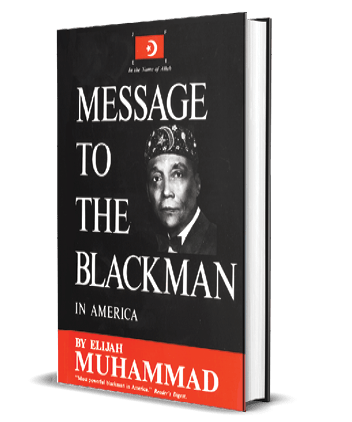
In His book, “Message to the Blackman in America,” published in 1965, the Most Honorable Elijah Muhammad outlined an economic program for Black people.
The program, found on pages 195-196, explains Black wage earners to save just five cents a day to go into a national treasury. From there, Black people, collectively, could buy farmland and produce their own food, He wrote.

“You can raise enough cattle, sheep, cows and chickens by the thousands if you try our program. We could cut down on our clothing bills,” he added. “Purchase real estate, buy farm and timberland. Convert the timber into lumber and build homes for yourselves as the White man is doing.”
He advised Black people to get clay land and start making their own bricks. Then, build brick homes “and sell them to your people at a very reasonable price.” Take the cotton to the mills and convert it to lint, and take the lint to the mills and convert it to cloth, he said.
The Honorable Minister Louis Farrakhan, National Representative of the Most Honorable Elijah Muhammad, has since urged Black people to take another look at the program of the Honorable Elijah Muhammad.
“At a time of great crisis, the Honorable Elijah Muhammad outlined in the Muhammad Speaks newspaper a ‘Plan’ that sought to address the economic plight of Black people in the United States.
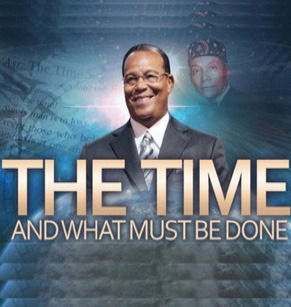
It was presented at that time as an ‘Economic Savings Program,’ or a ‘3-Year Savings Plan’—and it was the greatest effort in the history of Black people in America to: 1) break our harmful spending habits; 2) pool our earnings; and 3) redirect our wealth in ways that would lead to self-sufficiency in America,” Minister Farrakhan said in Part 30 of his 2013 lecture series, “The Time and What Must be Done,” titled, “Muhammad’s Economic Blueprint: Ending Poverty & Want.”
“The Program called on not only Muslims, but all Black wage earners—the poor, the middle class, and the wealthy—to make affordable contributions, on a regular basis, into a single national treasury,” he added.
“But why did the Honorable Elijah Muhammad give us this Plan 48 [now 61] years ago? He warned us that 100% inflation would come to America, totally destroying the value of the dollar.
He wrote that a financial crash was on the way more severe than The Stock Market Crash of 1929 (a.k.a. ‘Black Tuesday’). And, He wrote that America would experience a loss of wealth so severe that it would force the descendants of slaves to finally get up and do something for themselves economically.”
Minister Farrakhan then went into the statistics on the dire condition of Black life in America, including foreclosure rates, unemployment rates, incarceration rates, homicide rates, high school dropout rates and poverty rates.
Minister Farrakhan concluded with words from His teacher from pages 56-57 of “Message to the Blackman”: “As a people, we must become producers and not remain consumers and employees. We must be able to extract raw materials from the earth and manufacture them into something useful for ourselves! This would create jobs in production.
We must remember that without land there is no production; [and] the surplus of what we produce we would sell. This would [help] develop a field of commerce and trade as other free and independent people whose population is less than that of [our] so-called Negroes who are dependent in America.”
“The future is in our hands,” the Honorable Minister Louis Farrakhan said. “You don’t have to beat up on other people, you just have to do right by yourself!”