By S.E. Williams
Black Voice News
https://blackvoicenews.com/
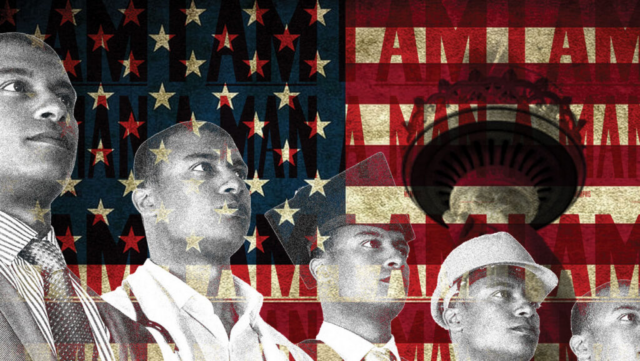
Overview: A new report titled “Economic State of Black Men and Boys in the United States” highlights severe systemic inequalities affecting over 20 million Black individuals. The findings reveal significant disparities in educational proficiency, college enrollment, and workforce participation, including a persistent racial pay gap. Author Dr. Wes Bellamy emphasizes that even wealth cannot fully shield Black men from these deep-seated institutional barriers.Thank you for reading this post, don’t forget to subscribe!
S. E. Williams
Ralph Ellison’s Invisible Man—released nearly 75 years ago—explored the raw themes of Black identity, race, and individuality as experienced by Black men and boys in a segregated society.
Themes explored in the Invisible Man, considered by many scholars as a seminal work in the Black Literary canon, though discouraging in some ways, remain relevant today. This is not only because of the truth it tells but also because it is a story of self-discovery; because it demonstrates the power of resilience and does not shy away from the enduring struggle against society oppression and prejudice.
A new report titled, the “Economic State of Black Men and Boys in the United States,” delves into the current reality of life for the nation’s more than 20 million Black men and boys.
The report makes it clear that the current (and historic, soul-crushing) economic reality faced by Black men and boys in this country remains and it extends from the classroom to the workplace and most points in between. One of the stark messages validated by the study is that money does not shield highly melanated men and boys from continued systemic and institutional racism.
Activist, educator and author of the new report, Dr. Wes Bellamy, stated in a recent interview, “Even if you come from a ‘wealthy Black family,’ that still doesn’t prevent you from having to deal with systemic barriers, which is something we knew, but the data actually pointed that out.”
From the classroom to the workplace, the data and what it tells us is disheartening. In 2024, the report stressed that only 17% of Black fourth graders in America performed at or above the National Assessment of Educational Progress’ Proficient level in reading; by the eighth grade, that number dropped to 14%. In addition, more than 60% of Black eighth graders performed below the Basic level.
“When they approach me they see only my surroundings, themselves or figments of their imagination, indeed, everything and anything except me. For, like almost everyone else in our country, I started out with my share of optimism. I believed in hard work and progress and action, but now, after first being ‘for’ society and then ‘against’ it, I assign myself no rank or any limit, and such an attitude is very much against the trend of the times.”Ralph Ellison, The Invisible Man
ADVERTISEMENT
“The systems are playing out exactly as they were designed to,” stressed Dr. Bellamy. “ [This] is why we see some of the bleak numbers . . . we have.”
Low scholastic performances among Black males in grades K-12, are further reflected in their low undergraduate enrollment in and completion of colleges and universities. In truth, the enrollment of Black males in these institutions has been declining for more than a decade. According to the report, this is most dramatically reflected at historically Black colleges and universities (HBCUs). Enrollment at HBCUs has declined 25% among Black males in recent years, compared to a still concerning 22% enrollment decline among Black males in schools of higher education nationwide.
Although Black men have historically played a critical role at HBCU’s, today, they make up less than a third, only about 26%, of HBCU enrollment.
Those entering the workforce don’t fare any better. If you are a Black man or living at, above or below the poverty line and who has entered the workforce or are seeking to enter it—you’re still a Black man or boy and your employment opportunities may be suppressed either structurally, institutionally and/or subversively.
In April, at 7.3% unemployment, Black workers had the highest unemployment rate in the country. Although the number improved somewhat in June to 6.6%…Black unemployment is usually a fair indication that the nation’s economy is unsteady and there may be something untoward looming on the horizon. I say this only because when things start getting more difficult for Black people, things must be getting a little tough for everyone else. It is not that misery loves company as they say, but rather there is always hope that people who experience similar hardships seem to more easily have compassion for one another—we can only hope.
Yes. Life is difficult for Blacks who are unemployed but according to the report, those who are working fare somewhat, but not too much better as it relates to equity and stability.
The pay gap between white and Black men has proven to be unrelenting. In 2025, for example, Black men earned a median income of $1,039 a week compared with $1,354 for White men. In other words, on average, Black men earn only about 77 cents for every dollar paid white men.
The study also brought renewed attention to the disparity between Blacks and whites in relation to homeownership. Only 43% of Blacks own their homes compared to 73% of whites.
Oftentimes Black men and boys are included in broader statistics about Black Americans in general and as a result, issues that are specific to struggles unique to them can get lost when factored into the averages on this or that. When Black men and boys are lumped into broader statistics about Black Americans, their specific struggles can disappear into the averages.
In conclusion, the study makes a good case for what it identifies as intentional public policy, institutional investment, and community-based solutions.
Obviously, the social safety net is being ripped away and communities must rely on themselves to find a meaningful way forward that is equitable, just and enjoys the support of a majority in the community. Community involvement and investment, good leadership, economic stewardship and philanthropic support will be critical in bringing solutions to the forefront in the inland region.
Of course, this is just my opinion. I’m keeping it real.
S.E. Williams
Stephanie Williams is executive editor of the IE Voice and Black Voice News. A longtime champion for civil rights and social justice in all its forms, she is also an advocate for government transparency and committed to ferreting out and exposing government corruption. Over the years Stephanie has reported for other publications in the inland region and Los Angeles and received awards from the California News Publishers Association for her investigative reporting and Ethnic Media Services for her weekly column, Keeping it Real. She also served as a Health Journalism Fellow with the USC Annenberg Center for Health Journalism. Contact Stephanie with tips, comments. or concerns at myopinion@ievoice.com.More by S.E. Williams