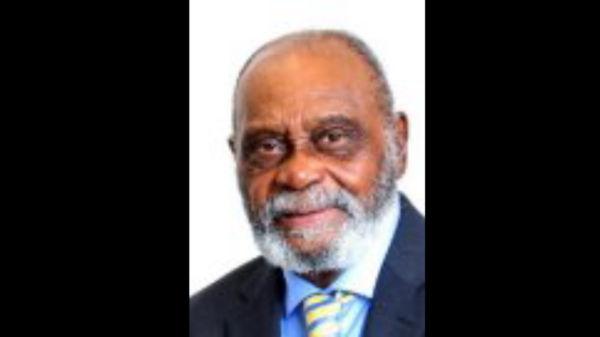
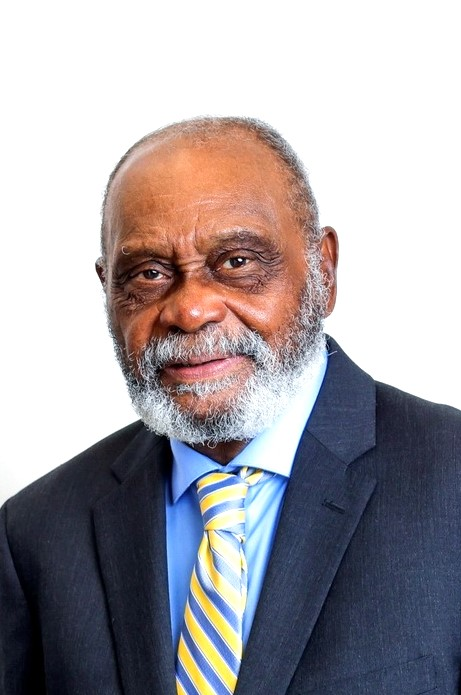
By: Rev. Peter Johnson
I grew up in Plaquemine, Louisiana, where the older folks could tell you it was going to rain before there was a cloud in the sky. As a little boy, I would hear one of them say, “A storm is coming.” I would run outside, look up at a bright blue sky, and come back convinced they were wrong. “There’s not a cloud out there,” I would say.
They would smile and answer, “Baby, you haven’t lived long enough yet.” Before the day was over, the wind would shift. The air would get heavy. Dark clouds would gather, and the rain would come pouring down. Back then, I thought they had some kind of magic.
Now I understand. They had experience. They had survived enough storms to recognize the signs before everybody else could see them.
Well, I am one of the older people now, and I feel a storm coming. It is gathering around something called election integrity.
Let me be clear. I believe elections should be secure. Every lawful vote should be protected, every voting system should be trustworthy, and every American should have confidence in the process. But Black folks have heard the language of “election integrity” before.
We have heard words like “order,” “protection,” and “security” used to justify poll taxes, literacy tests, intimidation, and exclusion. We know that sometimes the words sound reasonable while the results fall hardest on our communities.
That is why we must pay attention not only to what is being said, but to what is being done.
President Donald Trump says he wants stronger election security. But at the same time, his administration has taken actions that critics say weaken independent election oversight, reduce confidence in federal election institutions and place greater pressure on the systems that help protect fair elections.
That contradiction should trouble us. You cannot claim to strengthen the roof while removing the beams that hold it up.
The bipartisan U.S. Election Assistance Commission was created after the disputed 2000 presidential election to help states improve election administration, certify voting systems and assist local officials. When the leadership of such an agency is weakened, every citizen should ask whether public confidence is being protected or endangered.
Black Americans, especially, cannot afford to be casual about that question. Our people did not stumble into the voting booth. We marched there. We prayed there. We bled there. We buried people on the road there.
I remember men and women standing in courthouse lines knowing they could lose their jobs, be threatened, humiliated, or turned away. Some dressed in their Sunday clothes because they believed registering to vote was sacred work.
They were not only fighting for the right to cast a ballot. They were fighting for the right to trust that the ballot would count. That trust is fragile.
Once people lose faith in elections, every defeat becomes fraud, every victory becomes suspicious, and every political opponent becomes an enemy. Democracy cannot survive long under those conditions.
As a minister, I learned that accountability strengthens trust. Pastors should not count the offering alone. Finance committees review the books. Trustees examine expenditures. Auditors ask hard questions. That does not weaken the church. It protects the church.
The same is true for elections. Independent oversight is not the enemy of election integrity. It is part of election integrity.
Black voters should also be cautious when politicians raise fears about widespread voter fraud without producing evidence that matches the alarm. History tells us that imaginary threats have often been used to create very real barriers.
We have seen laws presented as neutral that made it harder for elderly people, students, working families and communities of color to vote. That is why this moment requires wisdom, not panic.
We should register. We should verify our registration. We should learn the laws. We should vote early when possible. We should help our elders reach the polls. We should watch local election boards, state legislatures, and federal agencies. Most of all, we should refuse to surrender our trust blindly to any politician or political party.
The old folks in Plaquemine taught me to pay attention before the rain started. They noticed the wind. They felt the pressure change. They recognized what others ignored.
I hope I am wrong about this storm. I pray that our elections remain free, fair and trusted. But I have lived long enough to know that rights can be weakened while people are distracted, and institutions can be damaged while leaders insist they are being protected.
Black America must not be caught without an umbrella. Our ancestors paid too much for the ballot. Our children have too much at stake. This is the hour to stay awake, stay informed, stay organized, and keep voting. The clouds may not be visible yet. But the wind is already changing. There’s a storm coming.
Rev. Peter Jerome Johnson, was the youngest staff member of the Southern Christian Leadership Conference under Dr. Martin Luther King, Jr. An alum of Southern University, he founded the Peter Johnson Institute on Nonviolence.