By Rita Cook
Correspondent
Texas Metro News
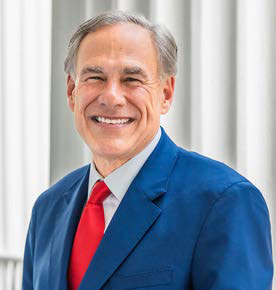
AUSTIN – In a joint statement issued by Texas Governor Greg Abbott, Lt. Governor Dan Patrick, and Speaker Dustin Burrows they gave a directive to all state agencies to slash 3% from their base budget requests for the upcoming 2028–2029 spending cycle.
The leaders stated that the 3% reduction ensures responsible government operation and prudent stewardship of resources. They explained this approach is vital to maintaining Texas’s competitive advantage following significant investments in property tax relief and infrastructure
Overall, this directive will serve as the foundational starting point for crafting the state’s 2028–2029 biennial budget, which lawmakers will formally negotiate during the 90th Legislative Session beginning in January 2027.
The main reason behind this aggressive fiscal belt-tightening is said to be a coordinated effort by state leadership to address cost-of-living and affordability concerns for Texas families and homeowners. The idea is thought to be that by enforcing a strict standard of agency efficiency, there will also be the possibility of engineering the necessary financial “wiggle room” to fund big-ticket, conservative legislative priorities.
There are key strategic exemptions to this cut including public infrastructure and this joint directive explicitly shields specific sectors from the 3% baseline reduction. Most notably, K-12 public education funding is completely protected. The 3% cut will not apply to the state’s central Foundation School Program or its newly enacted, highly championed private school voucher initiative, the Texas Education Savings Account program. Additionally, state leadership exempted funding required by law for major state entitlement programs—such as Medicaid—as well as essential employee benefits and payroll growth within state pension systems.
According to statements released by Governor Abbott, the funds saved from agency budgets will go directly toward providing historic local property tax relief and maintaining strong teacher pay raises. After dedicating an unprecedented $51 billion to property tax cuts last session, state leaders plan to expand these reductions next year. This new mandate sets the stage for tighter limits on local government spending and lower property appraisal caps to deliver direct financial relief to taxpayers.
The response from Texas Democrats, led by their gubernatorial nominee State Representative Gina Hinojosa (D-Austin), condemns the 3% budget cut directive. Democrats accuse Republican leadership of “hoarding” state wealth while everyday families struggle with an intense cost-of-living crisis.
The Democratic pushback argues the state’s emergency Economic Stabilization Fund (the “Rainy Day Fund”) sits at a historic record of $24.8 billion. Hinojosa and other state lawmakers argue that forcing agencies to tighten their belts and cut services by 3% is entirely unnecessary when the state is sitting on an unprecedented multi-billion-dollar cash surplus.
Instead of trimming agency budgets to generate future property tax cuts, Hinojosa launched an economic policy agenda proposing drawing $17 billion from the Rainy Day Fund to send a $1,500 direct check to every single household in Texas to provide immediate economic relief,
Democratic lawmakers are also stating the 3% cut will further degrade Texas’s public infrastructure. They point to the fact that CNBC’s “Top States for Business” rankings recently hit Texas with an “F” grade in quality of life and a “C” grade in education. Democrats argue that cutting university budgets and state agency resources will directly worsen these metrics, making Texas less competitive.
And, while the Republican directive shields K-12 public school funding from the 3% cut, Democrats believe the baseline is already deeply flawed. At the end of the day, state agencies say these early-stage requests are just business as usual for the biennial budget cycle. But don’t look past the mandate itself, which looks as if the 3% cut is signaling a massive push for government efficiency with many predicting state leaders are drawing a hard line in the sand to keep Texas’s economy on top as 2027 approaches.
Rita Cook is a world traveler and writer/editor who specializes in writing on travel, auto, crime and politics. A correspondent for Texas Metro News, she has published 11 books and has also produced low-budget films.