By John Hickman,
Forward Times
https://forwardtimes.com/
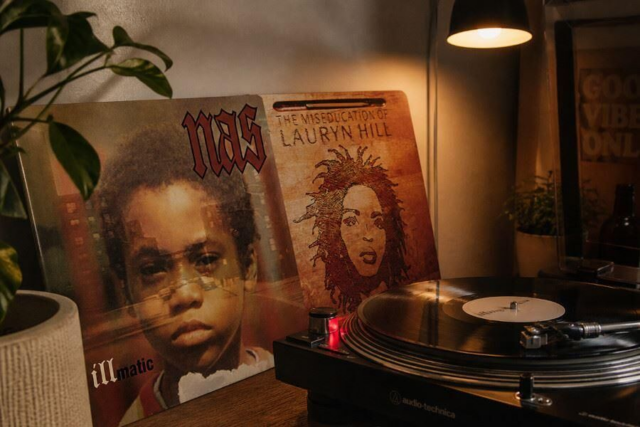
Is hip-hop losing its power?
That question has been circulating across hip-hop media for roughly a year now. But it isn’t being asked out of a renewed appreciation for variety, one of the qualities that once made hip-hop so special, or a desire to support artists based on the music rather than the metrics. It’s being asked because, for the first time since hip-hop became the nation’s bestselling genre in 2017, the numbers are trending in the opposite direction. Sales are down.
According to Luminate’s 2026 Midyear Report, the combined share of hip-hop and R&B in total U.S. chart consumption has decreased to approximately 30%, down from a peak of around 41% in 2023. Meanwhile, pop, country, and Latin music have experienced significant growth. As a result, the genre’s overall market share has also declined.
For many mainstream supporters and fly-by-night listeners, commercial success was equated with popularity, and popularity was equated with validity.
If an album sold, it mattered. If it didn’t, it was forgotten.
That is no longer the case, and we should be thankful for it. But why?
Between 2016 and 2021, hip-hop experienced an unprecedented commercial boom. Streaming exploded, and records were broken seemingly every year, particularly between 2016 and 2018. Rap became the soundtrack of popular culture around the world, and it deserved to be celebrated. Artists capitalized on the moment, with merchandise-to-album bundles helping drive massive first-week sales. But as Billboard changed its rules around bundle sales, that strategy lost much of its impact, exposing just how much the industry had come to depend on commercial tactics rather than the music itself.
After decades of being dismissed, censored, and shut out of mainstream spaces, hip-hop had finally become the dominant force in music.
But there was a cost.
As labels chased streaming numbers, originality slowly became secondary. The industry rewarded formulas over individuality. Similar flows. Similar production. Similar subject matter. Different artists often sounded interchangeable. Regional identity began to disappear. New York artists, despite coming from one of hip-hop’s richest cultural histories, started sounding like UK drill artists. In turn, UK drill artists were emulating a sound born from the streets of Chicago.
Hip-hop became the same product with different packaging.
Same drug. Different dealer.
In my opinion, the dealer was the major-label machine.
When streaming became the primary objective, artistry often took a back seat. The SoundCloud era lowered the barrier to entry, and while that wasn’t inherently a bad thing, it also accelerated a culture where quantity frequently outweighed craftsmanship. Eventually, listeners grew tired of hearing the same formula repeated over and over again.
Compared to the genre’s commercial peak between 2016 and 2021:
- First-week album sales have declined.
- Streaming growth has slowed.
- Fewer rap artists are becoming mainstream superstars.
- Hip-hop represents a smaller share of new music consumption than it once did.
To many, those statistics signal decline.
I think they signal correction.
Don’t misunderstand me. That era produced incredible albums. Kendrick Lamar’s Damn album, Pusha T’s Daytona, Lil Baby’s My Turn album, Kodak Black’s Painting Pictures, and Future’s HNDRXX album. Different sounds from different artists, all at different points in their careers.
But today? I believe we’re experiencing the healthiest musical period hip-hop has seen since roughly 2012 through 2015. Sales and streams be damned.
Regional identity is returning. Memphis sounds like Memphis again. California sounds like California again. Artists like GloRilla and Westside Boogie embrace where they come from instead of chasing whatever algorithm happens to be trending. Lyrical content is leading the way again. Albums have a soul again instead of feeling like hollow money grabs. Projects are beginning to sound like complete bodies of work instead of playlists engineered for TikTok snippets.
The blessing for hip-hop came in the form of the brewing decade-long rivalry between Kendrick Lamar and Drake. That battle was the start of a cultural reset. As the battle went on, it became clearer that gimmicks wouldn’t cut it, and the people wanted bars. Something to hold on to.
So, when I hear listeners and even some well-known hip-hop media personalities question where the substance has gone, I can’t help but wonder: Are y’all actually listening?
You want an album discussing the trials and tribulations of navigating parenthood, failed relationships, letting your parents down while dealing with the pressures of today’s society and battling depression? Wale’s Everything is A Lot album was a perfect blend of those elements while still finding time to have fun. What millennial hasn’t walked that path? It’s one of the more relatable albums to come out this decade. And he does it poetically.
If you want social commentary, look no further than Chance the Rapper’s Star Line. Named after Marcus Garvey’s Black Star Line shipping company during the Back-to-Africa movement, the album explores the trials and tribulations Black Americans continue to face while calling out false prophets disguised as politicians. It also wrestles with the role of the Black church and the loss of the wisdom and traditions once passed down by Black patriarchs in our communities. I’d even argue that the album’s fourth track, The Negro Problem, belongs in the same conversation as Tupac’s Keep Ya Head Up. That’s why I still question why more hip-hop media outlets didn’t highlight it. Shout out to the JBP for giving Chance the platform to talk about it.
Not to mention, the brothers of Clipse finally put out an album after a decade-plus-long hiatus to give us Let God Sort Em Out. At age 50, the duo gracefully raps over the best Pharrell Williams efforts, opening the album with a beautiful tribute to their parents.
J.I.D.’s lyrical exercise throughout God Does Like Ugly was impressive because the album didn’t get caught up in using complex wordplay at the expense of storytelling or cohesion.
Yes, Drake has songs dominating streaming playlists.
Yes, catchy records like “Spend Dat” will always exist. They’re supposed to.
Hip-hop has always had room for fun.
But commercial records shouldn’t overshadow the remarkable music being made beneath the surface. Too many listeners have become dependent on algorithms, playlists, and radio rotations to discover music. Somewhere along the way, we stopped digging. We stopped searching. Lyricism is returning. Albums feel cohesive. If commercial numbers have to decline for creativity to flourish again, then maybe that’s a trade worth making.
Hip-hop is in a good place. Several seasoned veterans are releasing great albums during this period of slow growth for the genre. Measuring a genre that was once ignored and dismissed solely by its sales is a disservice to the culture and to the legends who poured their blood, sweat and tears into creating an art form with an unbreakable, ever-evolving soul.
Albums Worth Your Time
- Wale — Everything Is A Lot
- Chance the Rapper — Star Line
- Vince Staples — Cry Baby
- Quiet Money Dot — Million $ Dot
- AZ — Do or Die III
- T.I. — Kill the King
- Young Deji — When Are You Coming Back to Houston
- 2 Chainz & Larry June — Life Is Beautiful
- Clipse — Let God Sort Em Out
- Kendrick Lamar — GNX
- Tyler, the Creator — Call Me If You Get Lost
- Don Toliver — Hardstone Psycho
- Megan Thee Stallion — Traumazine