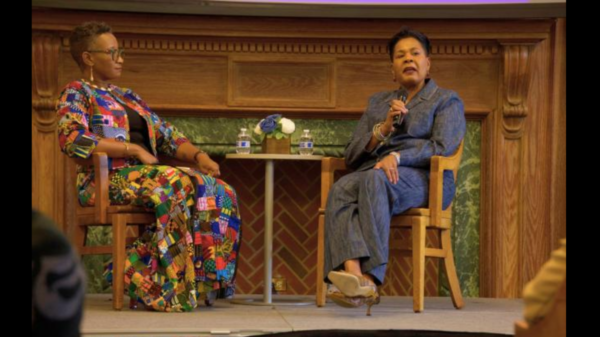
The HBCU Executive Leadership Institute endeavors to bolster the readiness of future HBCU presidents and executive leaders. Through the development of a performance-based program, it seeks to actively involve aspiring leaders in authentic HBCU contexts, fostering a learning environment where proficiency can be honed and demonstrated in real-time scenarios.
Goals
The HBCU Executive Leadership Institute (ELI) at Clark Atlanta University recruits and develops future presidents and executive leaders for over 100 Historically Black Colleges and Universities (HBCUs), enhancing their supply of qualified candidates.
Outcomes
The HBCU ELI prioritizes the implementation of a robust, and highly-curated curriculum for program each cohort, aiming to select up to 30 Fellows annually through a rigorous process. It seeks to increase the competence of prospective HBCU Presidents and executive leaders, offering personalized leadership pathways and establishing a “Fellow Alumni Network” for ongoing support.

Curriculum & Micro-credentials
The ELI Competency Model includes core leadership competencies of relationship building and networking, communication for influence, emotional intelligence skills, decision making, strategic planning, finance, and operations. Executive-specific competencies for HBCUs include branding, funding, recruiting, academic management, team building, board relations; recruiting and developing the management team; leading through crisis and uncertainty; and advocating for racial and social justice.
These competencies provide the foundation needed for executives to ensure the success of students by equipping them with career enhancing tools (credentials, certificates, internships, etc.) to complement their subject matter training.
Apply for the HBCU ELI at CAU Community of Fellows
Eligibility Requirements
- Minimum ten (10) years in higher education or related field, with at least three (3) years in Dean-level or equivalent leadership positions.
- Ability to transition to senior leadership within two-three years, showcasing requisite knowledge, skills, dispositions, and commitment.
- Strong recommendation from current or past supervisors, or senior institutional leaders.
- Proven track record of progressive leadership and successful performance across multiple institutional levels.