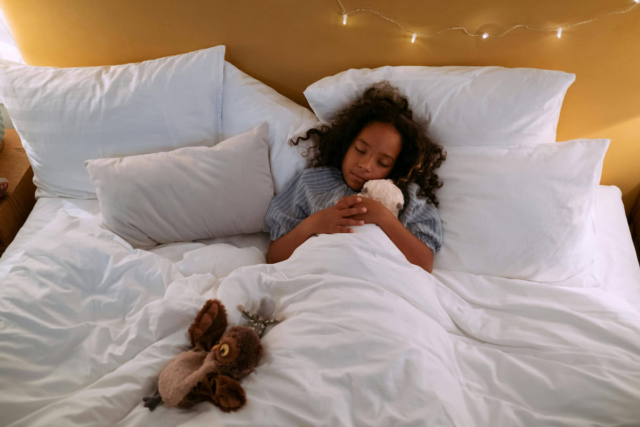
Irregular sleep is linked to lower brain power among preschool kids, a new study says.
Children who don’t stick to a regular sleep schedule tend to have problems with vocabulary and memory, according to research to be presented at an upcoming meeting of the American
Academy of Sleep Medicine and the Sleep Research Society. The findings were published recently in the journal Sleep.
“Children with more irregular sleep patterns tended to perform worse on verbal and memory tasks, even after accounting for total sleep time,” said lead researcher Karolina Rusin, a graduate student at the University of Massachusetts Amherst.
“These findings reinforce growing evidence that sleep regularity, not just duration, plays an important role in healthy child development,” Rusin said in a news release.
For the new study, researchers assessed the sleep of 379 preschool kids with an average age of 4. The team also tested children’s vocabulary, memory, planning, and thinking skills using cognitive tests.
Here’s what researchers found:
- Overall, children’s sleep duration varied by nearly an hour on average, and their sleep midpoint varied by about 32 minutes.
- Fluctuations in sleep duration and sleep midpoint were linked to lower vocabulary scores.
- Likewise, fluctuations in sleep midpoint and alignment of sleep to a child’s daily schedule were associated with lower performance on memory tests.
- However, thinking and planning skills – also known as executive function – were not affected by variable sleep.
“Children’s executive attention was not related to sleep variability measures in this sample, which suggests that not all cognitive outcomes are equally affected by irregular sleep,” Rusin said. “Further research is needed to understand the relationship between sleep variability and cognitive health across age groups and demographics.”
The researchers are scheduled to present their findings June 15 at the SLEEP meeting, which takes place in Baltimore.
Why This Matters for Black Children
Research shows that Black adolescents are more likely to experience sleep challenges, including shorter duration and later bedtimes.
Several factors can contribute to poorer sleep quality, including:
- Parents working late-night or rotating shifts
- Crowded housing conditions
- Noisy neighborhoods
- Caregiving responsibilities within the household
- Inconsistent daily schedules
The study’s findings shouldn’t cause guilt for parents. Instead, they highlight why supporting healthy sleep habits is critical and why families need the resources, support, and flexibility to help children get the rest they need.
Signs Your Preschooler May Not Be Getting Enough Quality Sleep
Here are some practical tips for helping your child get a better night’s rest:
- Aim for similar bedtimes and wake-up times — even on weekends
- Create a calming bedtime routine (bath, story, prayer, or cuddles)
- Limit screen time during the hour before bed
- Keep bedrooms cool, dark, and quiet when possible
- Prepare for the next day in advance to reduce bedtime stress
- If schedules vary because of shift work, focus on consistency wherever possible rather than perfection
There’s no one-size-fits-all solution for creating a bedtime routine. Even small improvements in consistency can support your child’s development.
When to Talk to a Pediatrician
If your preschooler experiences any of the following, talk with a healthcare provider:
- Regular snoring
- Pauses in breathing during sleep
- Persistent difficulty falling asleep
- Excessive daytime sleepiness despite adequate sleep opportunities
- Behavioral concerns that interfere with daily life
Medical conditions such as enlarged tonsils and sleep apnea can affect a child’s sleep quality. An evaluation by a healthcare provider can help determine the cause of symptoms and identify appropriate treatment options.
Final Thoughts
The preschool years are a critical period for brain development, and sleep plays an important role in learning, memory, and emotional regulation. While many Black families face unique challenges that can disrupt routines, small, realistic changes can make a meaningful difference.
The goal isn’t perfection — it’s creating healthy habits that support children as they grow.
More information
The Nemours Foundation has more on preschoolers and sleep.